Evening wall lighting ideas
Walls That Come Alive After Sunset: How to Use Wall Sconces for Evening Atmosphere
A room can look carefully decorated in daylight and still feel unfinished after sunset. The missing layer is often not more furniture, but light on the walls. Wall sconces create side glow, shadow, and depth, so hallways feel softer, bedrooms feel calmer, and living rooms feel more settled in the evening.
Why Walls Often Feel Lifeless at Night
A single ceiling light can make a room visible, but it usually lights the centre first and leaves the walls flat. That is why a space may feel bright enough yet still a little cold after dark. The eye needs contrast: a warm vertical glow, a soft edge near furniture, and enough shadow to make the room feel layered.
Wall lighting solves this by adding a second lighting layer at eye level. Instead of asking one overhead fixture to do everything, sconces give the walls their own quiet role. Before choosing the exact position, it is still worth checking Everything You Need to Know Before Installing Wall Sconces, because height, wiring, furniture, and glare can change the final result.
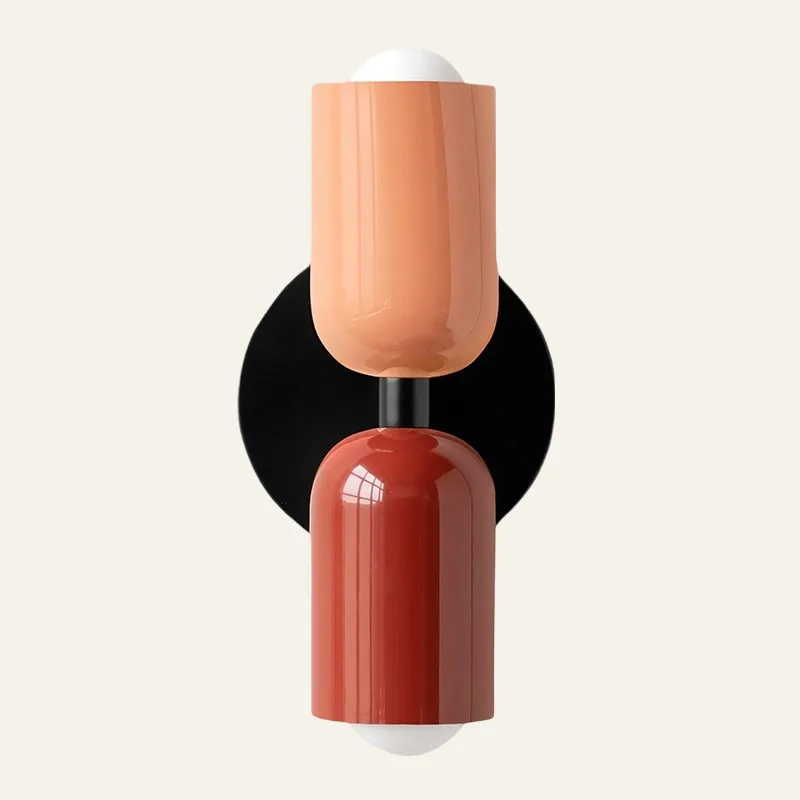
For rooms that need depth without extra objects, the Symra Minimalist Nordic Metal Wall Sconce works well because its slim shape lets the glow, not the fixture, become the main feature.
The Best Strategy: Build a Wall Glow, Not a Bright Wall
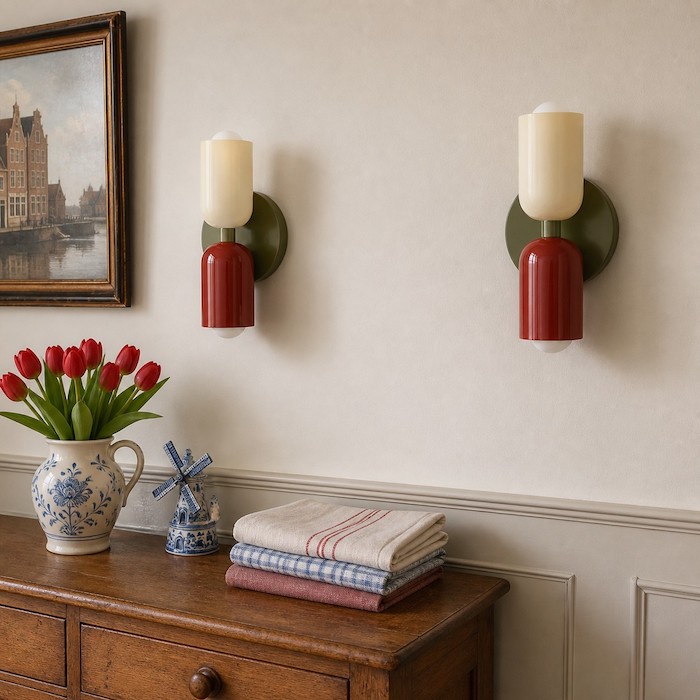
The goal is not to flood the wall with light. A good evening wall glow should feel comfortable when you walk into the room, sit down, or pass through the hallway. If the beam feels sharp, the bulb is exposed, or the wall looks patchy, the light is working too hard.
A practical starting point is to mount general wall sconces around 150 to 180 cm from the floor, then adjust for ceiling height, furniture, and sightlines. In a bedroom, test the height from a seated position on the bed. In a hallway, make sure people do not look directly into the brightest part of the fixture. In a living room, check how the glow relates to the sofa, sideboard, artwork, or textured wall.
For evening atmosphere, warm white light is usually the safest choice. Around 2700K feels cosy and relaxed, while 3000K can look a little cleaner but still warm. If the room already has very warm wood, beige textiles, or candles, keep the wall light gentle and dimmable rather than overly bright.
Quick Evening Wall Sconce Plan
- Choose the wall first: pick a plain or lightly textured wall where the glow has space to spread.
- Test the height: start near eye level, then check the view while standing, sitting, and walking past.
- Use warm light: choose a soft warm white tone for bedrooms, hallways, and relaxed living spaces.
- Avoid glare: the beam should touch the wall, not shine directly into normal eye lines.
- Keep the fixture simple: a clean metal sconce usually creates more atmosphere than a visually busy lamp.
Idea 1: Give a Hallway a Softer Evening Rhythm
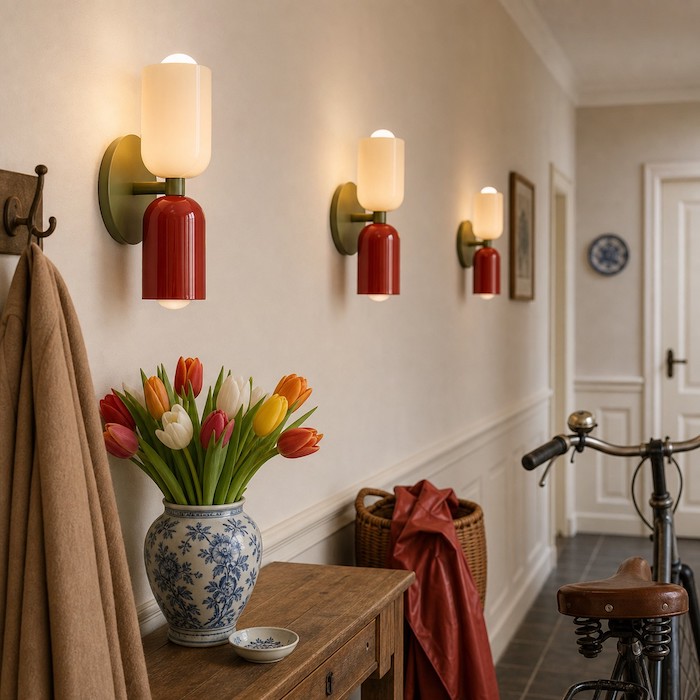
Hallways often become either too dark or too harsh after sunset. A row of wall sconces can solve that by creating repeated pools of warm light along the wall. This works especially well in narrow corridors, apartment entrances, stair landings, and long routes between rooms.
The key is spacing and restraint. Many hallway layouts work well when sconces are spaced roughly 150 to 210 cm apart, but the wall length, door openings, and ceiling height matter more than a fixed rule. Use the sconces to guide movement, not to turn the hallway into a showroom.
If the hallway wall is busy with doors, mirrors, or frames, choose a slim dual-direction fixture. Upward and downward light can create a steady rhythm without adding visual clutter, provided each beam has enough clear wall space to spread.
Idea 2: Make the Bedroom Wall Feel Calmer Than a Table Lamp Can
Bedside table lamps are useful, but they can make a small bedroom feel crowded. Wall sconces free the bedside surface and move the glow onto the wall, which often feels calmer after dark. Place them where they support the bed area without shining into the eyes.
For a restful mood, avoid placing the fixture too close to the pillow or too high above the headboard. If the sconce is mainly for atmosphere, a soft side glow is enough. If reading is the main purpose, choose a more focused or adjustable wall light and test it from your actual reading position.
A bedroom wall sconce should also work with your routine. Use a dimmable bulb or dimmer switch if possible, and keep the colour temperature warm so the room moves naturally from evening activity to rest.
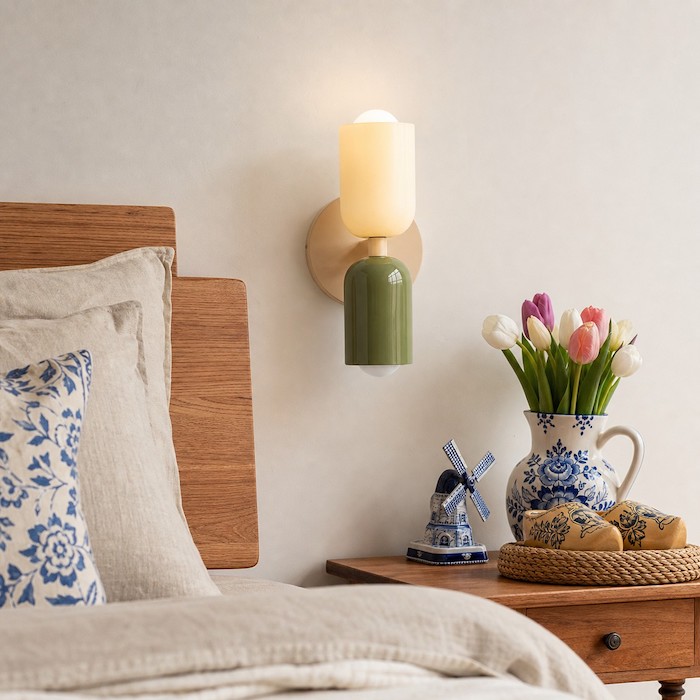
Idea 3: Turn a Living Room Background Wall Into the Evening Feature
A living room background wall can look finished during the day because it has a sofa, console, art, or texture. At night, those details can flatten out unless the wall has its own light layer. Wall sconces add that layer without taking floor space from side tables or floor lamps.
Use one or two sconces beside a sofa wall, near a sideboard, or on a plain plaster surface that needs warmth. Leave enough open space above and below the fixture so the glow is visible. If you are deciding whether the beam should go both upward and downward, compare the choice with Up-and-Down Wall Lights vs. Single-Direction Wall Lights.
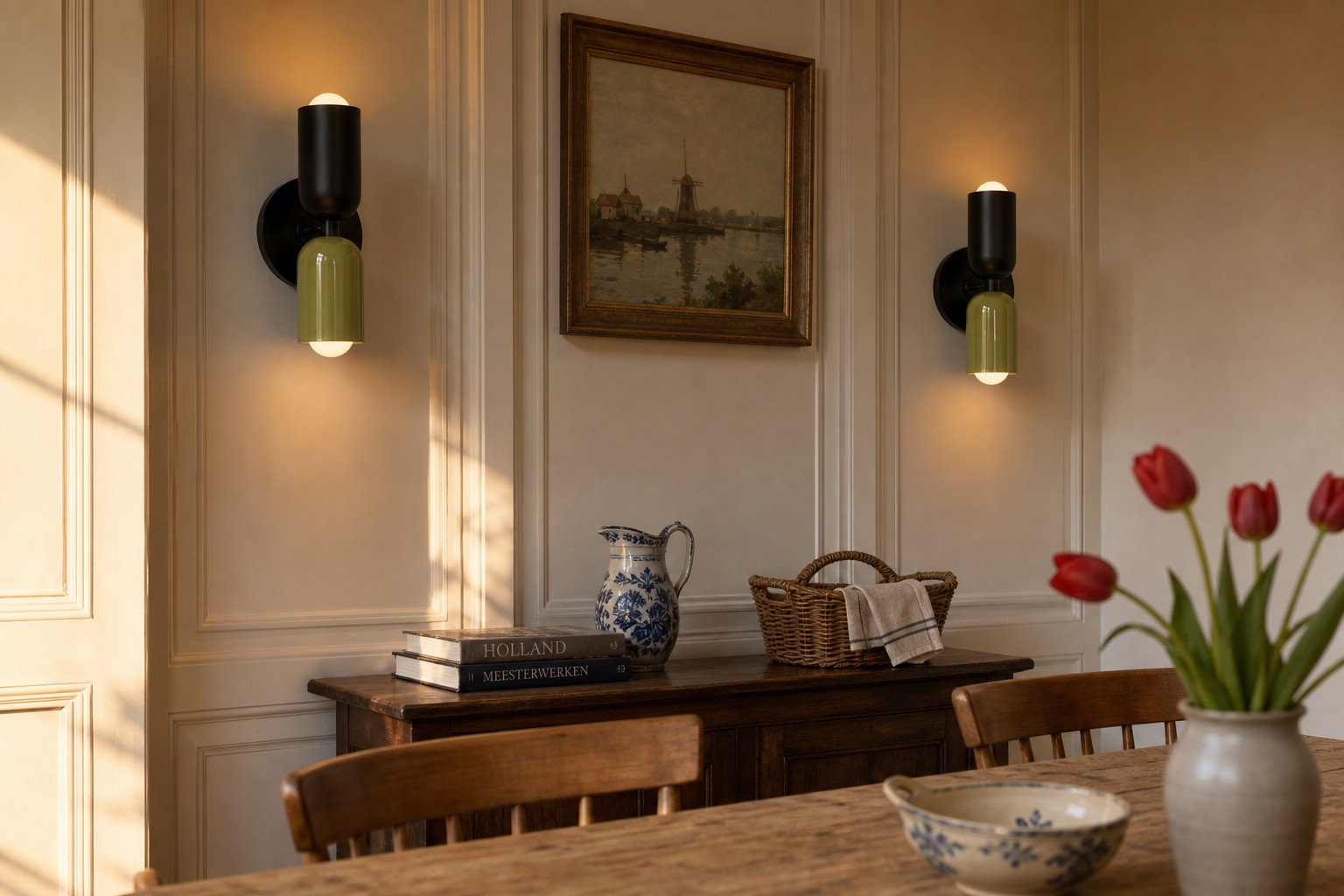
A slim up-and-down sconce feels especially natural here. It can give the wall depth while staying visually quiet enough for Scandinavian, Japandi, and modern interiors.
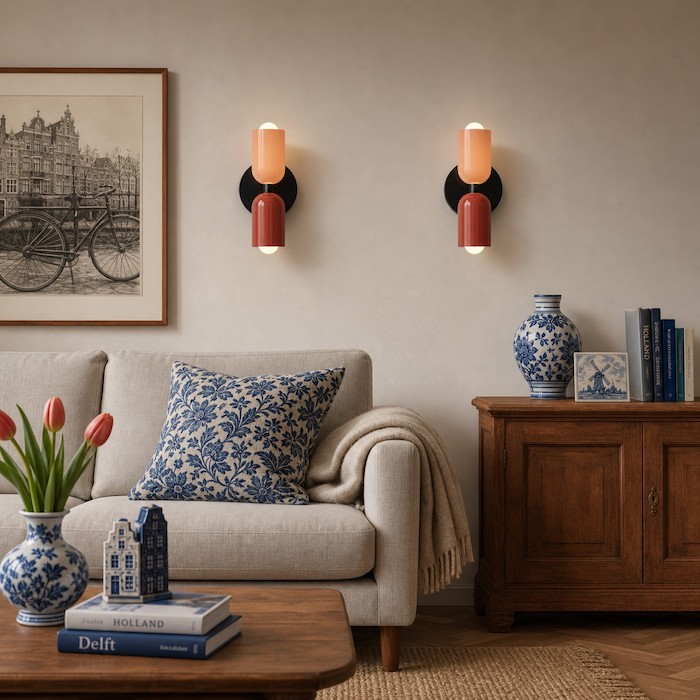
Idea 4: Use One Quiet Sconce to Finish an Empty Corner
Not every wall needs a full lighting plan. Sometimes one sconce is enough to make an overlooked corner feel intentional. This works well near a reading chair, beside a narrow console, by a bedroom doorway, or on a short wall between two larger areas.
The trick is to keep the surrounding area simple. A wall sconce can lose its calm effect if it is squeezed between too many shelves, frames, or tall plants. Give the light room to land, then let one small table, stool, artwork, or chair complete the corner.
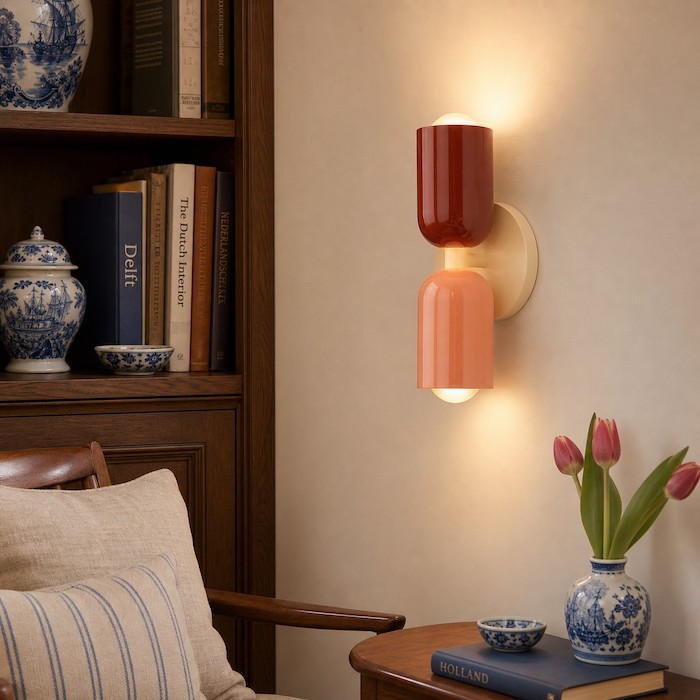
Which Styles Work Best After Sunset?
Minimalist and Scandinavian rooms benefit from wall sconces because the glow adds warmth without clutter. Japandi rooms work well with warm wall light because natural textures look softer after dark. Modern industrial rooms can also use sconces to balance harder materials such as metal, concrete, or dark wood.
For traditional or decorative rooms, choose wall lights carefully. A simple dual-direction sconce can calm a busy space, while an ornate fixture may add too much visual weight. The best evening wall light supports the room instead of competing with every object in it.
A Sunset-to-Bedtime Wall Lighting Plan
Instead of using the same brightness all evening, let the wall lighting follow the household routine. Test each stage from the places where people actually sit, walk, and rest, because a comfortable setting at the switch can still feel too bright at eye level.
- At sunset: turn on gentle wall lighting as daylight fades and switch off harsh overhead light. The wall glow should provide enough orientation for moving through the room without making the space feel abruptly bright.
- After dinner: dim the sconces and use warm 2700K light to support conversation and relaxation. Check the light from the sofa or dining chair; if the brightest part of the fixture draws attention, lower the output until the wall, rather than the lamp, becomes the focus.
- Before bed: keep only low-glare indirect wall light at the lowest practical brightness. It should be just bright enough for safe movement, with no exposed bulb or concentrated beam in the normal line of sight.
Common Mistakes That Break the Mood
The first mistake is using wall sconces as emergency brightness. If the room feels dark, adding a harsh wall light may only create glare. Use sconces for atmosphere, then add floor lamps, table lamps, or ceiling light where stronger general lighting is needed.
The second mistake is blocking the beam with shelves, large frames, curtains, or tall furniture. The third mistake is choosing a wall sconce only for its daytime appearance. At sunset, the beam matters as much as the object. Check how the light will touch the wall, where the brightest point will sit, and whether the glow feels soft from normal seating and walking positions.
Before You Buy: A Simple Room Check
- Is there clear wall space above and below the fixture?
- Will the beam be blocked by a shelf, frame, curtain, or door swing?
- Can the light be dimmed or paired with a lower-output warm bulb?
- Does the finish match nearby handles, lamps, or furniture legs?
- Do you need hardwired, plug-in, or rechargeable installation?
Recommended Wall Light for Evening Atmosphere
For a clean modern wall that needs atmosphere after dark, Symra is a practical choice. It combines a minimalist metal form with warm dual-direction light, making it suitable for living rooms, bedrooms, and hallways where the wall itself should feel warmer and more dimensional.
Use it when you want the room to feel more finished in the evening, not when you need a strong task light for detailed work. For atmosphere, rhythm, and quiet wall depth, it is exactly the kind of fixture that helps a plain wall do more.
FAQ
What type of wall light is best for evening atmosphere?
A warm up-and-down wall sconce is often the best choice for atmosphere because it makes the wall glow softly above and below the fixture. It is better for mood than for detailed task lighting.
Where should I use wall sconces in a bedroom?
Use them beside the bed, near a reading corner, or on a calm side wall where the glow supports rest. For bedside reading, check the height while sitting in bed so the light reaches the page without shining into your eyes.
What colour temperature is best for evening wall lighting?
Warm white light is usually best. Around 2700K feels cosy and relaxed, while 3000K can look cleaner but still warm. Avoid cool white light in bedrooms and relaxed living spaces if you want a softer evening mood.