Pendant lighting comparison
Swing Arm Pendant Lights vs Linear Pendants: Which Makes Dining Spaces More Flexible?
A swing arm pendant is best when your table, island, or open-plan dining area needs the light to move with daily life. A linear pendant is best when the furniture is fixed and you want one clean, balanced line of light. The right choice is less about which fixture looks more impressive and more about how your room actually works.
Quick Comparison: Flexibility or Symmetry?
| Decision point | Swing arm pendant | Linear pendant |
|---|---|---|
| Best strength | Moves light toward the active area | Creates one long balanced line |
| Best room type | Flexible dining rooms, open plans, compact apartments | Fixed islands, long tables, symmetrical layouts |
| Main risk | Needs enough arm and ceiling clearance | Can lock the room into one furniture position |
| Choose it when | The table shifts, extends, or sits off the ceiling point | The table or island stays exactly where it is |
If your main frustration is that the table never sits naturally under a fixed ceiling point, start with Why Your Dining Table Never Feels in the Right Place Under a Fixed Pendant Light. That article explains the layout problem; this one helps you decide which fixture shape solves it best.
What Is a Swing Arm Pendant?
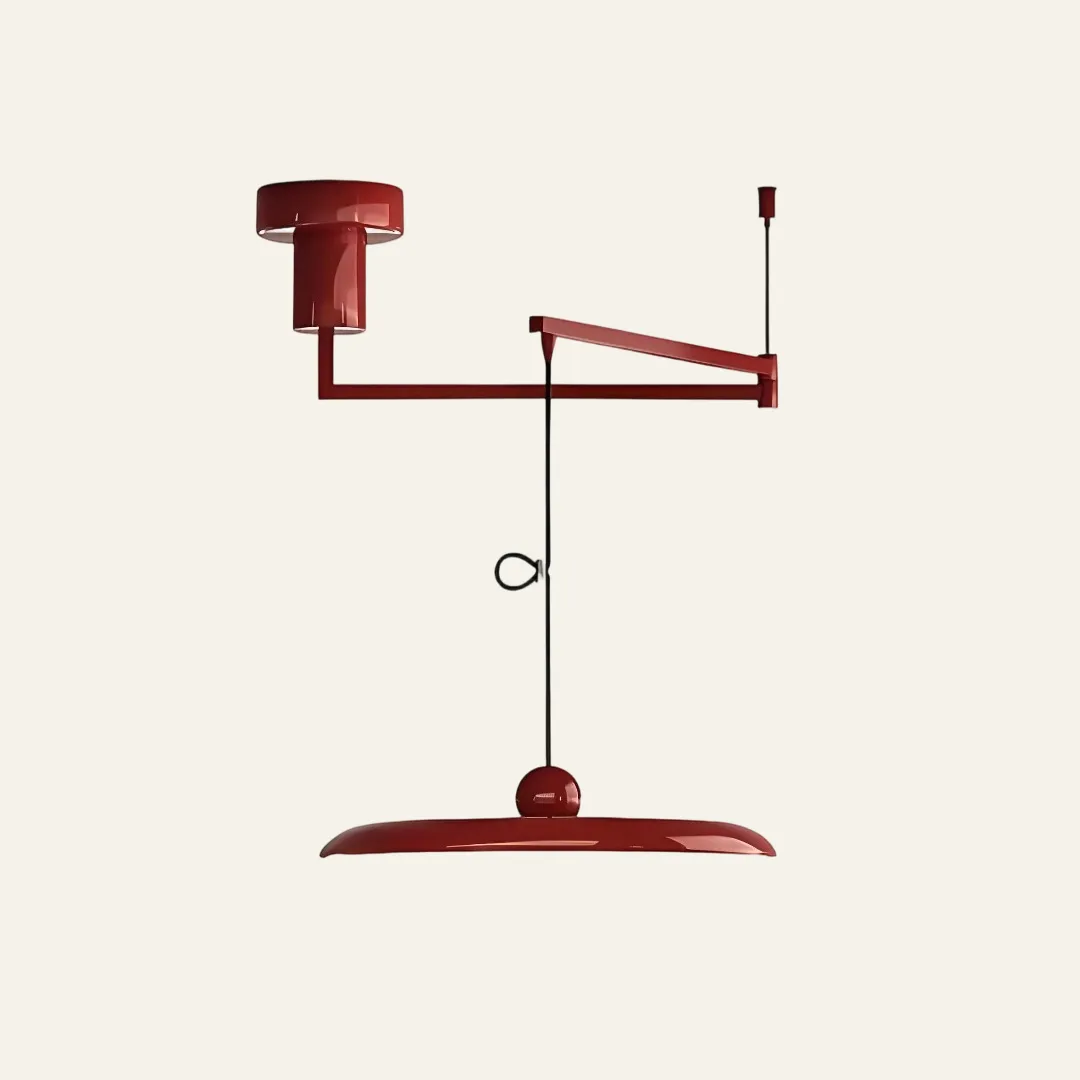
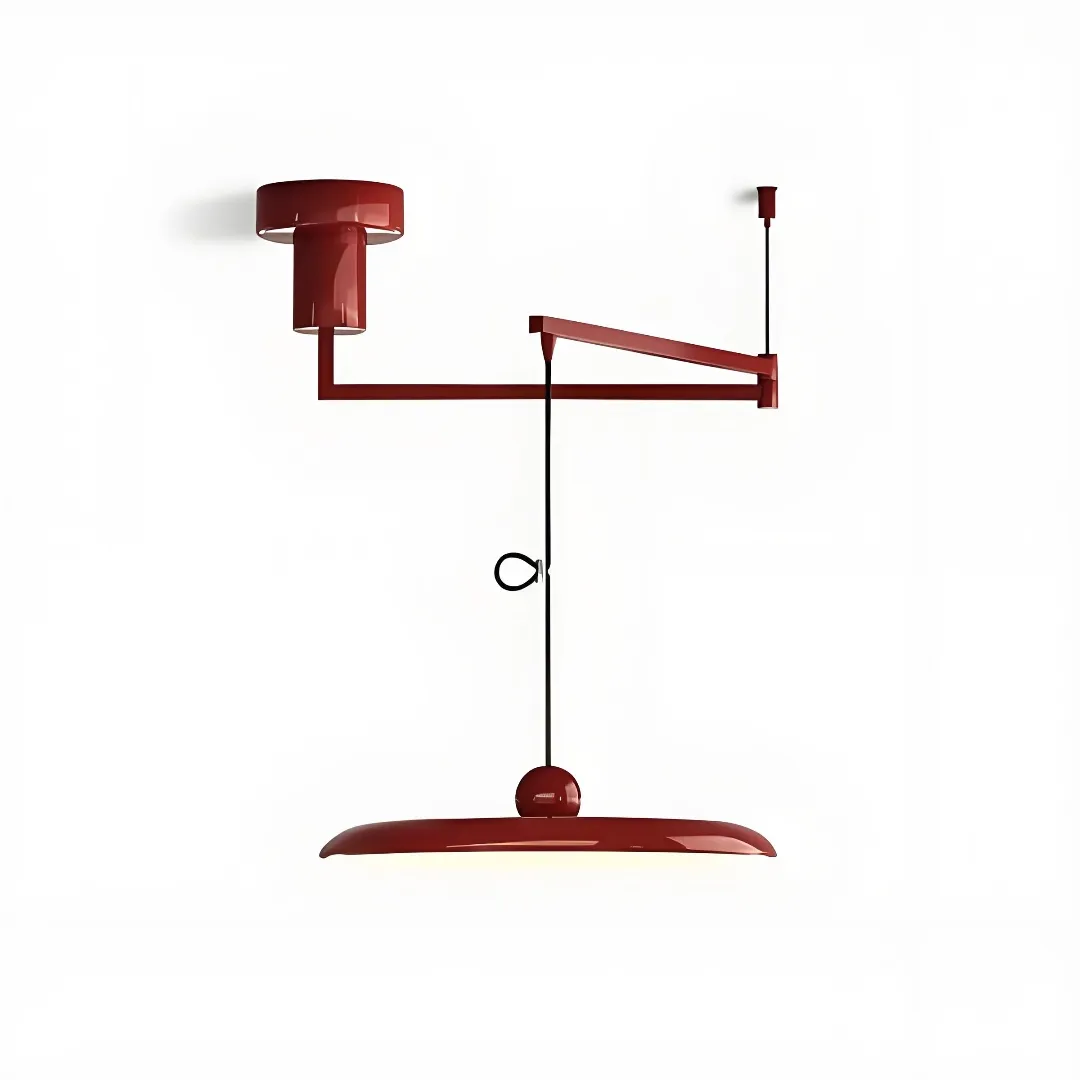
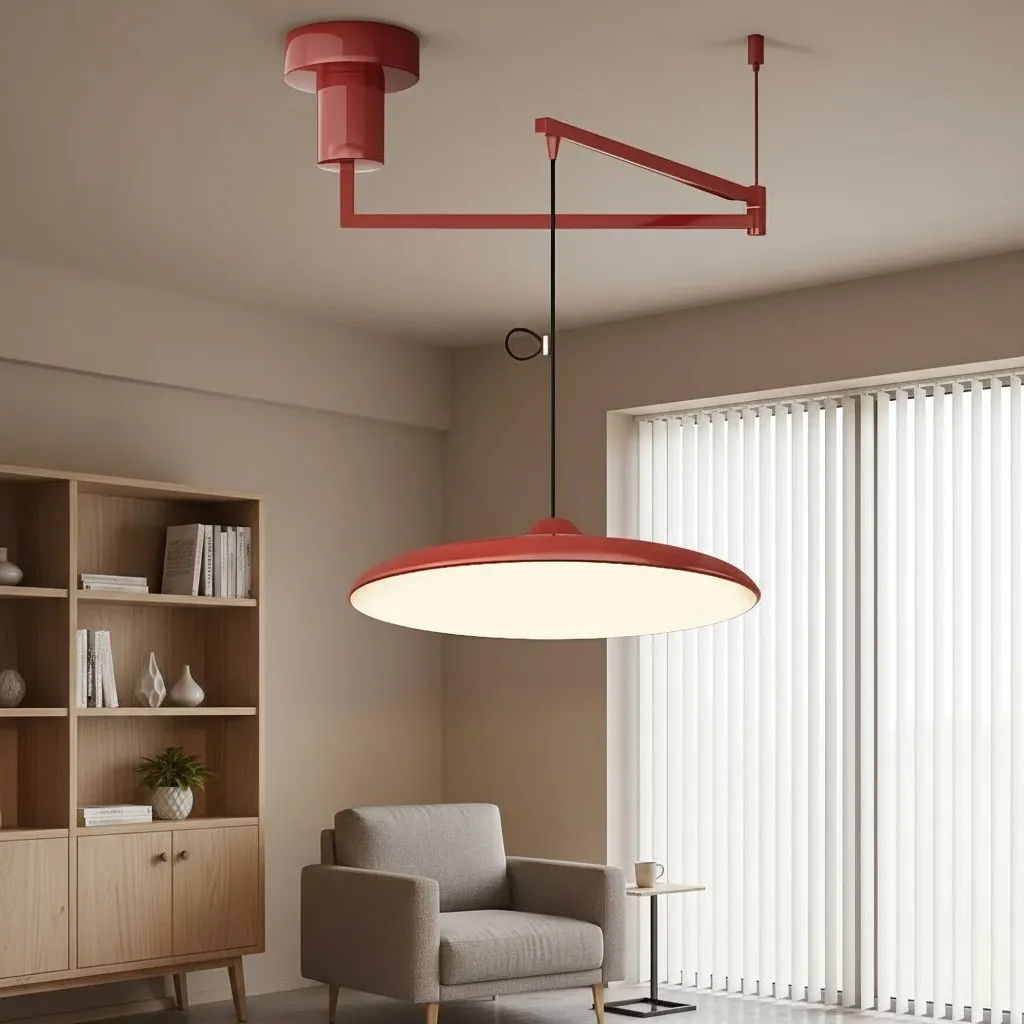
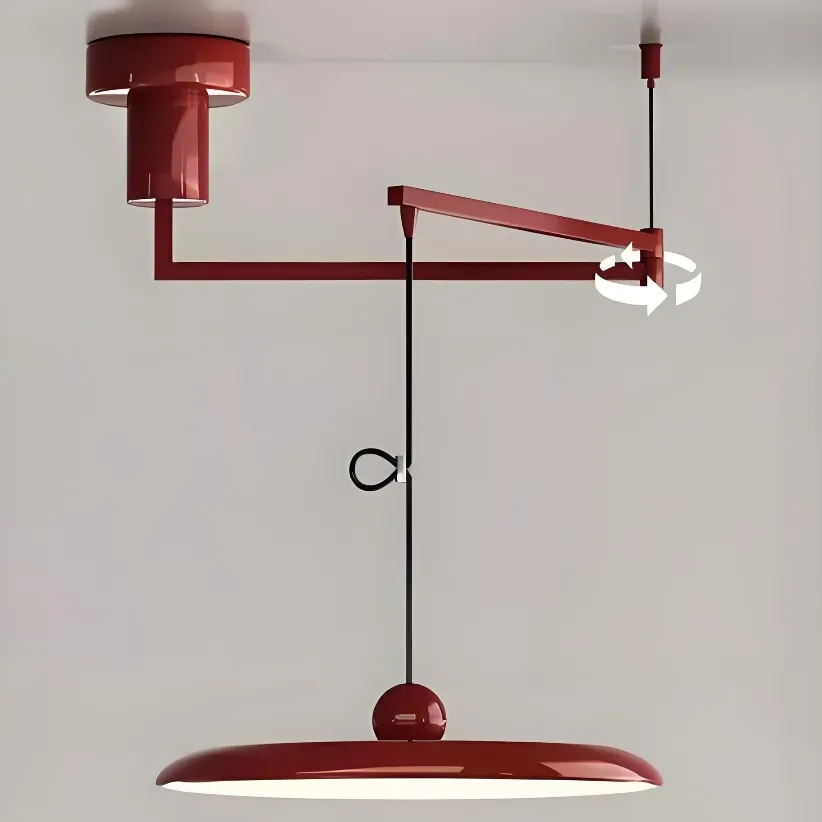
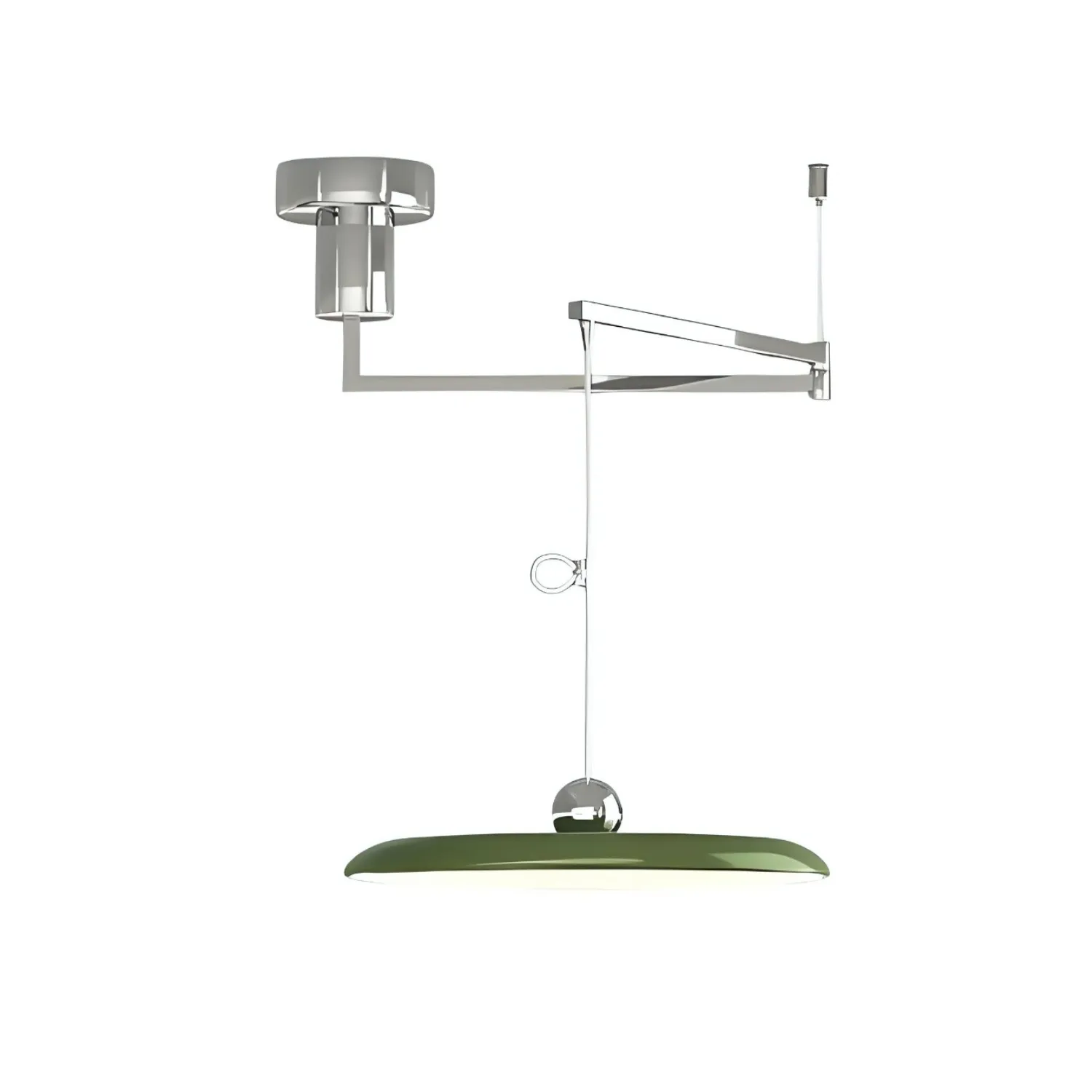
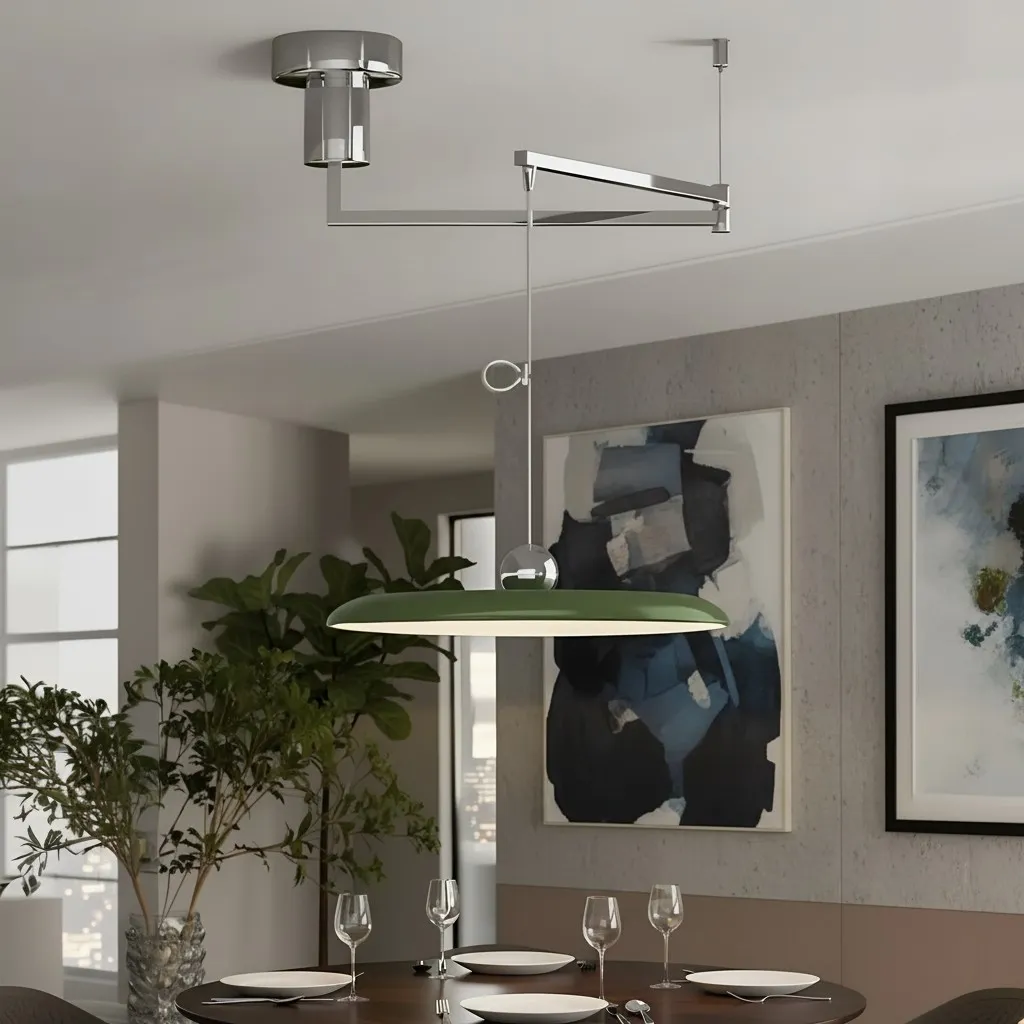
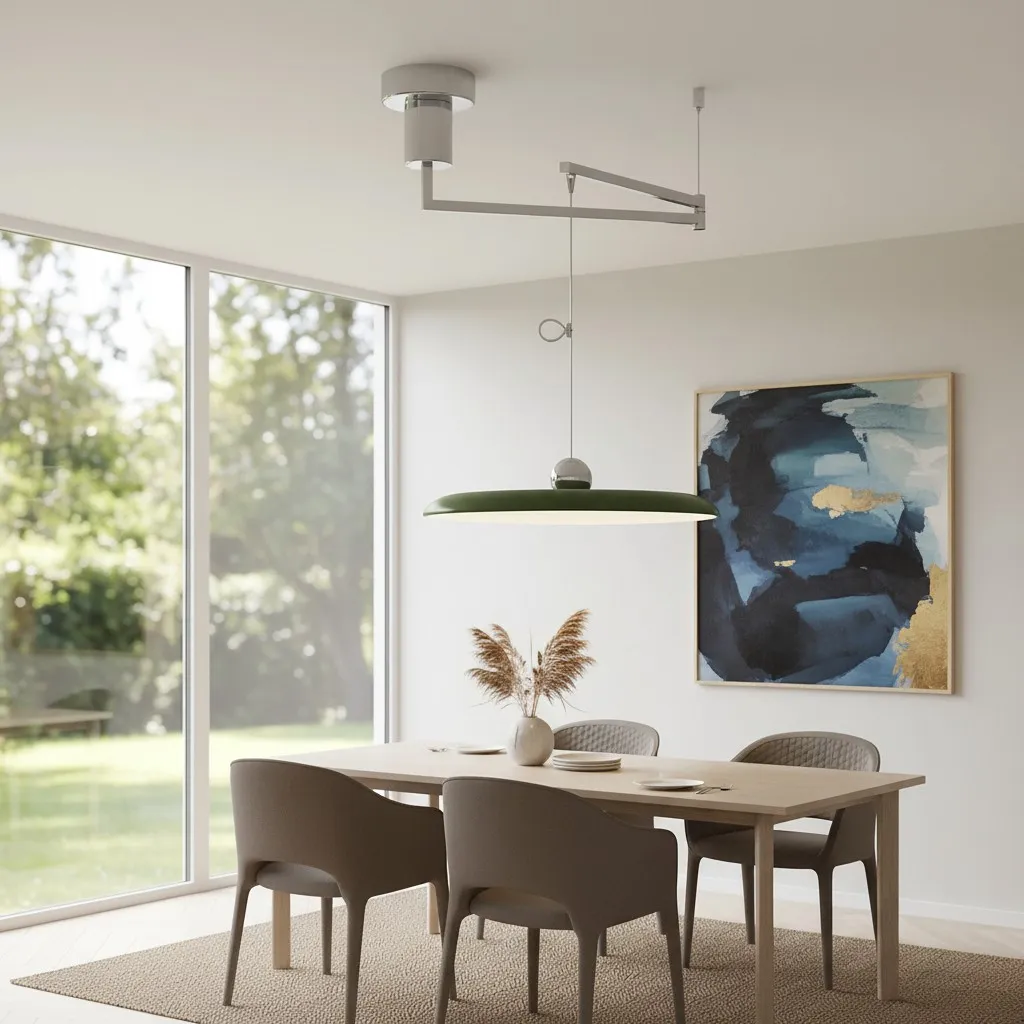
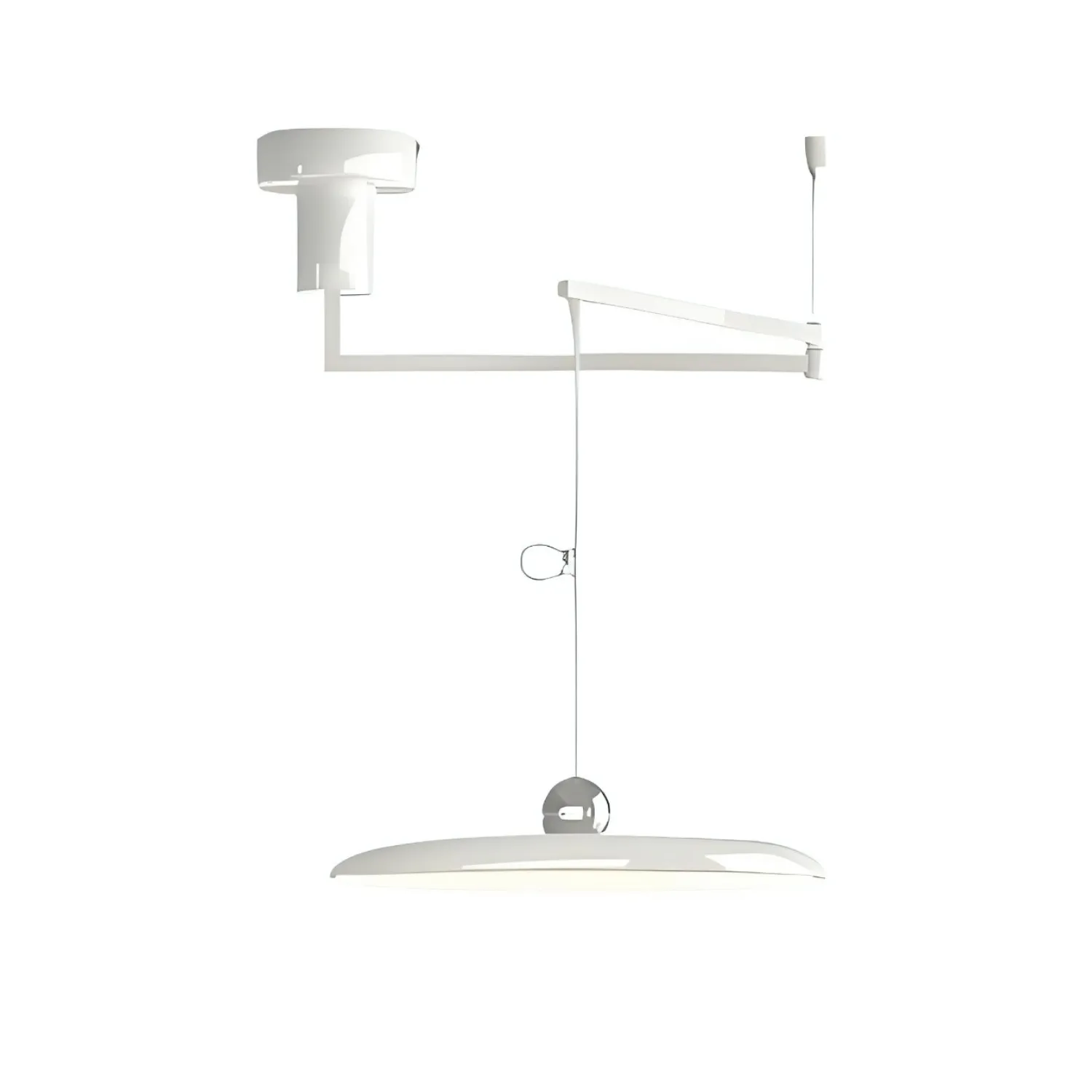
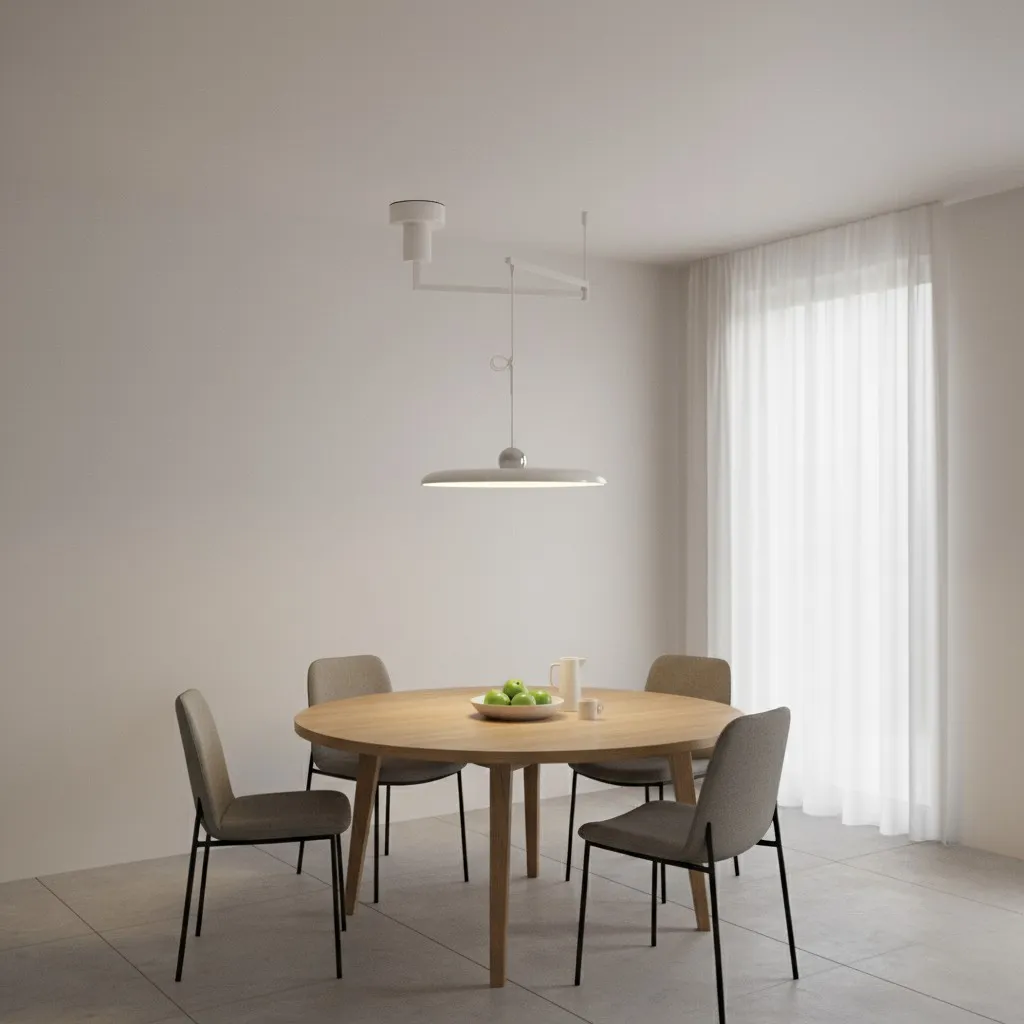
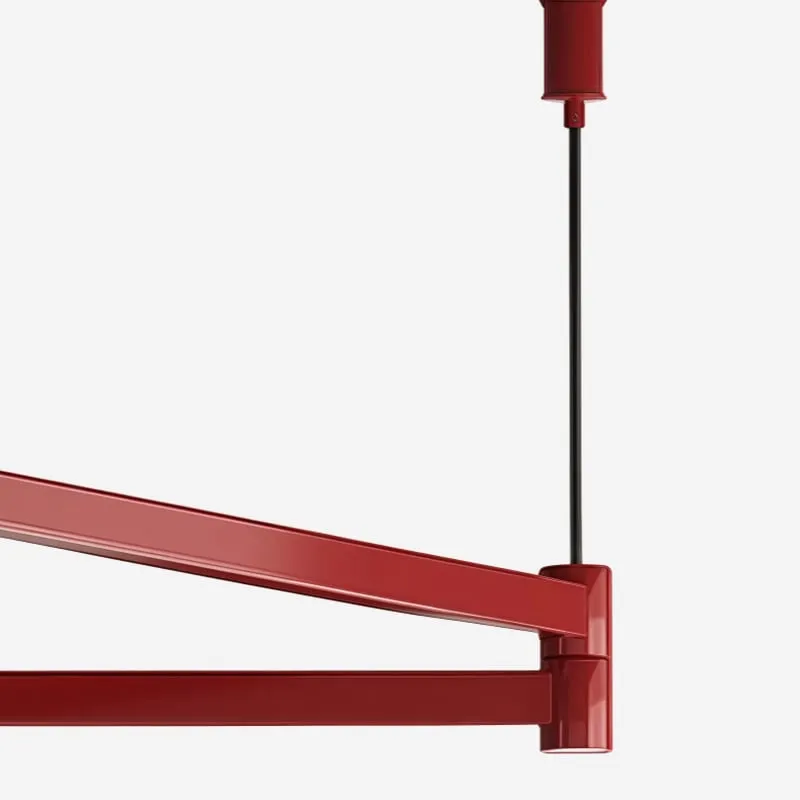
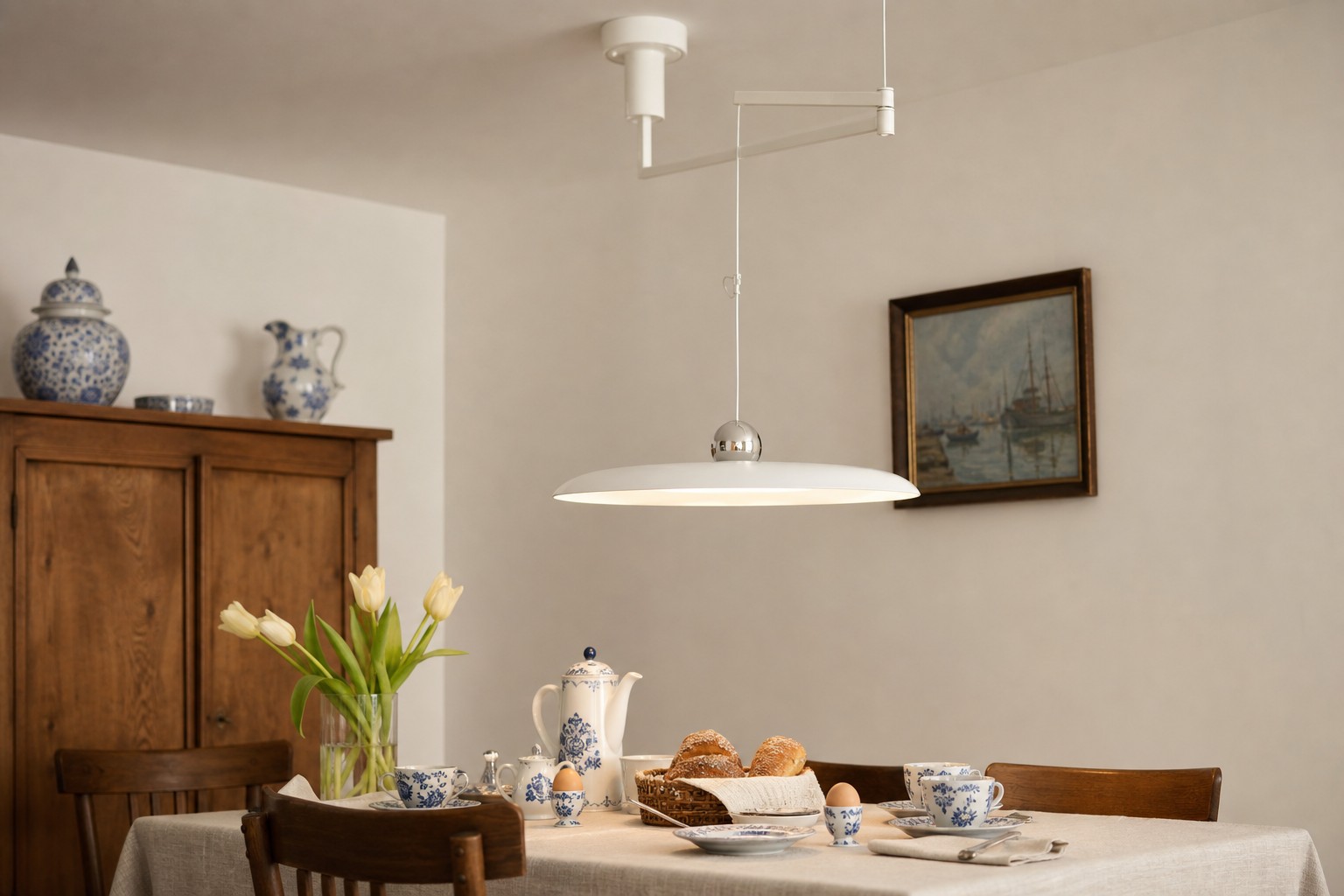
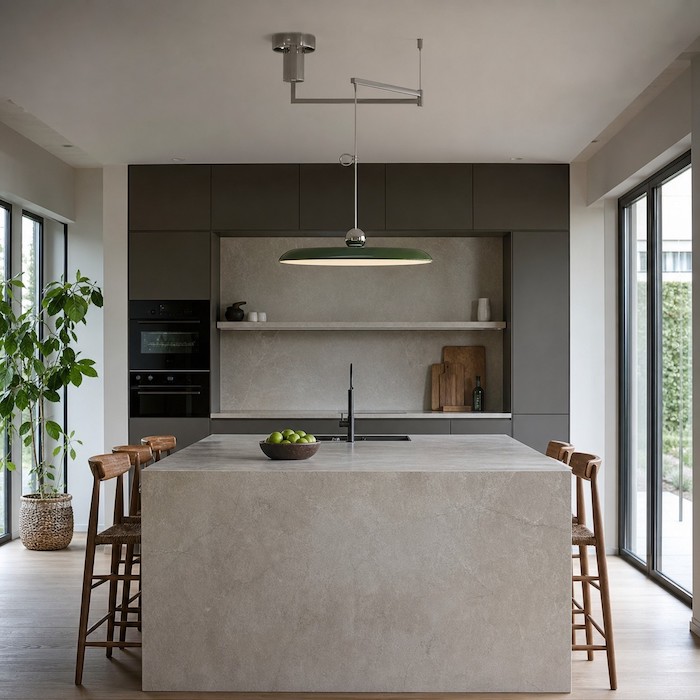
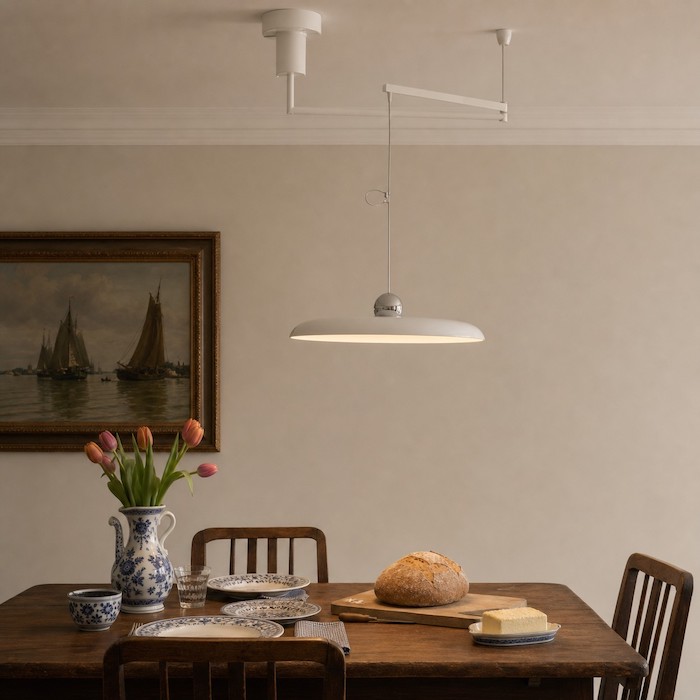
A swing arm pendant is a ceiling light with an adjustable arm that lets the shade move away from the exact ceiling point. Instead of forcing the dining table to sit under one fixed spot, the fixture can bring light closer to the place where people eat, work, prepare food, or gather.
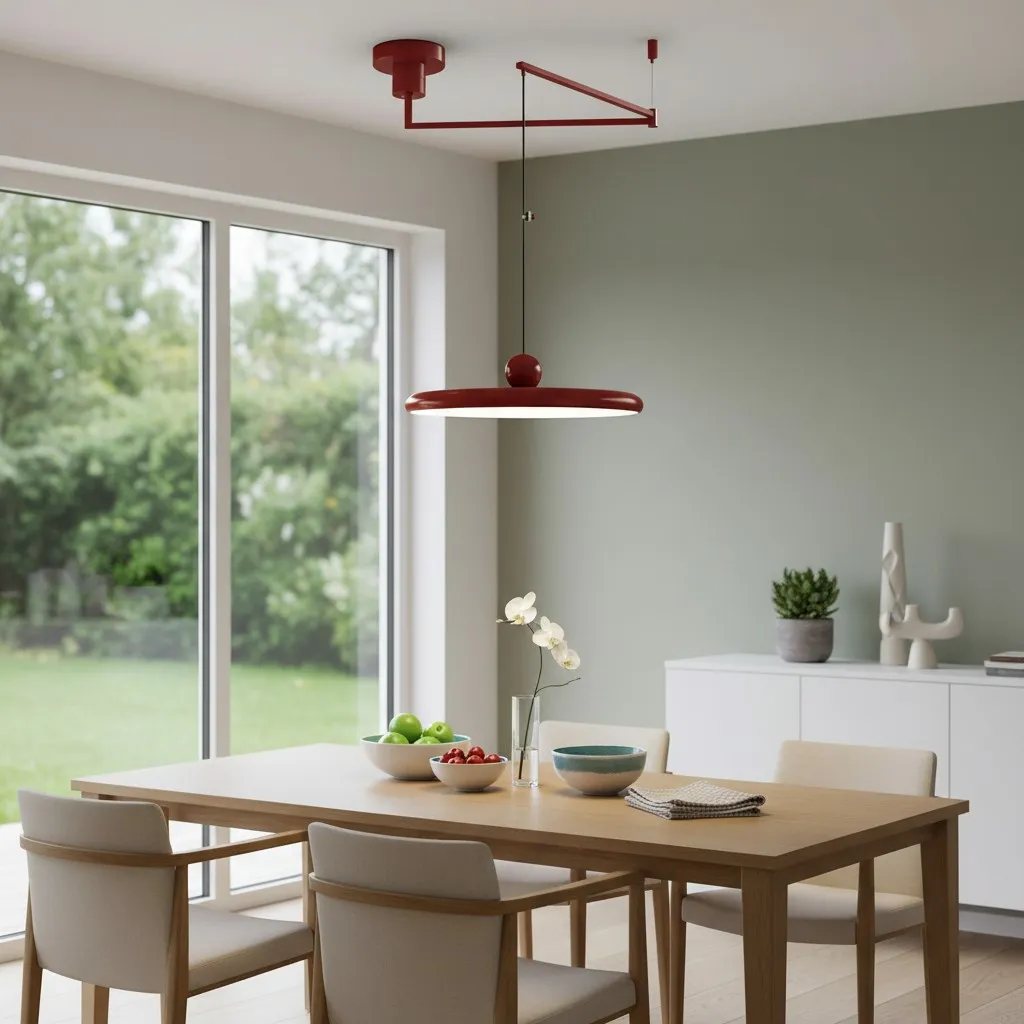
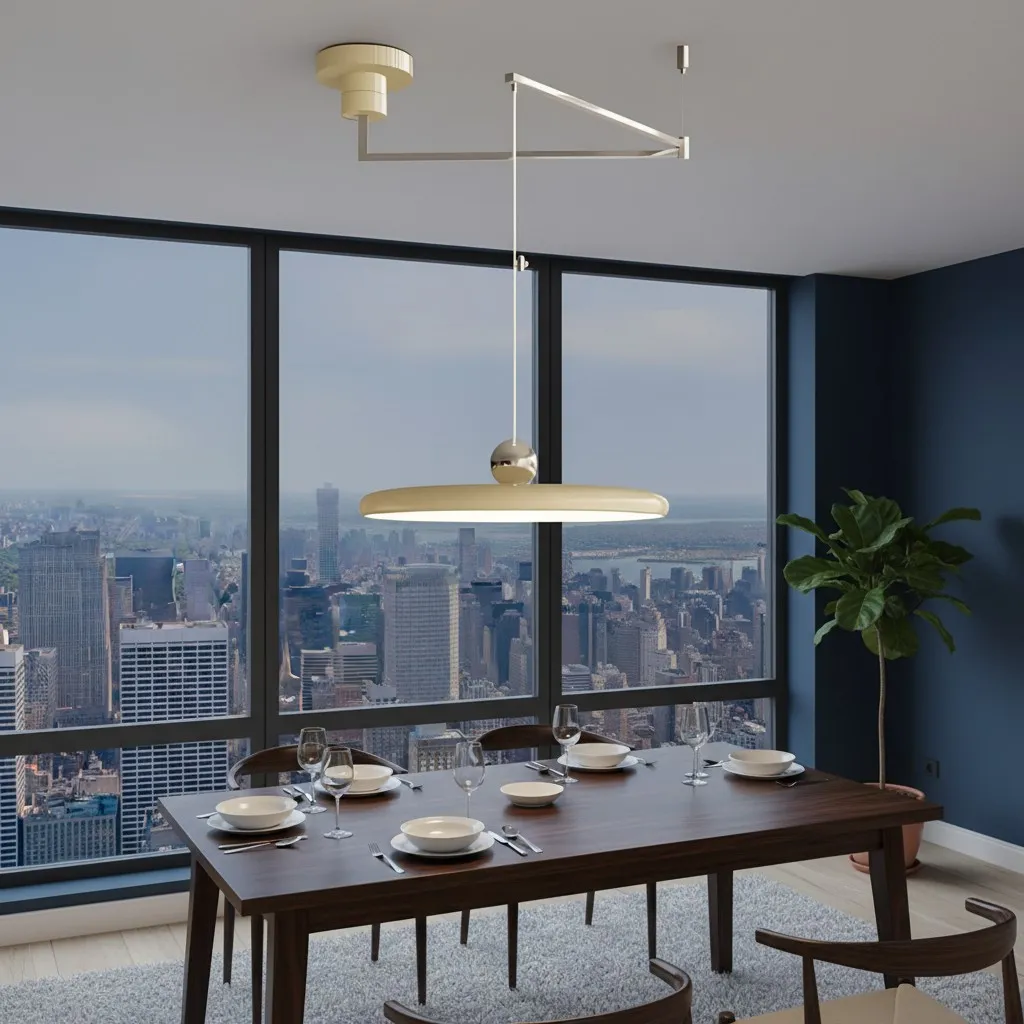
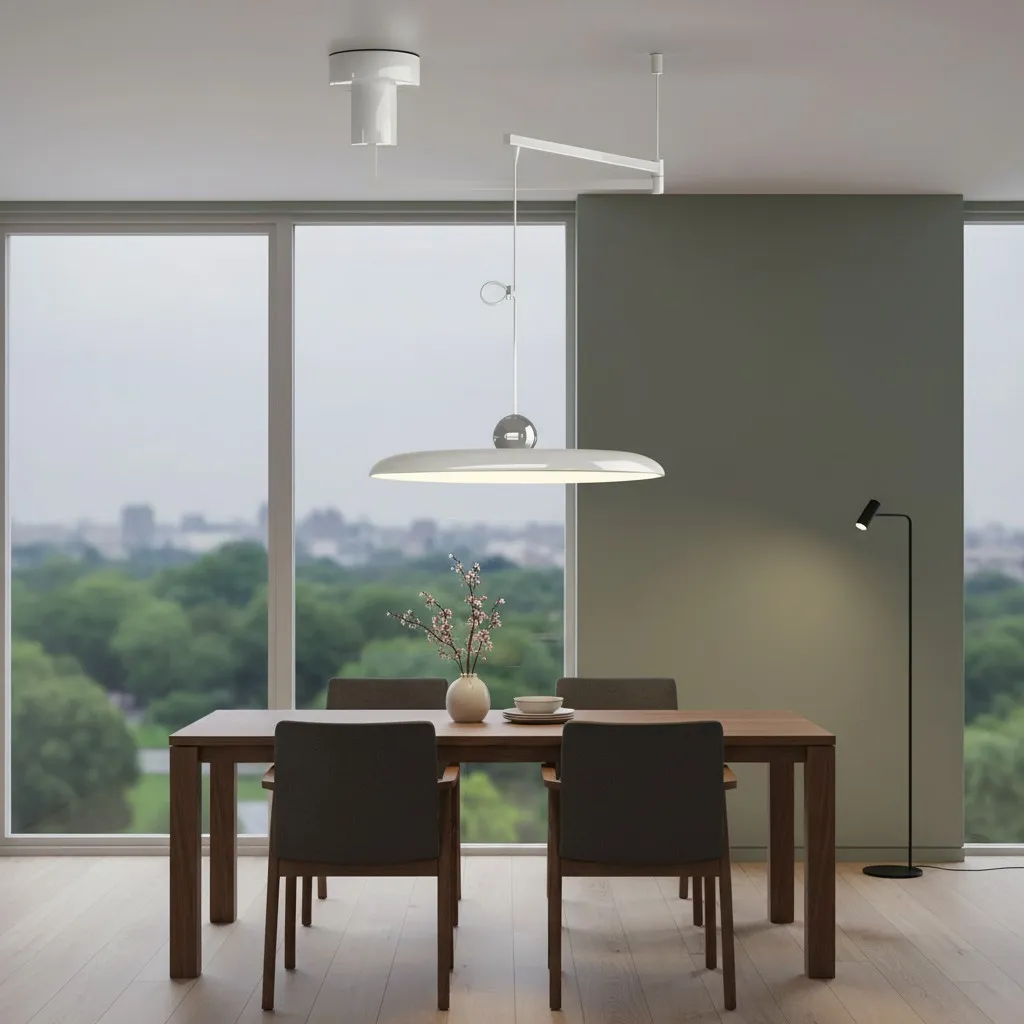
This type is useful when the room changes. A table may extend for guests, move slightly for better chair clearance, or double as a desk during the day. In those cases, the best light position is not always the original wiring point. A swing arm pendant gives the room some forgiveness.
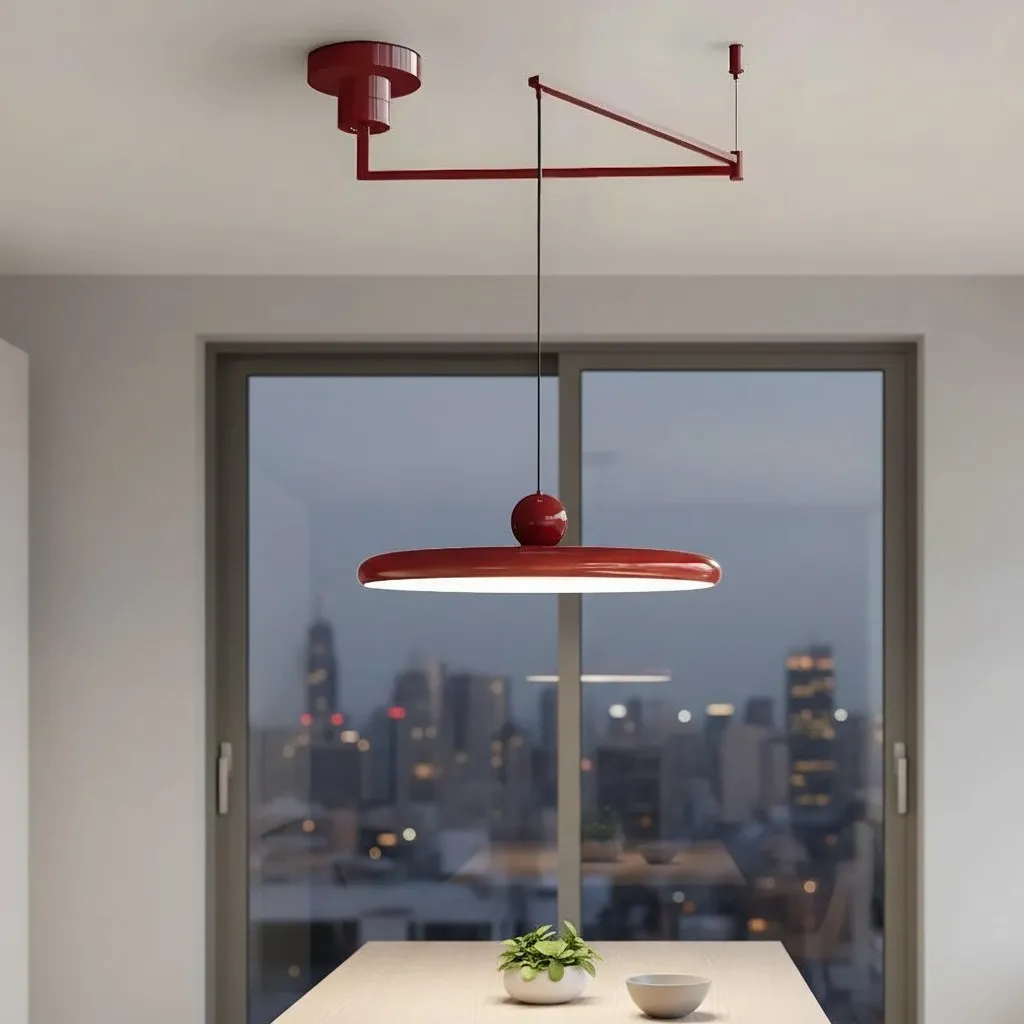
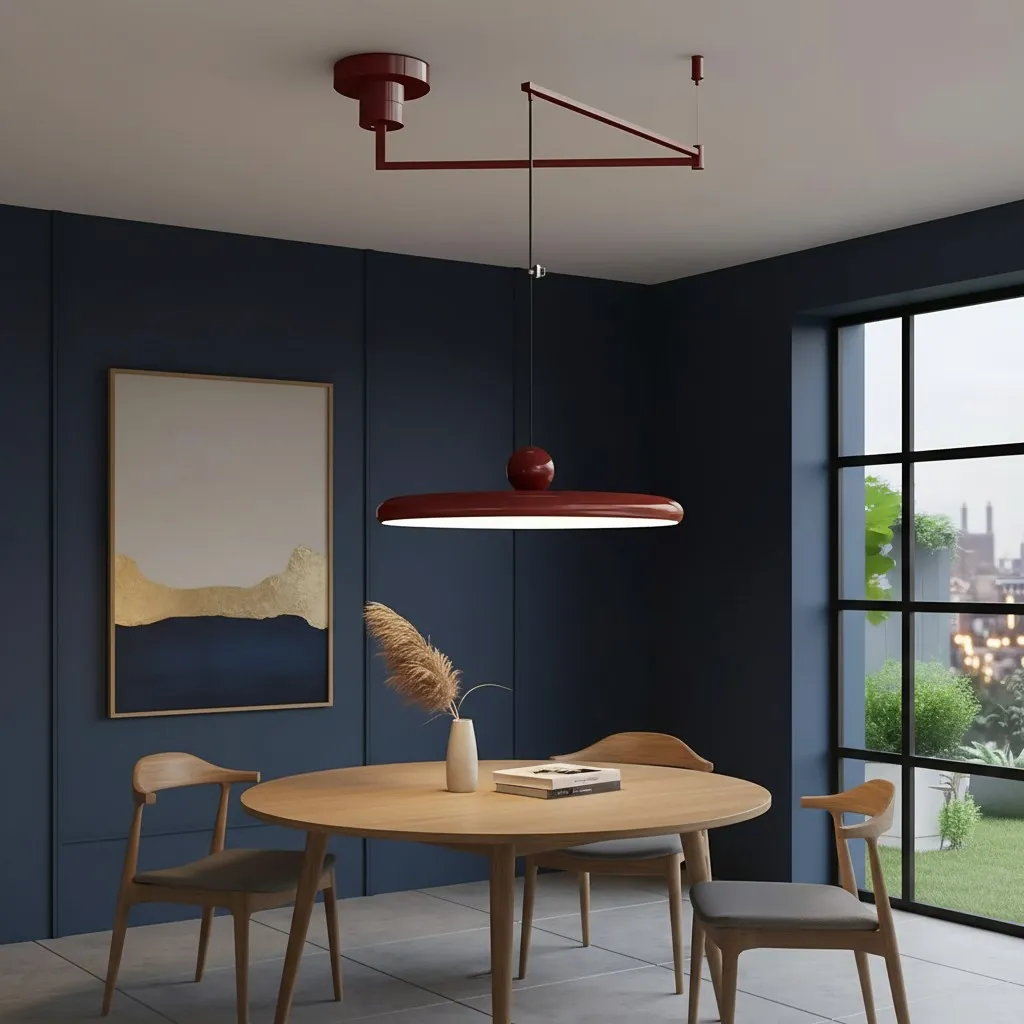
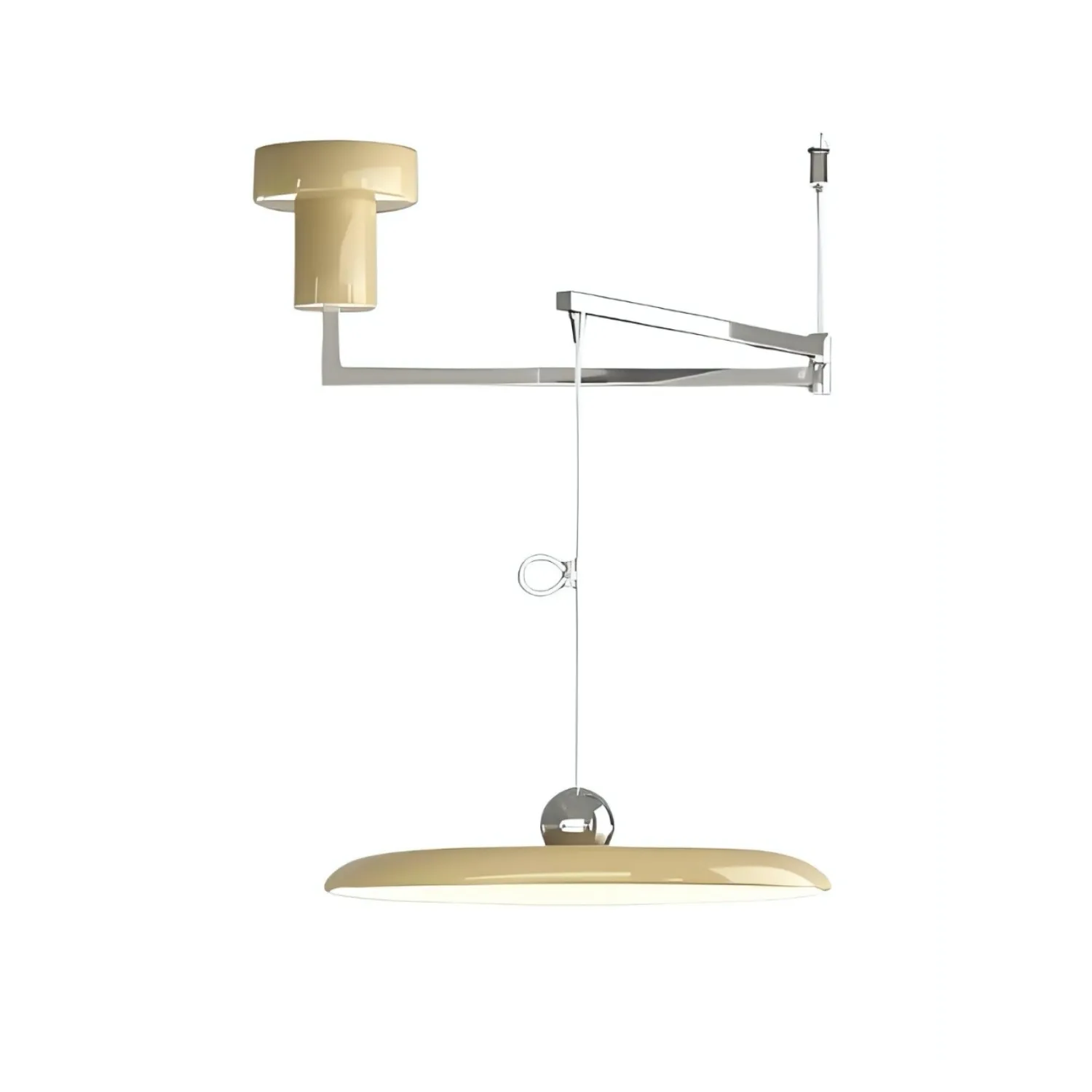
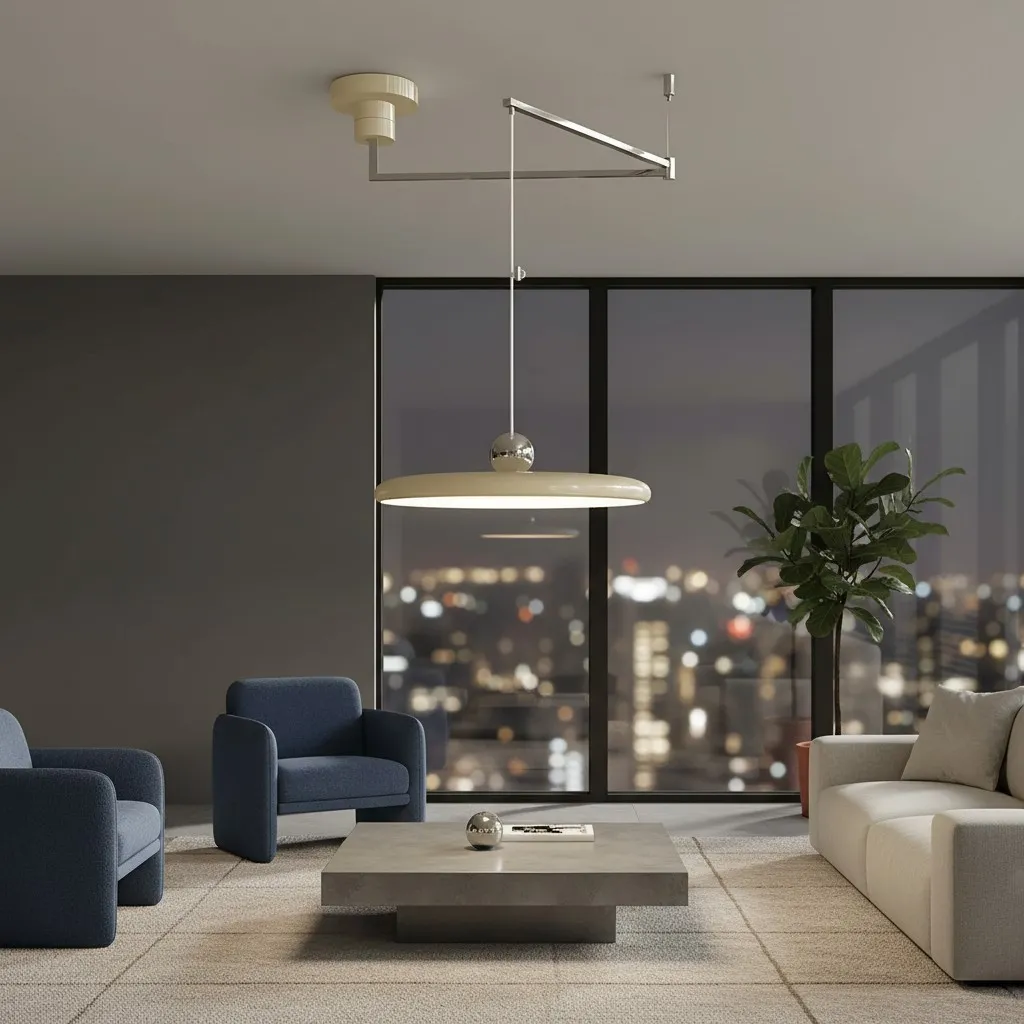
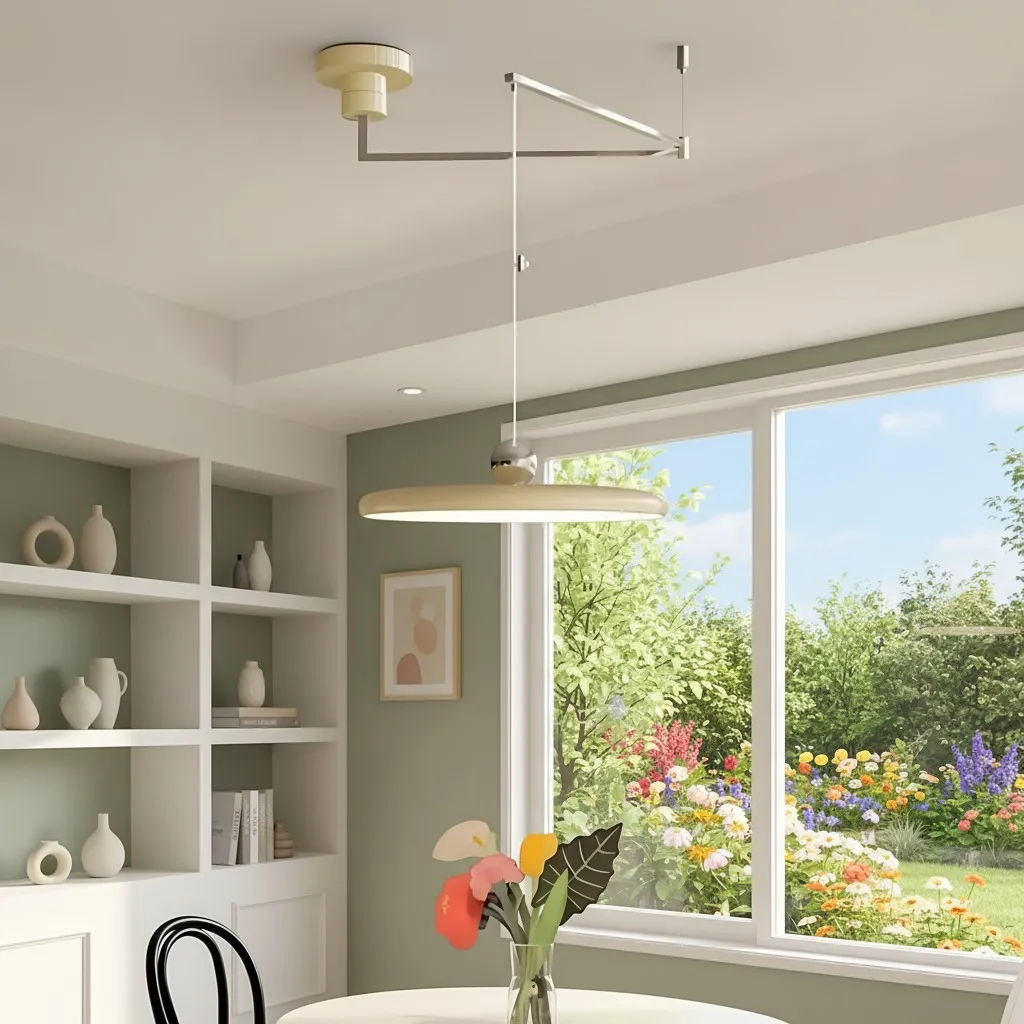
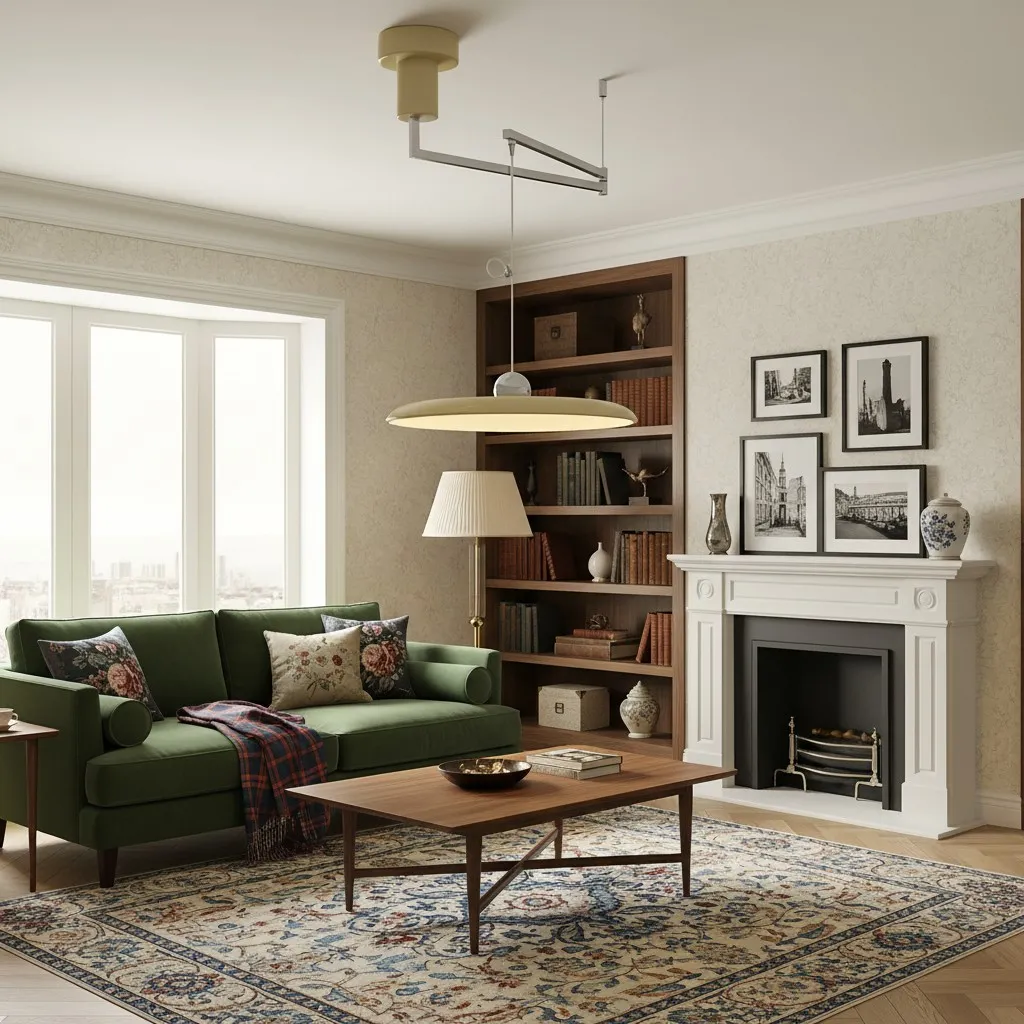
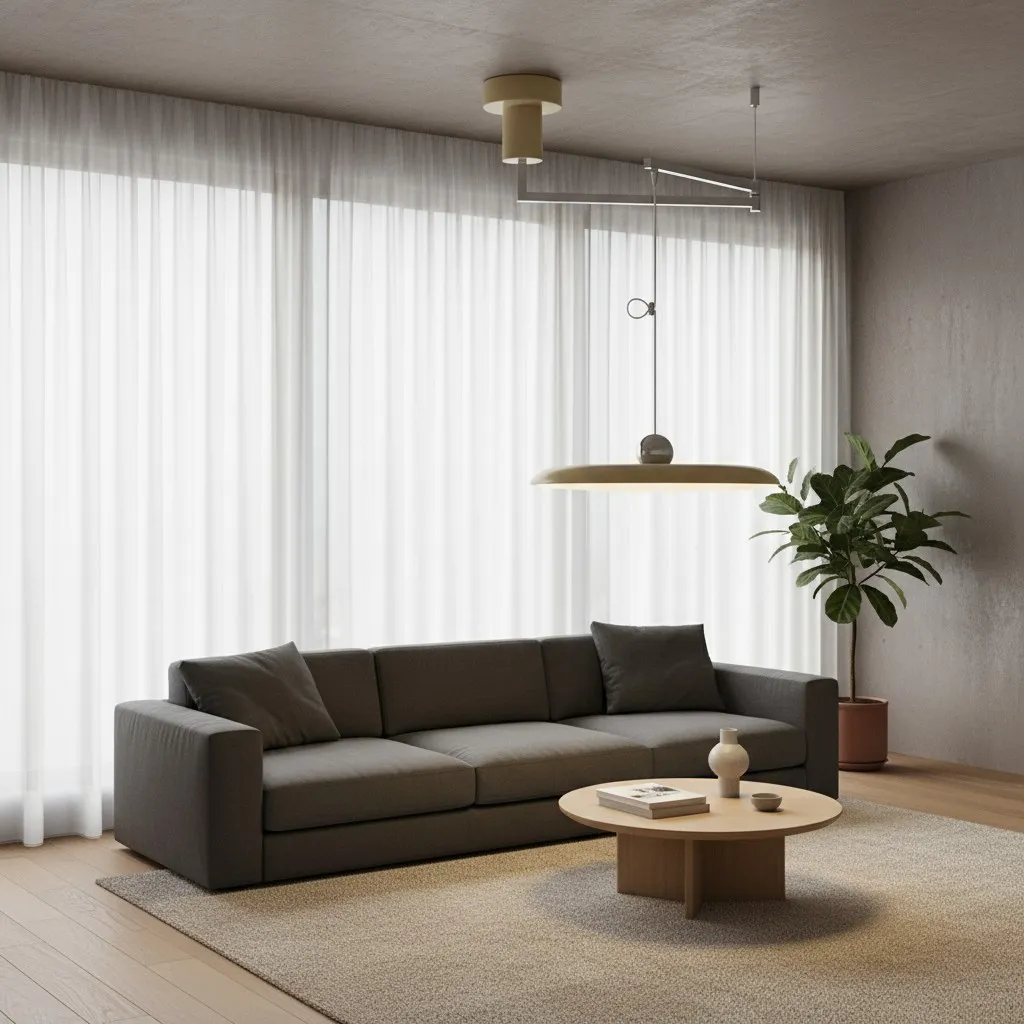
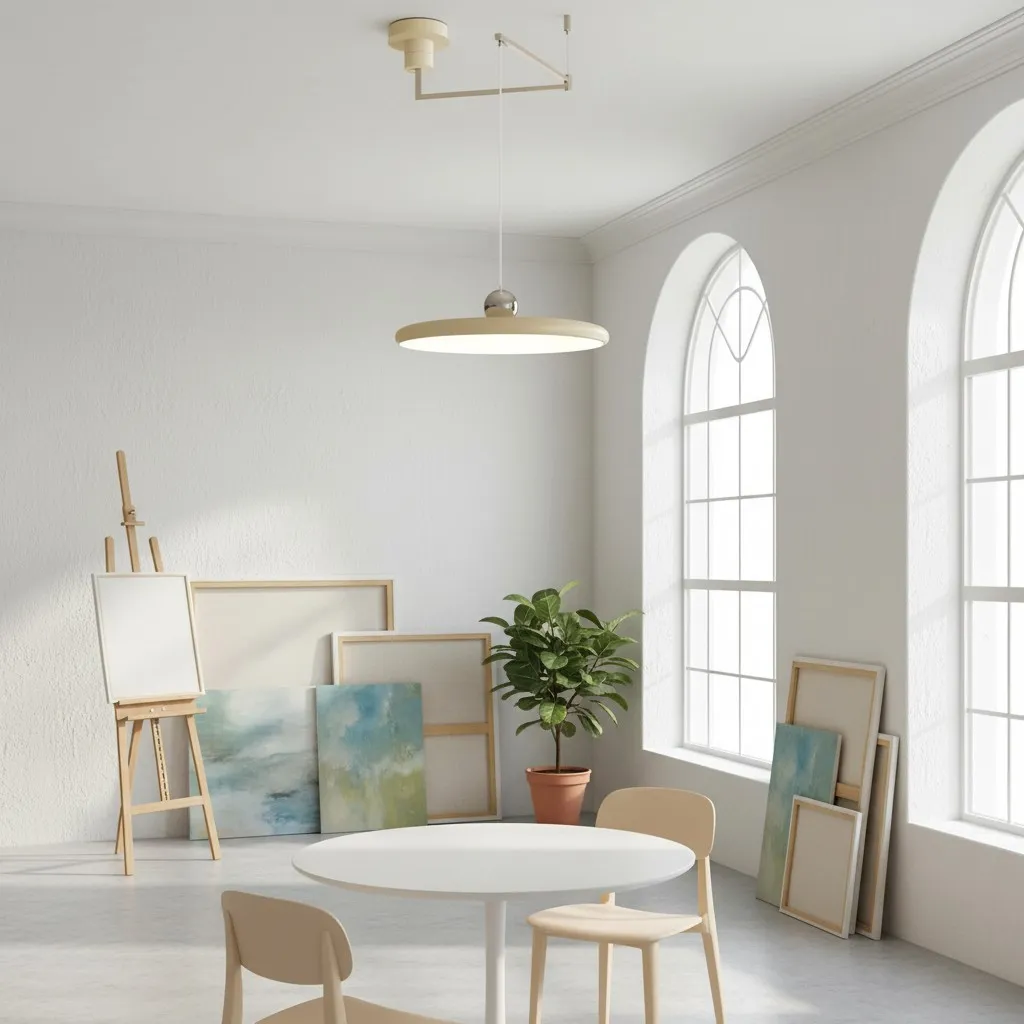
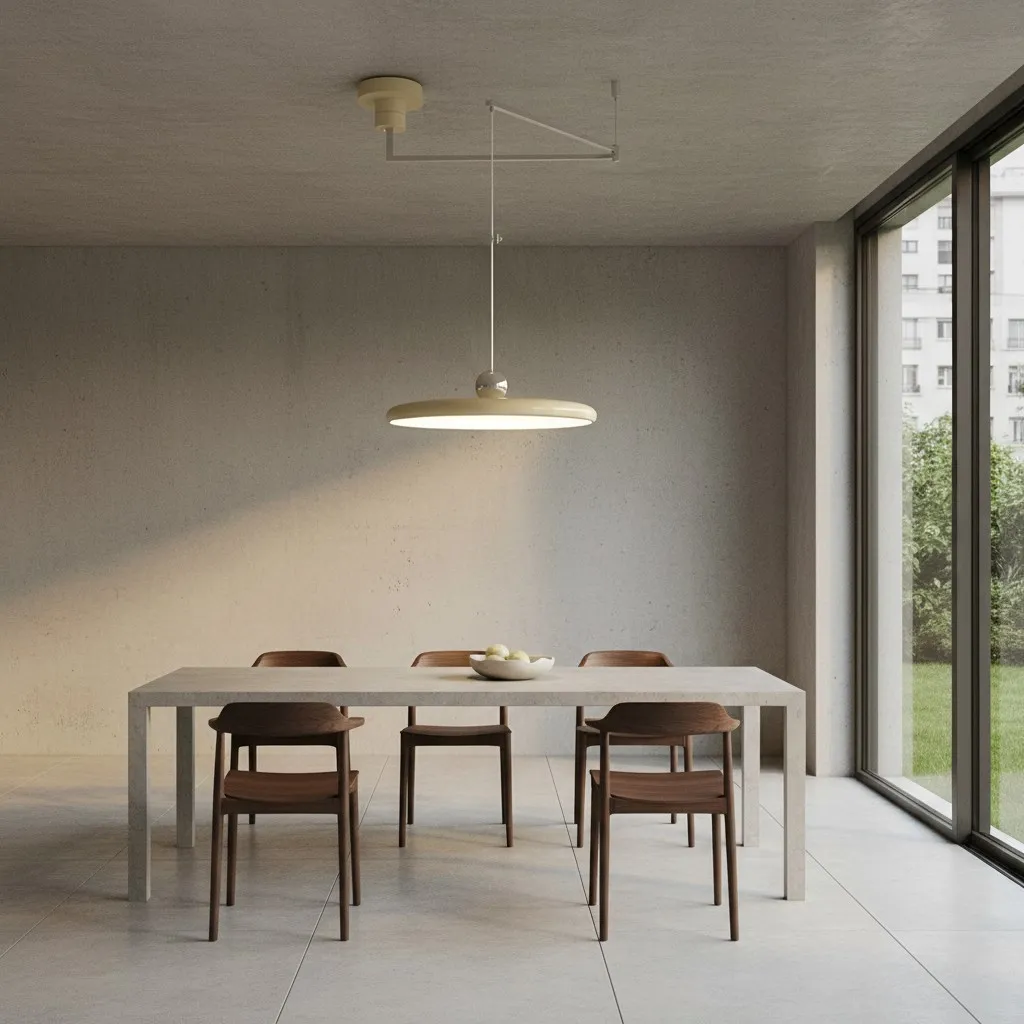
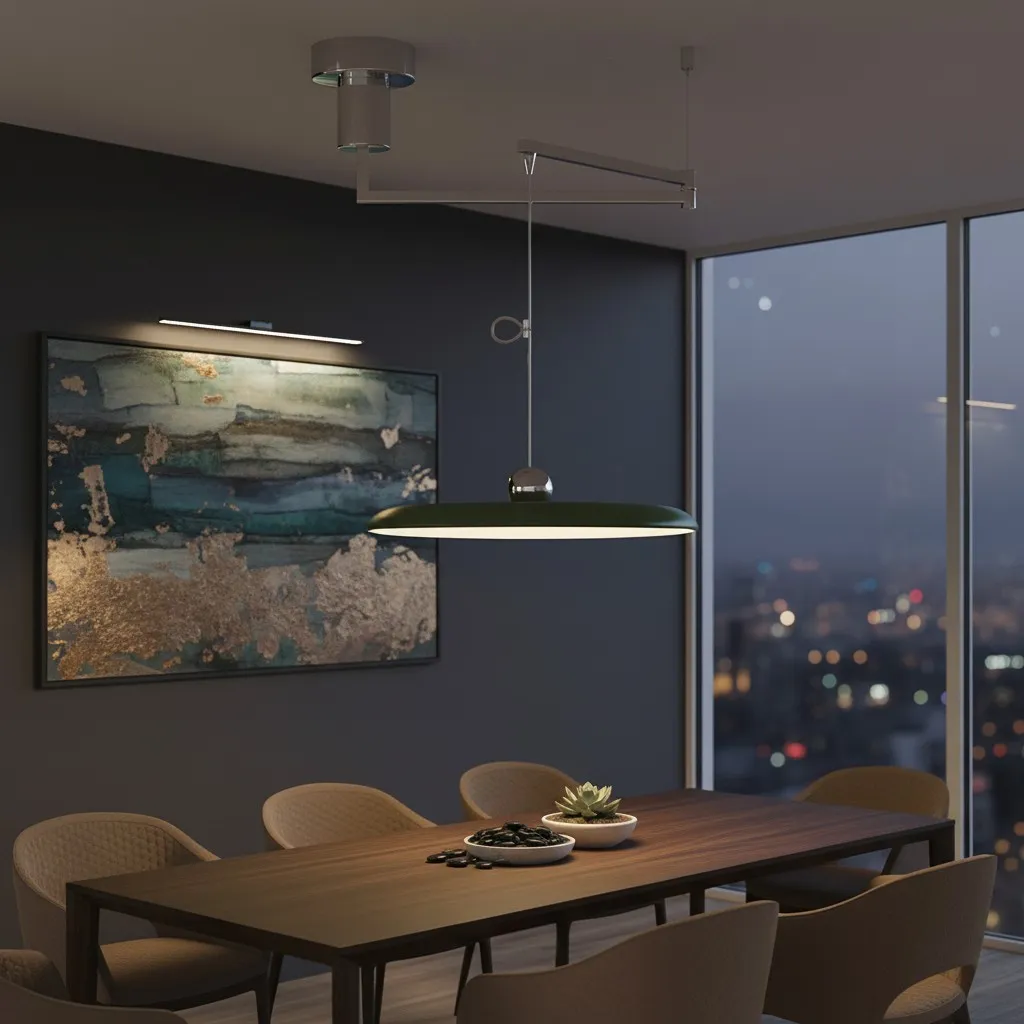
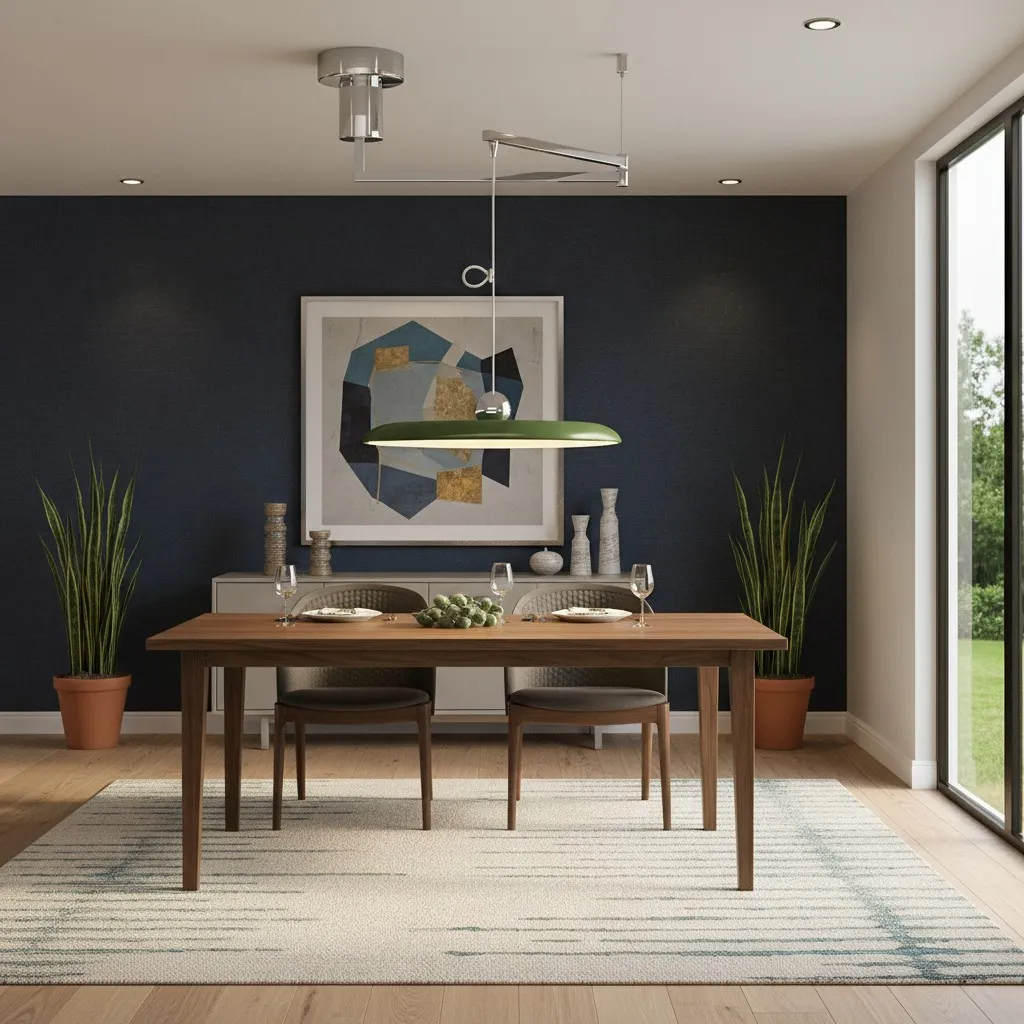
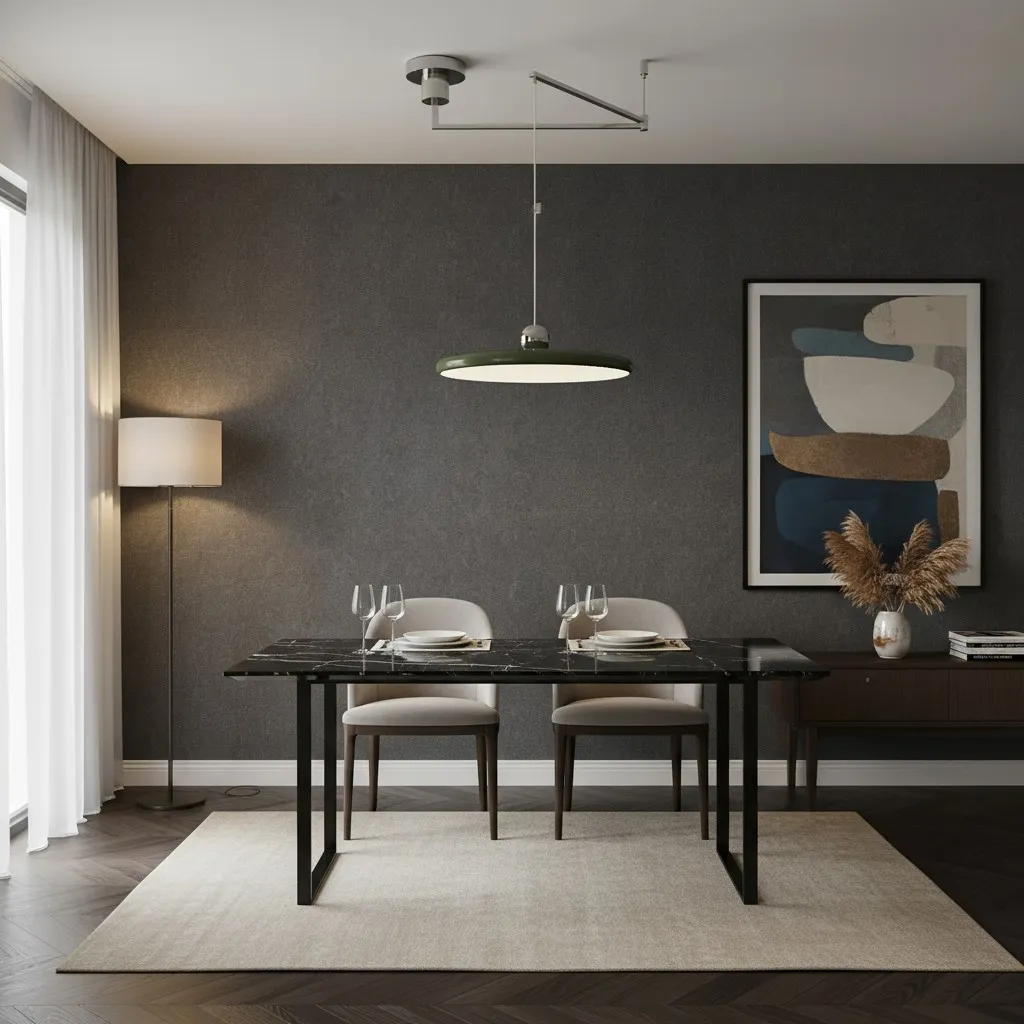
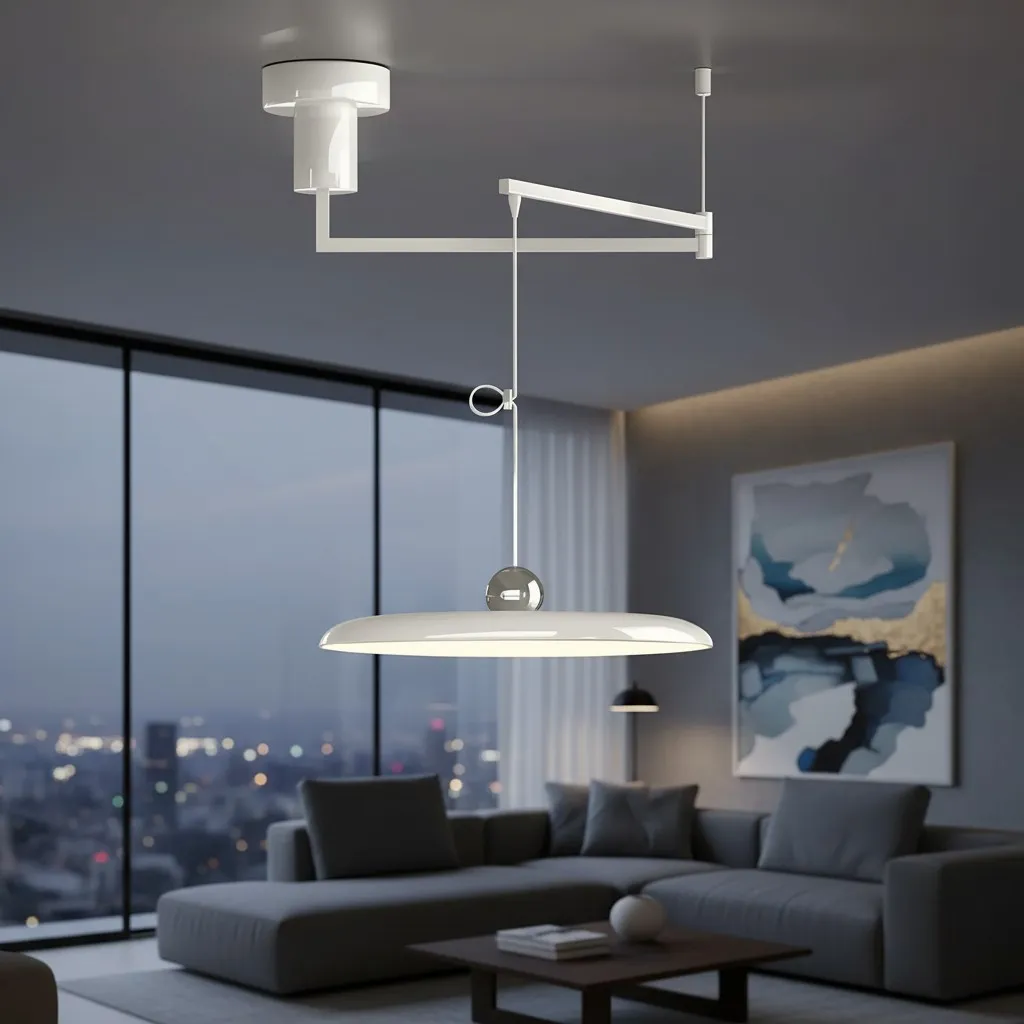
The Swinglo adjustable swing arm disc pendant light suits this need because the arm adds movement while the slim disc keeps the look clean. It is especially useful when you want flexibility without filling the ceiling with several separate fixtures.
What Is a Linear Pendant?
A linear pendant is a long fixture designed to stretch across a dining table, kitchen island, or counter. It works beautifully when the furniture below it is also long, stable, and centred. The room feels ordered because the pendant repeats the line of the table or island.
The limitation is movement. A linear pendant usually wants the furniture to stay exactly where it is. If the dining table shifts, expands, or needs to relate to different zones in an open-plan room, the fixture can feel too committed. The longer the pendant, the more it visually fixes the layout.
Before You Choose: Ask These 5 Questions
- Does the table move? If it extends, shifts, or doubles as a desk, flexibility matters.
- Is the ceiling point perfect? If the outlet is slightly off, a swing arm pendant can help.
- Is the furniture long and fixed? A linear pendant often works best over a stable island or rectangular table.
- Do you need task light or visual order? Swing arms solve placement; linear pendants create symmetry.
- Will the fixture crowd the room? In a small apartment, a compact adjustable pendant may feel lighter than a long bar.
The Differences That Matter in Everyday Homes
The biggest difference is control. A swing arm pendant gives you control over where the light lands. A linear pendant gives you control over visual balance. If your home already has a clean, fixed dining layout, the linear option can look calm and architectural. If the room has to flex, the swing arm is usually more practical.
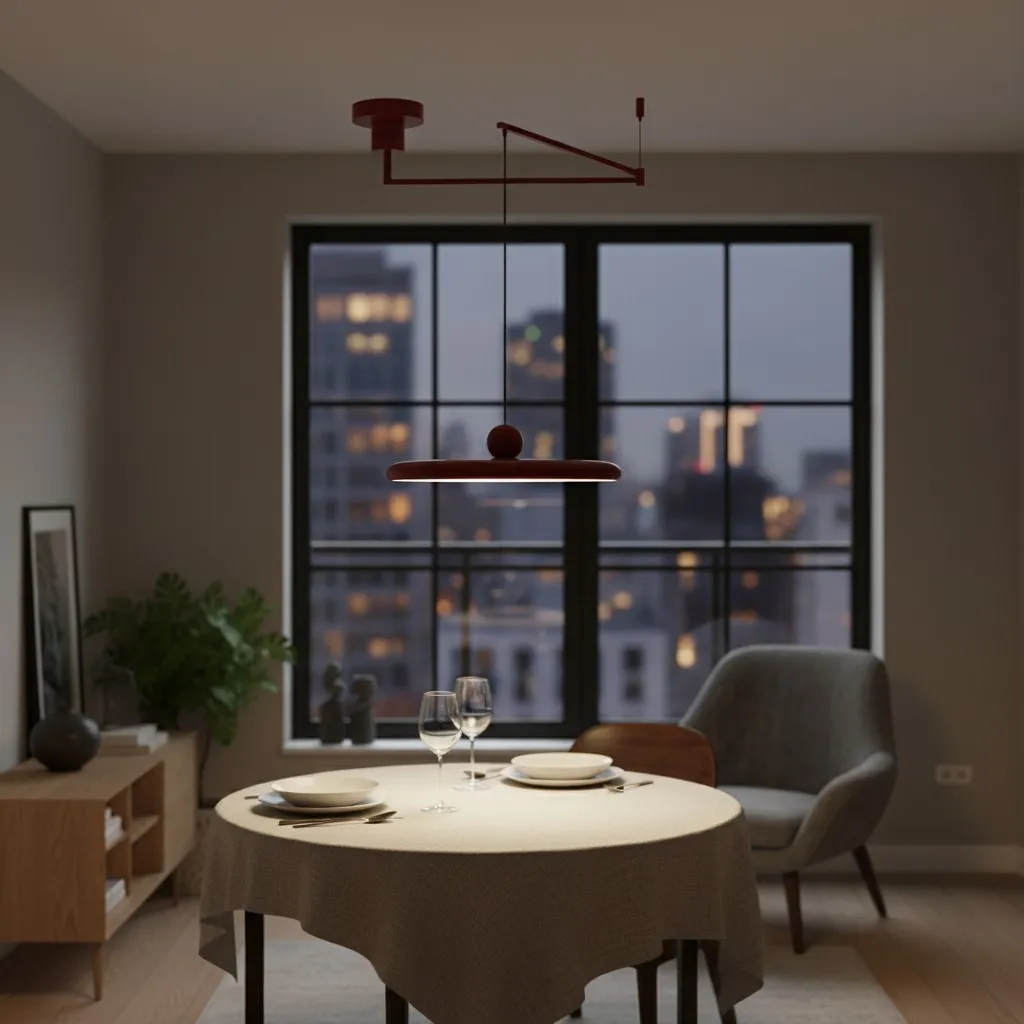
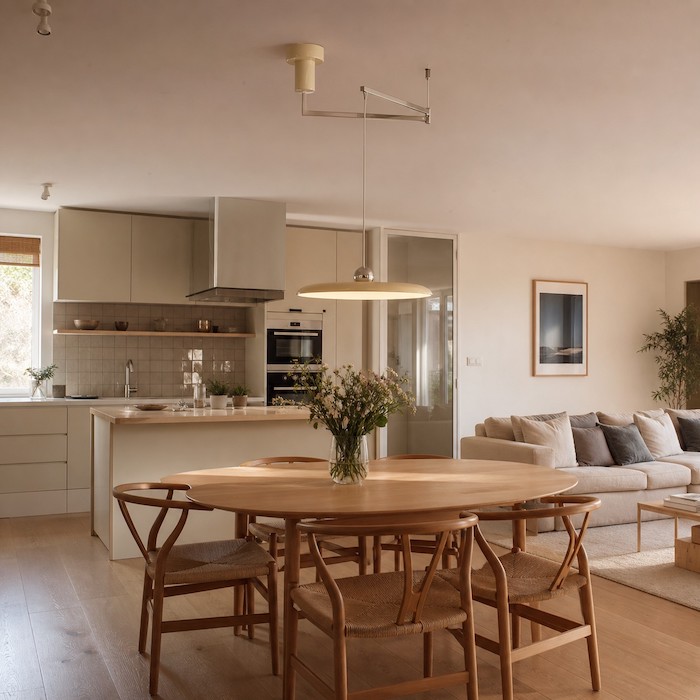
Think about a dining table near a kitchen. A linear pendant may look perfect when the table is centred, but it can feel awkward when chairs move, guests arrive, or the table shifts closer to the wall. A swing arm pendant can respond to these small changes without making the whole room feel rearranged.
Height and proportion still matter. Many dining and island pendants start around 75 to 90 cm above the tabletop or counter, then adjust for shade size, ceiling height, and glare. For Swinglo, the 40 cm option suits compact tables, breakfast corners, and smaller open-plan zones. The 50 cm option has more presence over a wider table or island.
Choose a Swing Arm Pendant If...
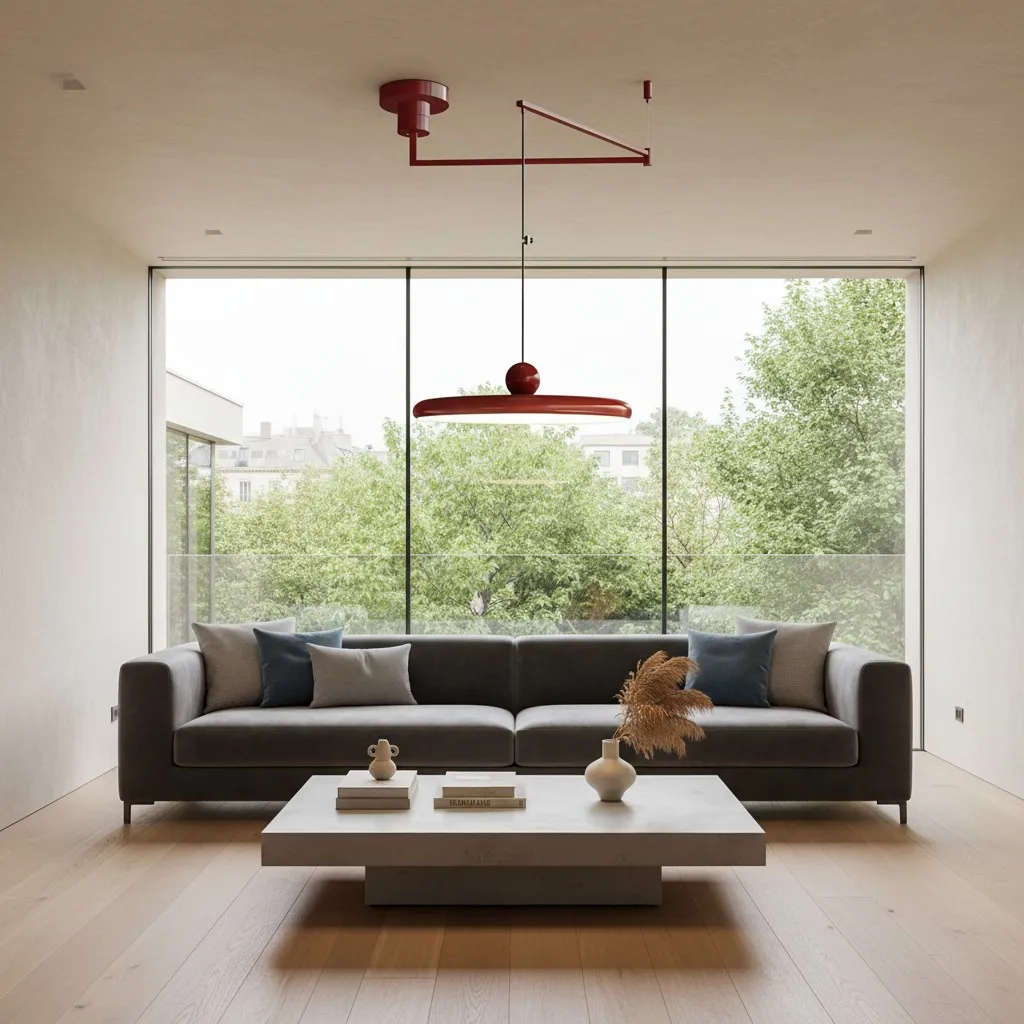
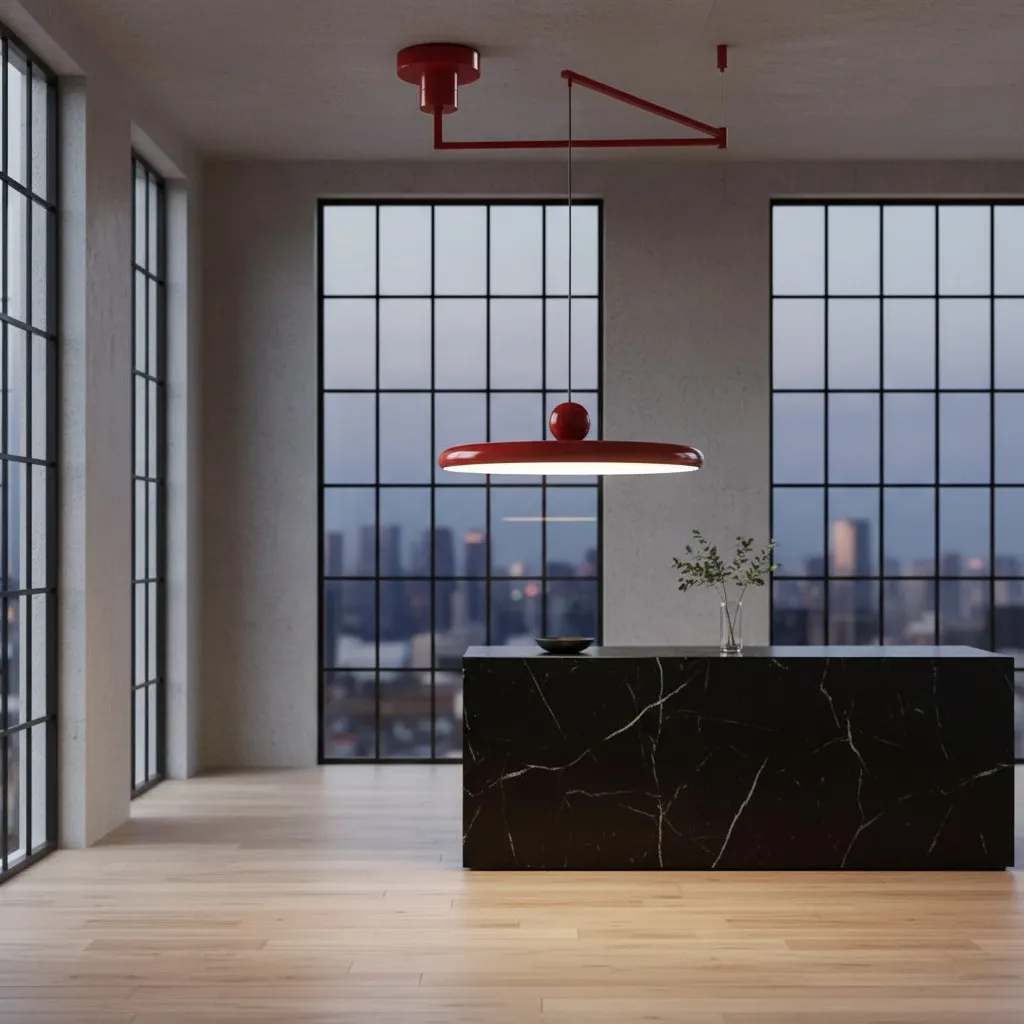
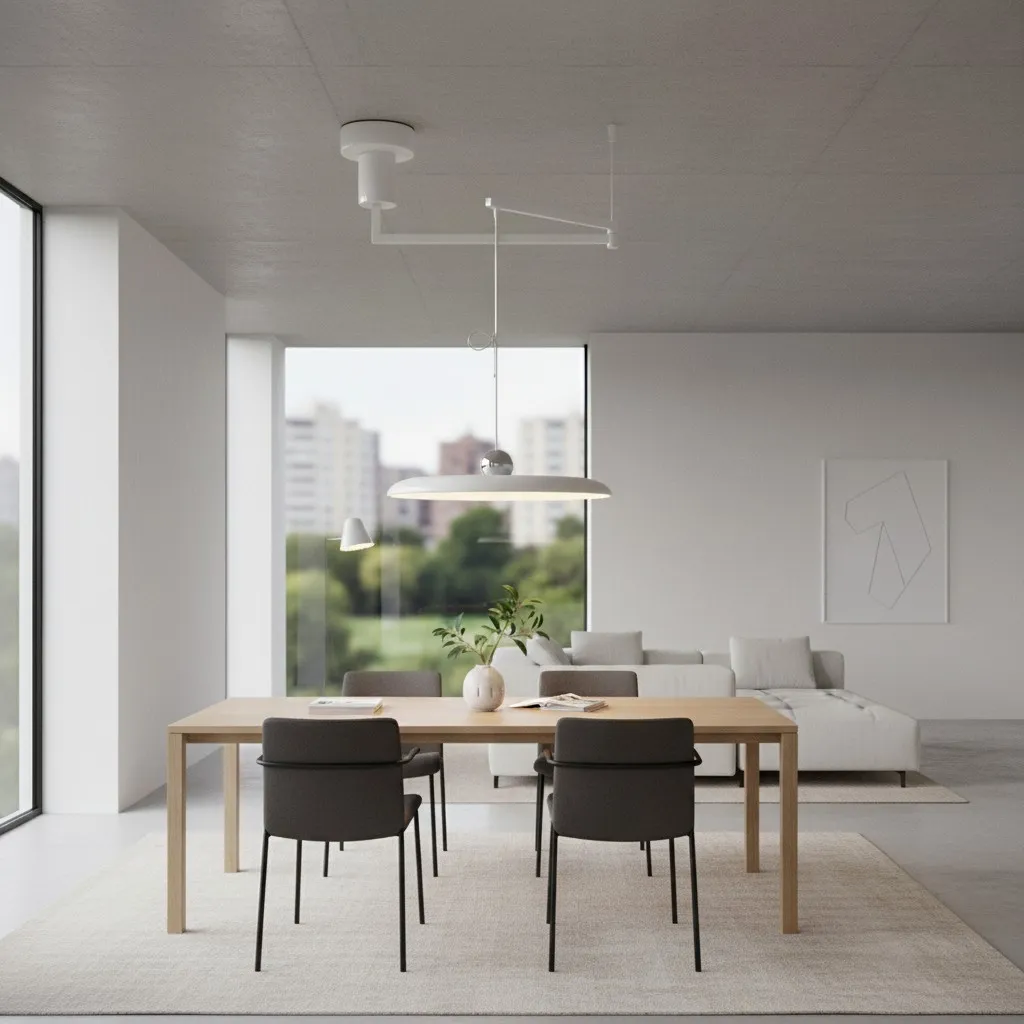
Choose a swing arm pendant if the room needs flexibility more than strict symmetry. It is a good fit for apartments, open-plan homes, dining tables that extend, kitchen islands used for several tasks, and rooms where the ceiling point is close but not perfectly centred.
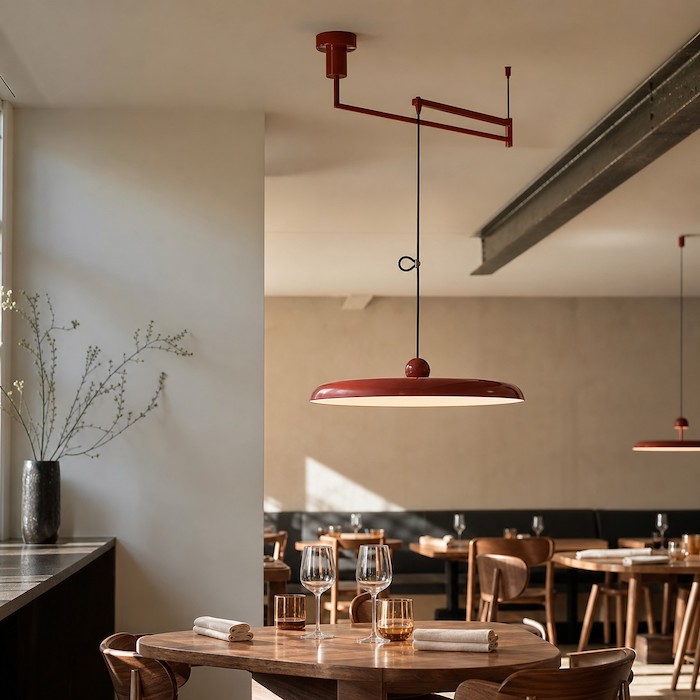
This option also works well when you want a smaller fixture to do more. The disc shape gives a clean focal point, while the arm adds function. If you like minimal interiors but still need practical adjustment, the Swinglo pendant light is the more adaptable choice.
Choose a Linear Pendant If...
Choose a linear pendant if your table or island has a stable position and the room benefits from one strong horizontal line. It can be excellent over a long kitchen island, a rectangular dining table that never moves, or a room where symmetry is part of the design.
A linear pendant is less ideal when the dining space keeps changing. If the table also works as a desk, serving surface, homework zone, or social gathering spot, a more adjustable fixture may support daily life better. For that lifestyle angle, the next article, How One Pendant Light Can Adapt to Dining, Working and Entertaining Throughout the Day, should continue the story.
Room-by-Room Recommendation
- Small dining corner: choose a swing arm pendant if the table needs breathing room.
- Long kitchen island: choose a linear pendant if the island is fixed and needs even coverage.
- Open-plan dining area: choose a swing arm pendant if the table relates to several zones.
- Formal dining room: choose a linear pendant if symmetry is central to the look.
- Multi-use table: choose a swing arm pendant so the light can follow meals, work, and guests.
Final Recommendation
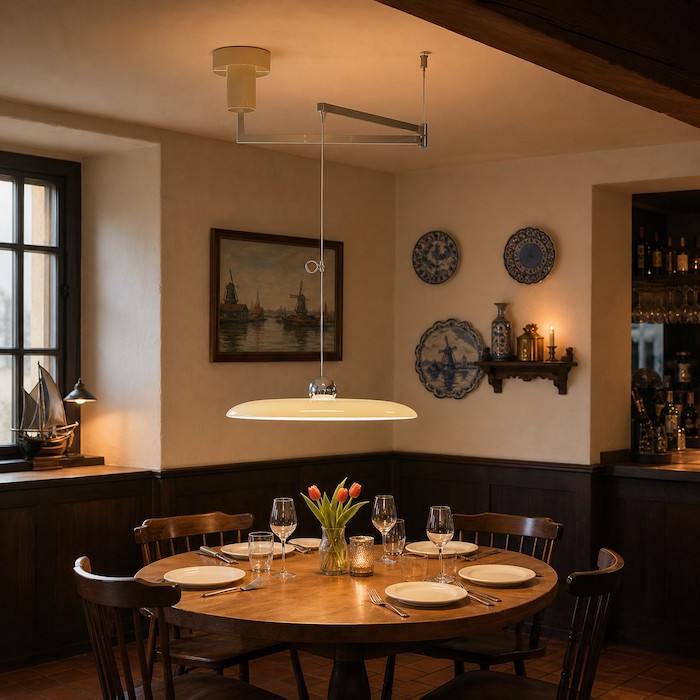
For a flexible dining space, choose a swing arm pendant. It is the better choice when the ceiling point is not perfect, the table moves, or one room has to support meals, work, and entertaining. It lets the light follow the activity instead of forcing the activity to follow the light.
For a formal or fixed layout, choose a linear pendant. It is strongest when the furniture is long, stable, and centred. The final decision is simple: if your room changes, choose movement; if your room stays still, choose the line.
For homes that need both a clean look and practical flexibility, the Swinglo modern adjustable swing arm disc pendant light is a strong fit because it combines a minimal disc shade with adjustable placement.
FAQ
Is a swing arm pendant better than a linear pendant?
It is better when the room needs flexible light placement. A linear pendant is better when the table or island is fixed and the design depends on symmetry.
Can a swing arm pendant work over a dining table?
Yes. It works especially well when the ceiling point and table position are not perfectly aligned, or when the table changes size for guests.
Are linear pendants good for kitchen islands?
Yes. A linear pendant is often a strong choice over a fixed kitchen island because it follows the island shape and can give the space a clean visual anchor.
Which pendant is better for an open-plan dining room?
A swing arm pendant is often better if the table relates to the kitchen, sofa area, or walkway. It gives more freedom than a long fixed fixture.
Which option is better for small apartments?
A swing arm pendant is often better because one fixture can adapt to more than one activity zone without visually crowding the ceiling.
How high should these pendants hang over a table or island?
A common starting point is around 75 to 90 cm above the tabletop or counter. Adjust the height so the light feels useful without blocking sightlines or causing glare.
What size should I choose for Swinglo?
Choose 40 cm for compact dining areas, breakfast corners, and small apartments. Choose 50 cm for wider tables, kitchen islands, or more open rooms.
Can I use a swing arm pendant instead of rewiring?
Sometimes. If the ceiling point is only moderately off, an adjustable arm can bring the light closer to the table. If the outlet is far away, professional rewiring may still be the better solution.