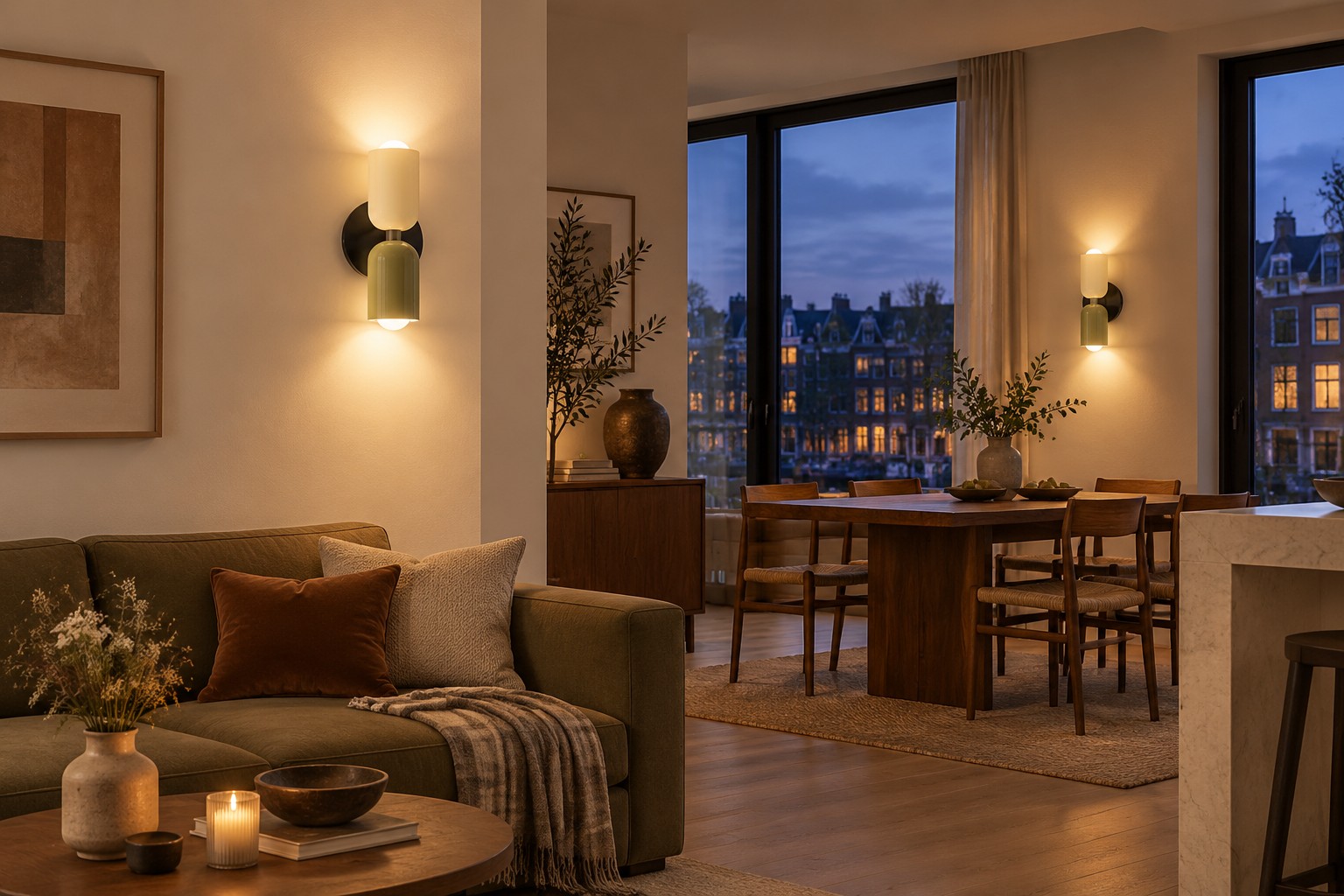
Learning how to use lighting in interior design starts with the room after sunset. When a finished space still feels flat, another vase or print may only add clutter; first find out whether the room is missing useful light, visual depth, or a clear focal point.
Before You Add an Object, Run a Night Test
Wait until the room is used most often, then switch on only the lights you normally use. Stand at the doorway, sit in the main seat, and walk the usual route. Notice where your eye lands, which wall disappears, and whether a table, sofa, or artwork has enough light to feel intentional.
If the room has plenty of objects but no visual resting point, the problem is usually hierarchy rather than emptiness. If faces are hard to see, the issue is functional. If the ceiling is bright while the walls look grey, the room lacks vertical light. These are three different problems, and buying decor cannot solve all of them.
Quick decision: If the room feels unfinished only at night, test the lighting before shopping for accessories.
For the next step after this audit, Designers Are Creating Atmosphere Before Decoration explains how to turn a desired mood into a practical lighting brief rather than a vague style label.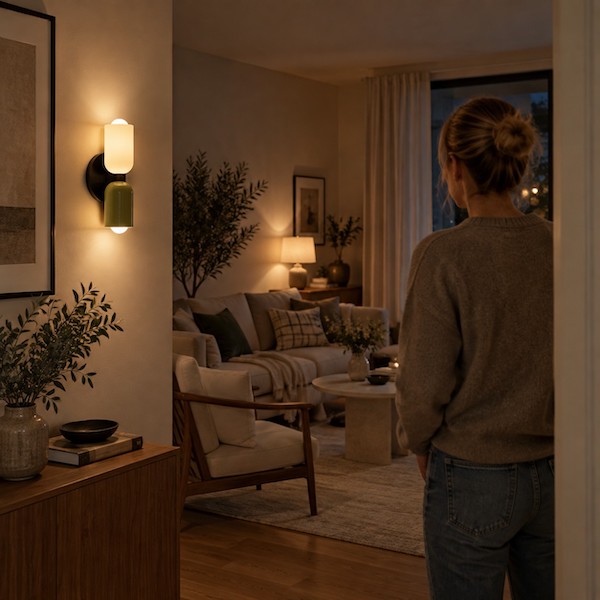
How to Use Lighting in Interior Design: Start with Surfaces
Good interior lighting does not begin with a fixture catalogue. It begins with surfaces. Walls establish depth, tables support activity, paths guide movement, and selected objects provide emphasis. Give each important surface one job before deciding how many lights the room needs.
A blank wall may need a controlled wash of light rather than another framed print. A dining table may need focused illumination rather than a larger centrepiece. A dim route may need a repeated low-level cue rather than a brighter central ceiling light.
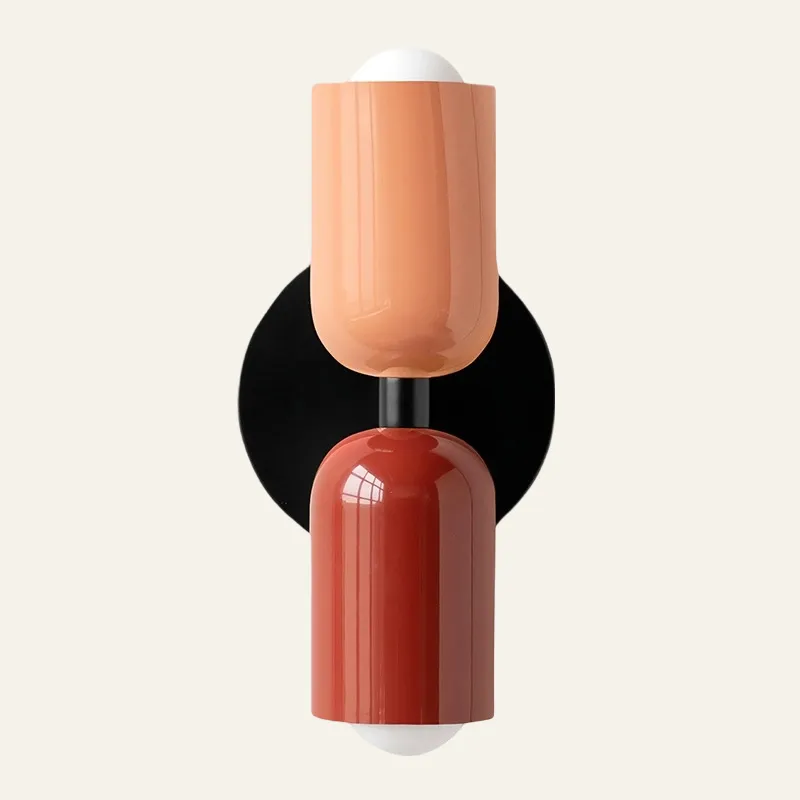
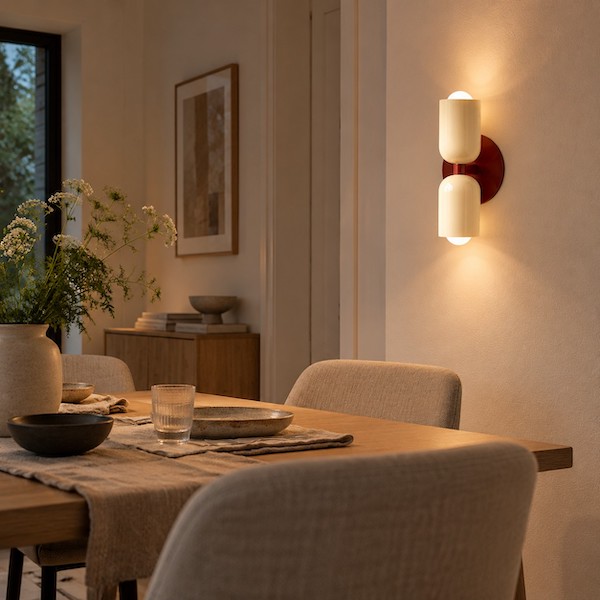
When a vertical plane is the missing layer, the Symra wall sconce for directional wall light is worth considering. Its up-and-down effect adds structure without occupying floor or table space.
Use a Four-Pass Lighting Plan
- Purpose: name the activities that must remain comfortable, such as reading, eating, moving through a hallway, or relaxing without screen glare.
- Surfaces: choose the wall, worktop, table, or artwork that should receive light. Avoid lighting empty air.
- Direction: decide whether the source should point down, spread across a wall, bounce upward, or stay shielded from seated eye level.
- Control: separate lights by purpose so the whole room does not have to operate at one maximum setting.
This sequence makes fixture choice easier because it turns “the room feels wrong” into observable conditions. It also prevents a common mistake seen in homeowner discussions: adding several attractive lamps that all illuminate the same zone while another useful surface stays dark.
When a Wall Sconce Earns Its Place
A wall sconce is useful when floor area is limited, a side table should stay clear, or a tall wall loses definition at night. An up-and-down sconce can make the wall read as part of the architecture, but it is not a substitute for strong task light on a desk or kitchen worktop.
The Symra measures 12 centimetres in diameter and 28 centimetres high. It uses an E27 light source, is rated at 8W, and the product page lists it as non-dimmable. That makes lamp selection and switching strategy important: choose the bulb effect you want from the start and do not promise dimming unless the installed configuration supports it.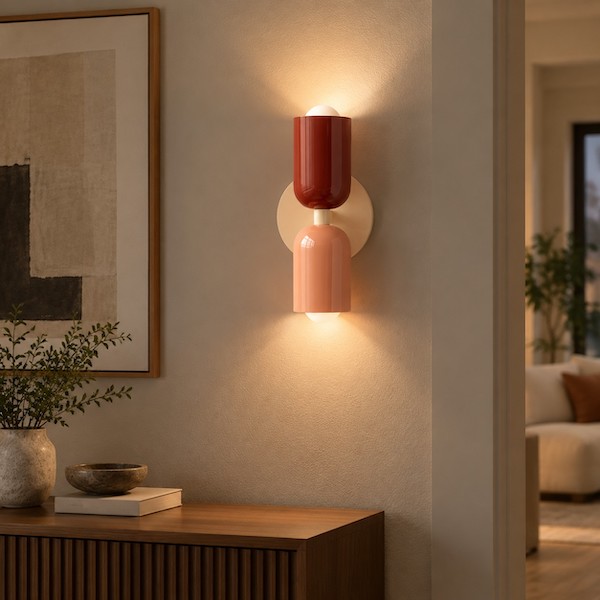
If your test shows that the wall, not the furniture, is the missing layer, review the verified dimensions and available finishes before planning the electrical point.
Check Symra dimensions and finishesMake the Decision Room by Room
| Room | Test first | Better lighting move |
|---|---|---|
| Living room | Sit where you watch or talk | Light a side wall so the screen or ceiling lamp is not the only bright point |
| Bedroom | Look from pillow height | Keep the source out of direct view and preserve a clear bedside surface |
| Hallway | Walk the route at night | Use repeated wall light to support direction without flooding the ceiling |
| Dining area | Sit at every chair | Keep the table readable and give the surrounding wall a quieter supporting glow |
Layer Jobs Instead of Repeating Brightness
The familiar three-lighting shortcut groups light into ambient, task, and accent roles. It is useful, but a home does not need one fixture for every label. A wall sconce may provide background light and accent at the same time; a pendant may provide both focus and part of the ambient level.
The practical rule is simpler: do not ask every light to do the same job. Keep wall light, activity light, and circulation light independently useful. For a complete method, Layered Light Is the Future of Interior Design shows how to map those roles across a room without making it uniformly bright.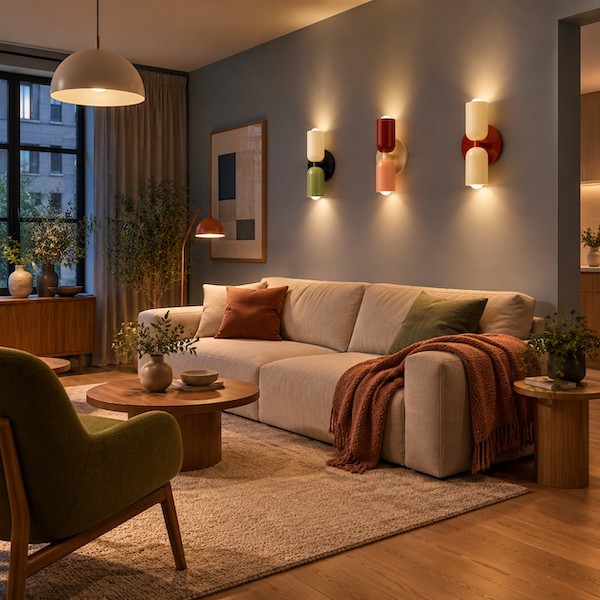
Five Mistakes That Lead to More Clutter
- Buying an object to fill a dark corner before checking whether that corner needs light at all.
- Using one powerful ceiling light for circulation, conversation, reading, and atmosphere.
- Choosing a decorative lamp before checking scale from the doorway and normal seated positions.
- Aiming exposed light toward eyes, mirrors, televisions, or glossy tabletops.
- Adding two fixtures that illuminate the same surface while leaving walls and paths visually disconnected.
Try a 48-Hour Pause Before Buying More Decor
After the night test, make one reversible change: move a lamp, switch off the harshest source, or temporarily aim light at the missing wall. Live with that change for two evenings. If the room feels calmer and more complete, you have evidence that lighting should come before another accessory.
If nothing improves, the problem may be furniture scale, colour balance, storage, or circulation instead. Lighting is powerful, but it should not be used to explain every design problem. The pause protects both the room and the budget.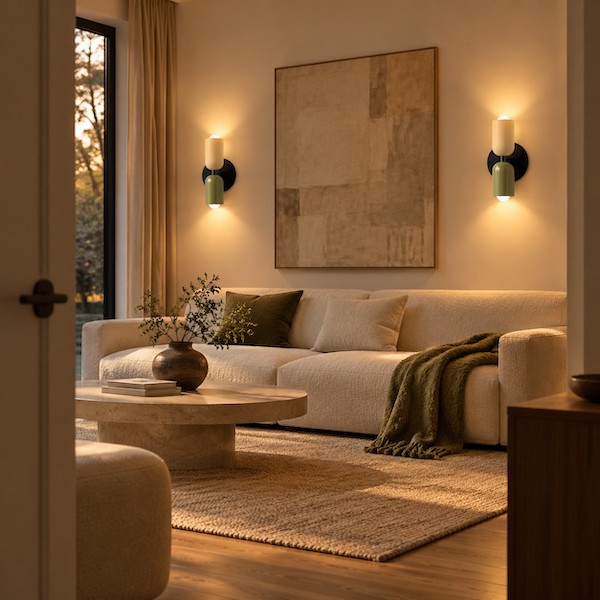
Lighting Design FAQs
What is the three-lighting rule?
It usually means combining ambient light for general visibility, task light for activities, and accent light for emphasis. Treat these as jobs, not a requirement to buy three new fixtures.
What are the basic rules for lighting a room?
Light the activity surfaces, keep glare out of normal sightlines, add vertical light where walls disappear, and control different jobs separately whenever possible.
Should lighting be chosen before decor?
Plan the main lighting roles first. Decor can then reinforce a room that already works after dark instead of hiding an unresolved visibility or hierarchy problem.
Can a wall sconce replace a ceiling light?
It can support atmosphere, circulation, or a vertical layer, but one wall sconce is rarely the only source needed for demanding tasks or a large room.
How do I know if a fixture is too large?
Check it from the doorway and the nearest seated position. It should not block movement, dominate a small wall, or place the bright source directly in the line of sight.