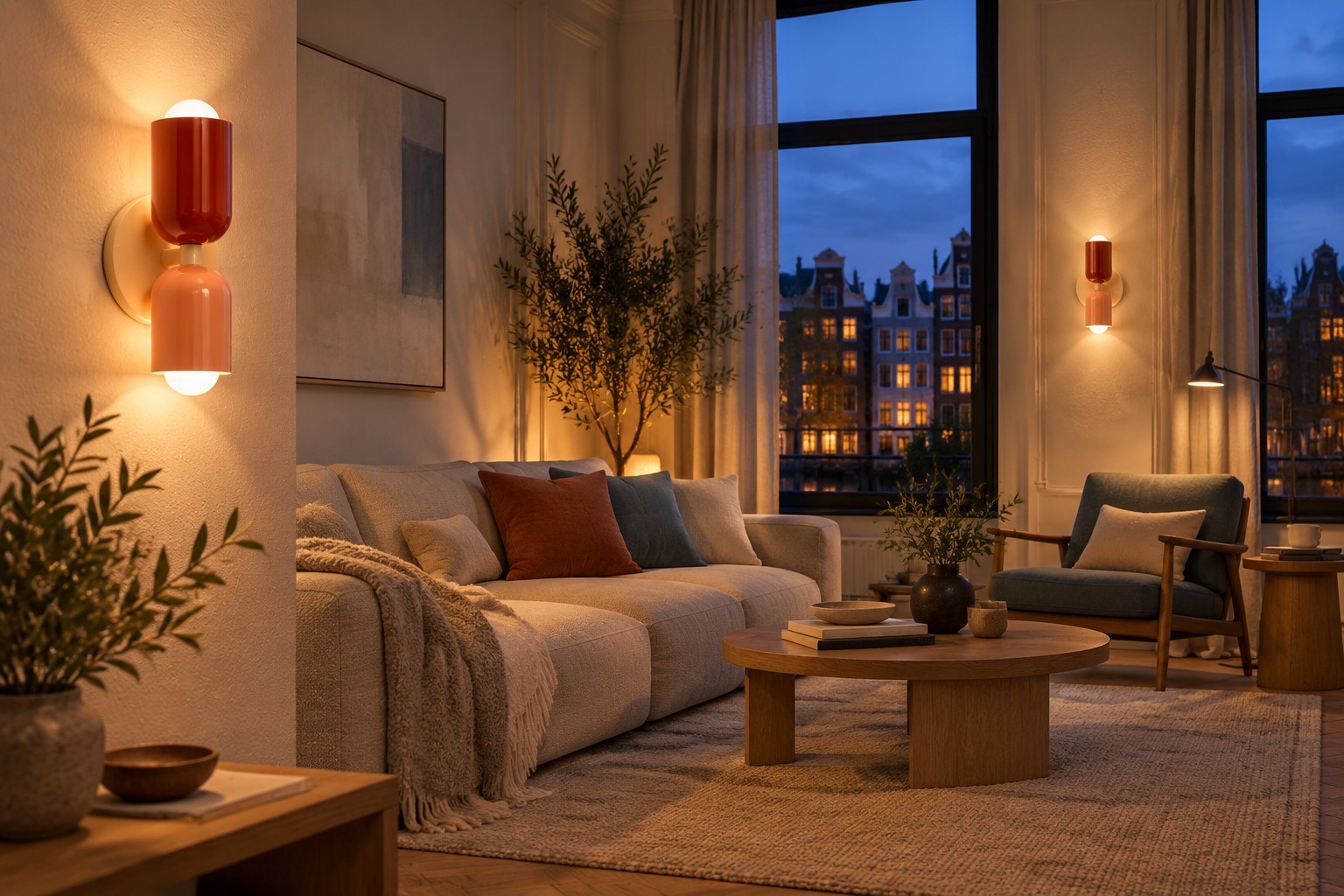
Learning how to create atmosphere with lighting begins with what people do, where they look, and how the evening unfolds. Atmosphere is not a filter added at the end; it is a sequence that can be planned before the styling begins.
How to Create Atmosphere with Lighting: Write a Brief
Replace broad words such as “cozy” or “luxurious” with a sentence that describes behaviour. Try: “The room should feel calm enough for conversation, with a readable table and no visible glare from the sofa.” This gives every lighting decision a test.
A useful brief names the activity, the important surface, the viewing position, and the unwanted effect. “Warm and relaxing” is difficult to verify. “A gentle wall glow behind the seating area, with enough local light to read” is specific enough to design.
If you are still deciding whether lighting or another accessory deserves the budget, read Stop Buying More Decor. Start Designing with Light. Its night-test method helps identify whether the room is missing light, hierarchy, or something else entirely.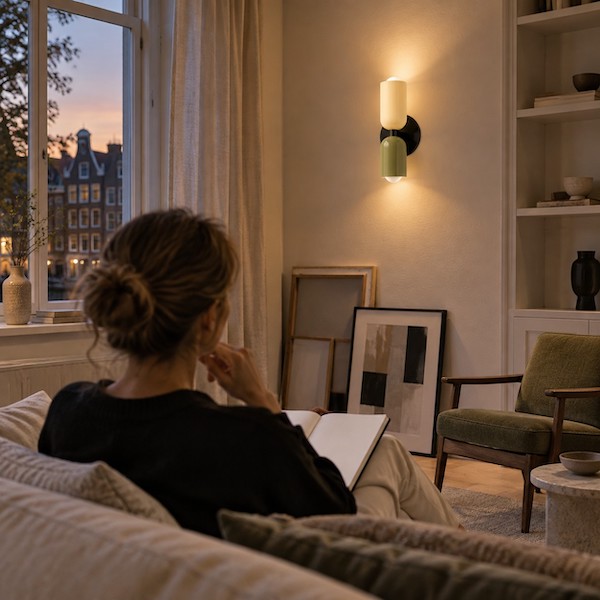
Observe the Room at Three Real Moments
Atmosphere changes with use, so inspect the room when you arrive home, during the main activity, and when you are winding down. At each moment, note the brightest visible source, the darkest important surface, and the action that still feels difficult.
This prevents a common buying mistake: choosing a beautiful fixture from a daylight photograph and assuming it will create the same experience at night. The fixture, wall colour, bulb, viewing angle, and surrounding darkness all affect the result.
Atmosphere improves when the brightest point supports the moment instead of competing with it.
Build Atmosphere on Three Planes
The vertical plane
Walls shape how enclosed or expansive a room feels. A gentle vertical glow can reveal texture, soften the edge of a room, and keep a television or pendant from becoming the only bright object.
The activity plane
Tables, worktops, and reading areas need enough local clarity. Atmospheric lighting fails when the room looks pleasant but makes ordinary tasks frustrating.
The movement plane
Hallways and routes need visual cues. Light does not have to flood the floor; repeated wall illumination can provide direction while preserving a quieter overall level.
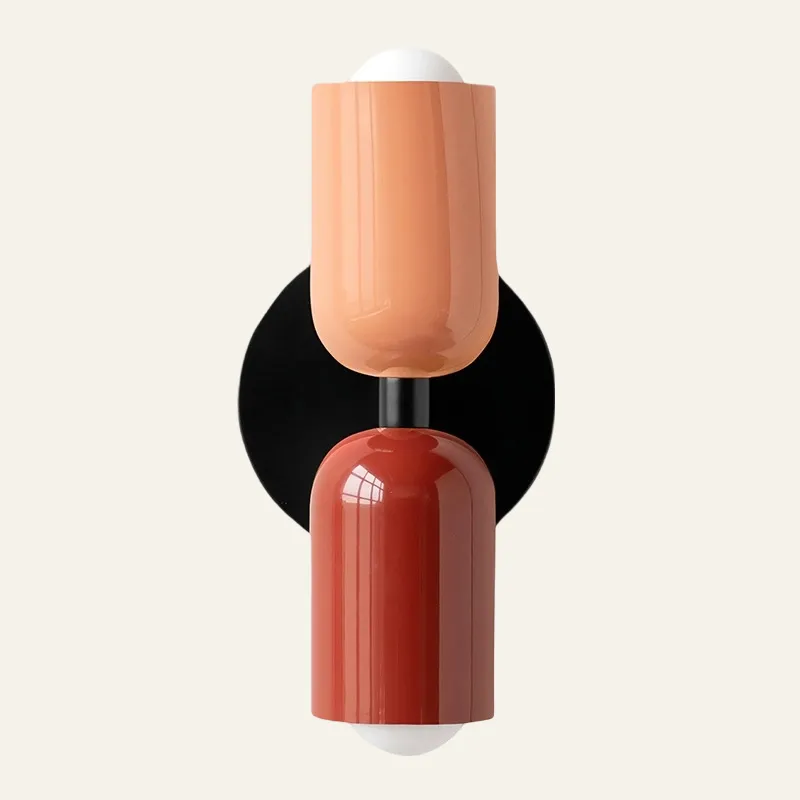
For a room that specifically lacks vertical definition, explore the Symra wall sconce as a wall-lighting layer after checking the intended sightline and electrical position.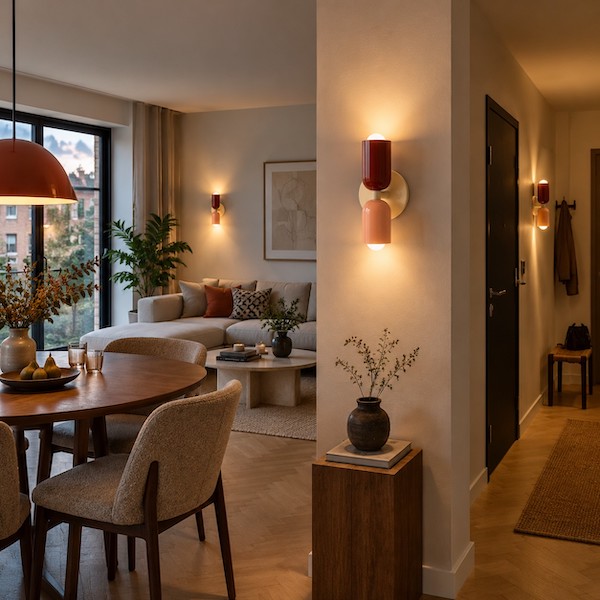
Plan an Evening Sequence, Not One Perfect Setting
| Moment | Priority | What to reduce |
|---|---|---|
| Arrival | Clear route and welcoming wall | Dark entrance corners |
| Dining or reading | Useful local light | Glare at seated eye level |
| Winding down | Soft background and easy movement | Uniform ceiling brightness |
Separate switching is often more valuable than adding another decorative source. Because the Symra product page lists the fixture as non-dimmable, plan its role as a stable wall layer that can be switched independently from brighter task or ceiling lights.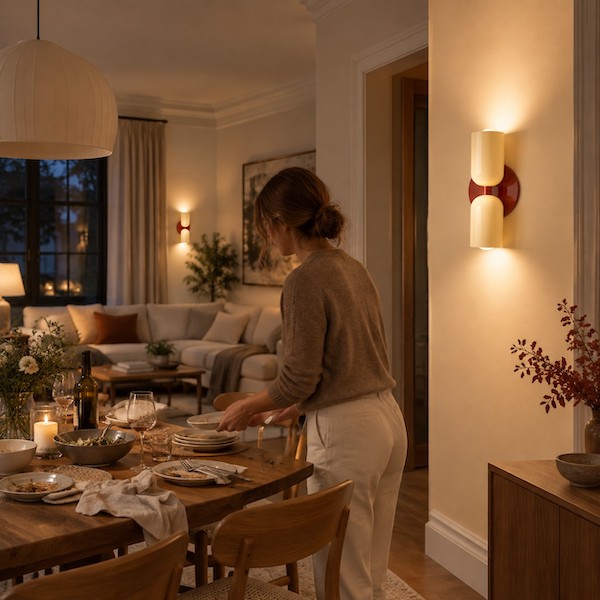
Make Atmosphere Flexible Enough for Real Life
A beautiful evening setting should not make cleaning, reading, or hosting difficult. Give practical light priority when a task begins, then let the background return when the task ends. The room can keep its identity without staying dim all day.
This is where atmosphere connects to a wider system. Layered Light Is the Future of Interior Design explains how ambient, task, accent, and wall light can remain distinct enough to adapt without multiplying fixtures unnecessarily.
Ask for Proof Before You Buy the Mood
Product photography can show style, but it does not tell you how the fixture will sit on your wall. Confirm dimensions, source type, power, control method, and the direction of light. Then compare those facts with your atmosphere brief.
The Symra is listed at 12 centimetres in diameter and 28 centimetres high, with an E27 light source, 8W power, and a non-dimmable push-button control method. It is suited to a controlled wall effect, not to replacing strong task lighting across a large room.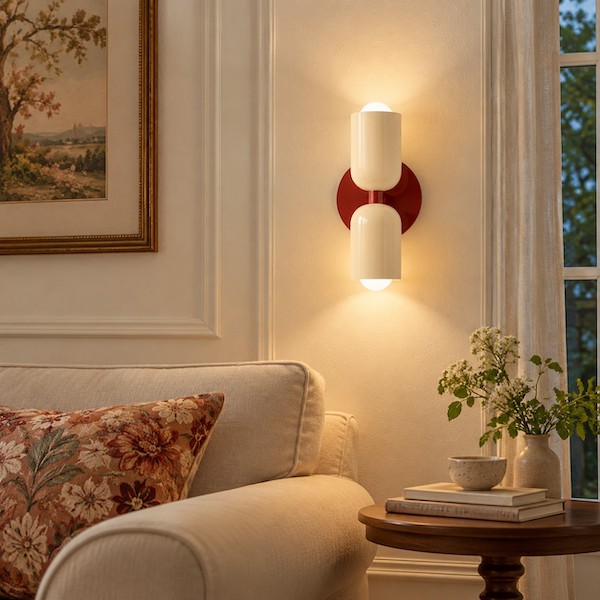
Compare the verified specification with the wall width, nearby furniture, and the view from your normal seat.
Review the Symra product detailsThree Room Recipes That Do Not Feel Staged
Living room: protect conversation
Use a wall glow beside or behind the seating area, keep the television from becoming the strongest contrast, and provide a separate reading source near the person who needs it. Avoid pointing bright light across faces.
Bedroom: protect the view from the pillow
Check every source while lying down. A warm appearance does not prevent glare if the bulb is visible. Choose shielding and direction first, then fine-tune the bulb colour.
Hallway: create a calm rhythm
Repeated wall light can make a narrow route feel intentional. Keep spacing consistent enough to guide movement, but do not place each light so close that overlapping beams create distracting bright patches.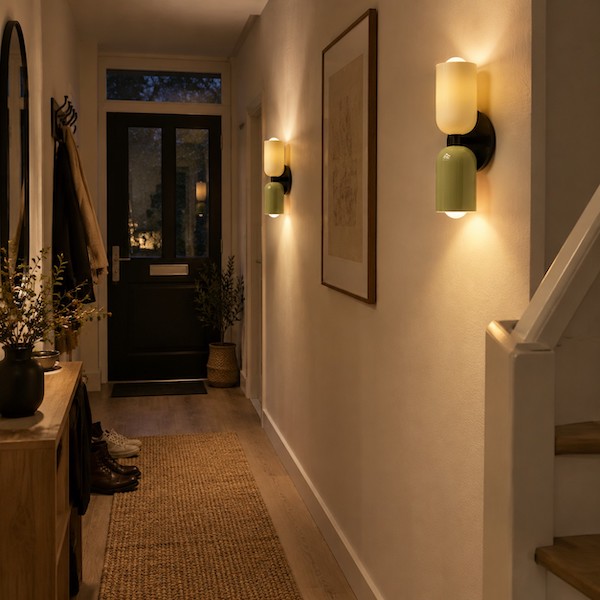
When “Cozy” Turns Murky or Artificial
- Every lamp is weak, so reading and dining become difficult.
- All sources use different colour appearances and the room feels visually fragmented.
- Decorative bulbs remain visible from normal seats and create glare.
- Only the centre of the room is lit, leaving walls and routes disconnected.
- The scheme depends on a staged photograph rather than the household's real evening routine.
Atmospheric Lighting FAQs
How do you create atmospheric lighting?
Start with one important activity, light the surface it uses, add a quieter vertical or background layer, and remove direct glare from normal viewpoints.
How can lighting create a mood?
Direction, contrast, surface reflection, and timing shape mood more reliably than colour temperature alone. Decide what should be bright, quiet, and visible.
How do I create a cozy atmosphere with warm lighting?
Use warm-appearing light on walls and activity surfaces, shield the source from direct view, and retain enough task light for reading or dining.
Can atmospheric lighting still be practical?
Yes. Keep task light available on a separate switch and use the atmospheric layer as a comfortable background rather than the only source.
Is a non-dimmable wall sconce suitable for atmosphere?
It can be when its fixed output and bulb choice suit the room. Plan separate switching so brighter sources can be reduced or turned off independently.