The Most Beautiful Wall Lighting Ideas Trending on Pinterest
The wall-lighting look gaining visibility on Pinterest is warm, sculptural and closely tied to the room around it. The fixture is rarely shown as an isolated product. It completes a textured wall, frames a seating area or adds colour to an otherwise quiet palette. The useful lesson is not to copy a pin; it is to understand the relationship that makes the image work.
What the trend signal actually shows
Checked on 28 September 2026 for English-language searches in the Netherlands, Google results prominently surfaced current Pinterest boards for modern wall lights, living-room wall lighting and wall-lamp ideas. Repeated visible themes included warm sconces, decorative wall lights, sculptural forms, indoor wall light, bedroom lamps and coloured modern fittings. This is a dated editorial observation, not a claim about Pinterest-wide search volume.
The strongest ideas also match broader search intent: people want inspiration they can apply to living rooms, bedrooms, hallways and compact spaces. For a wider room-by-room list, turns these visual cues into 30 practical treatments.
1. Sculptural lights on quiet walls
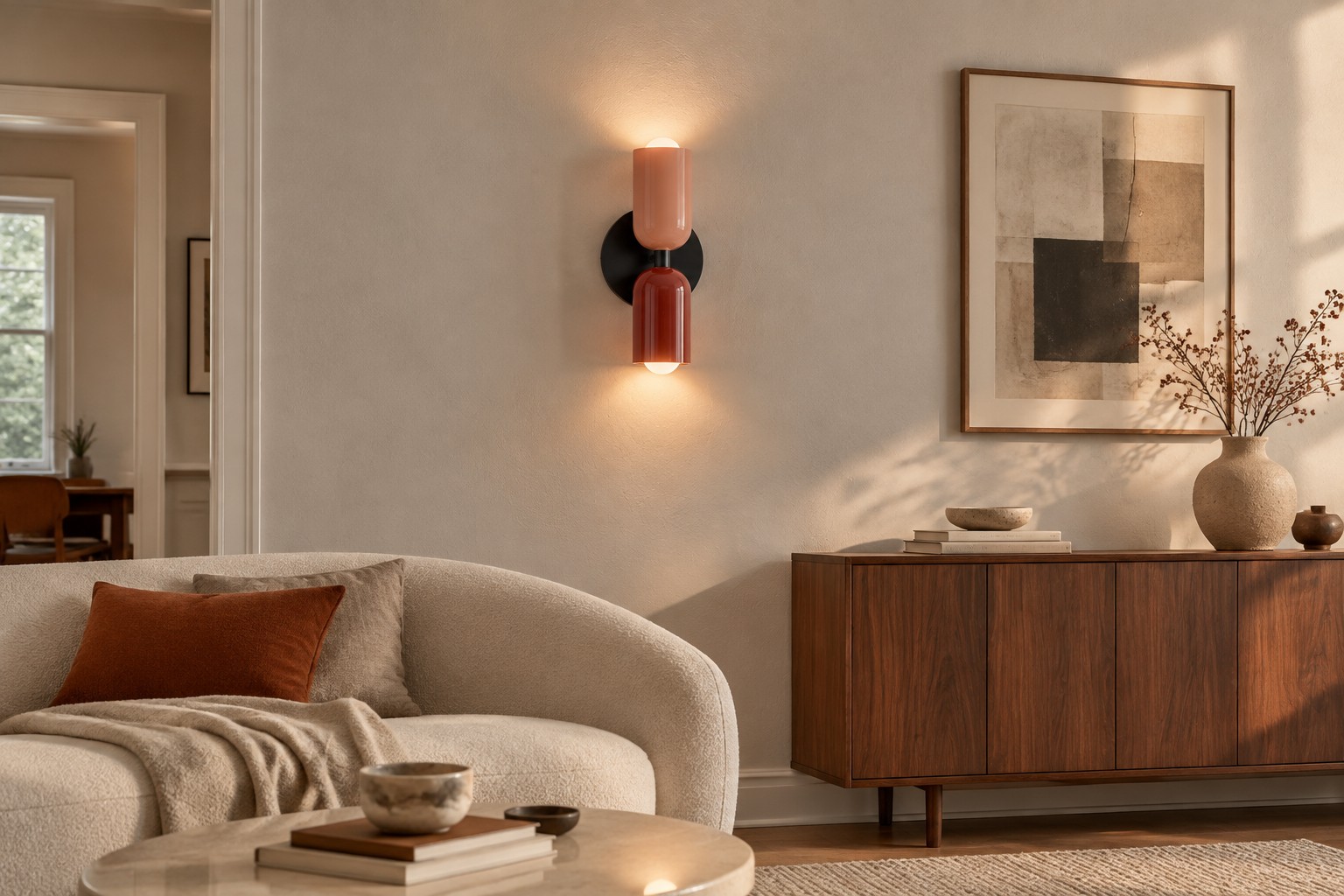
A simple wall gives an expressive fixture room to breathe. Curved cylinders, compact globes and offset forms are replacing busy gallery arrangements in many inspiration images. Use this direction when the wall already has strong proportions. Avoid adding art immediately around the light; let shadow become part of the composition.
2. Warm light on tactile surfaces
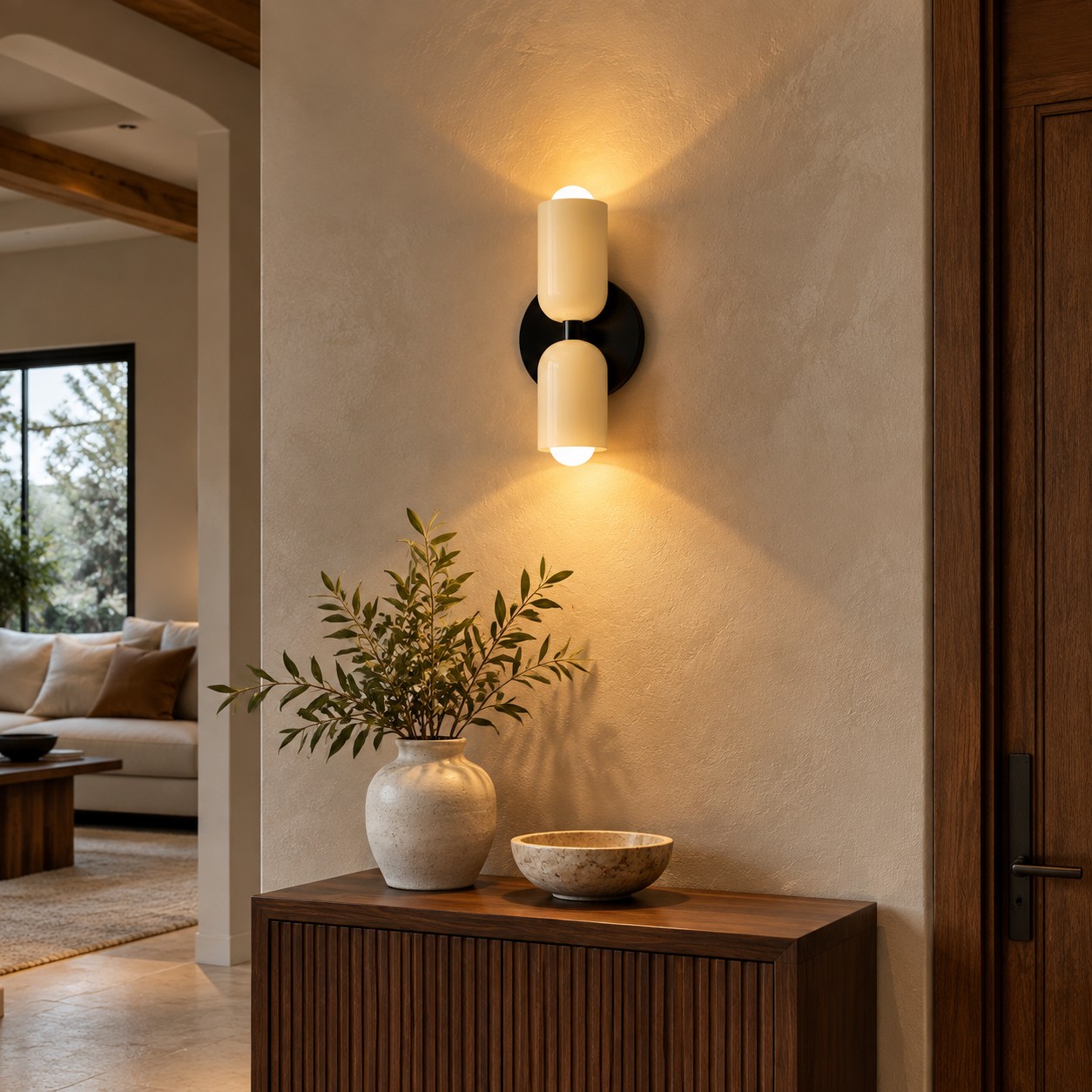
Plaster, limewash, brick and timber appear richer when light grazes them. The effect works because the beam reveals relief rather than flattening the surface. It suits dining rooms, entries and relaxed living spaces. Test the fixture on the real finish before installation, since a narrow beam can exaggerate every bump.
Explore wall lights for textured interiors
3. Coloured cylinders with a graphic outline
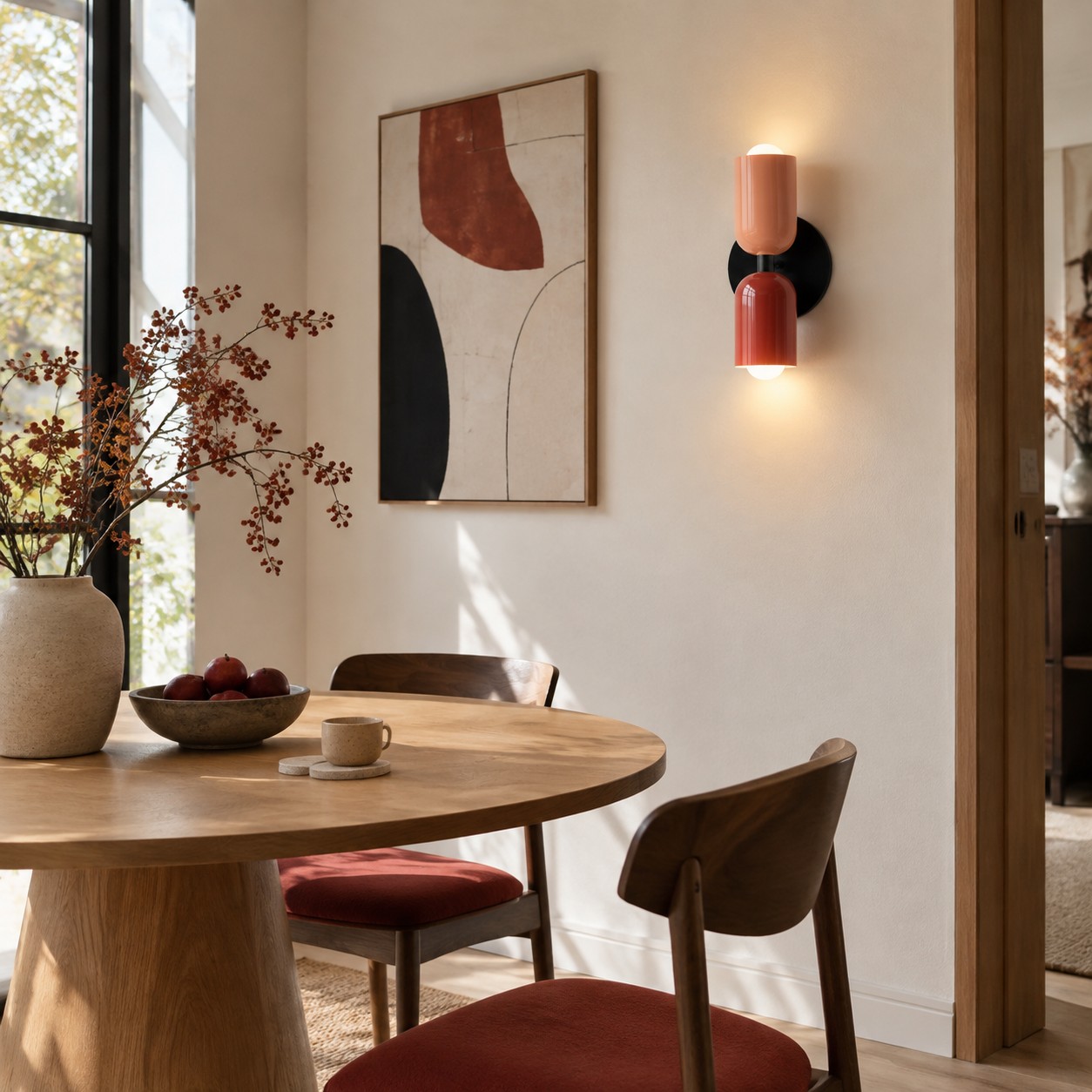
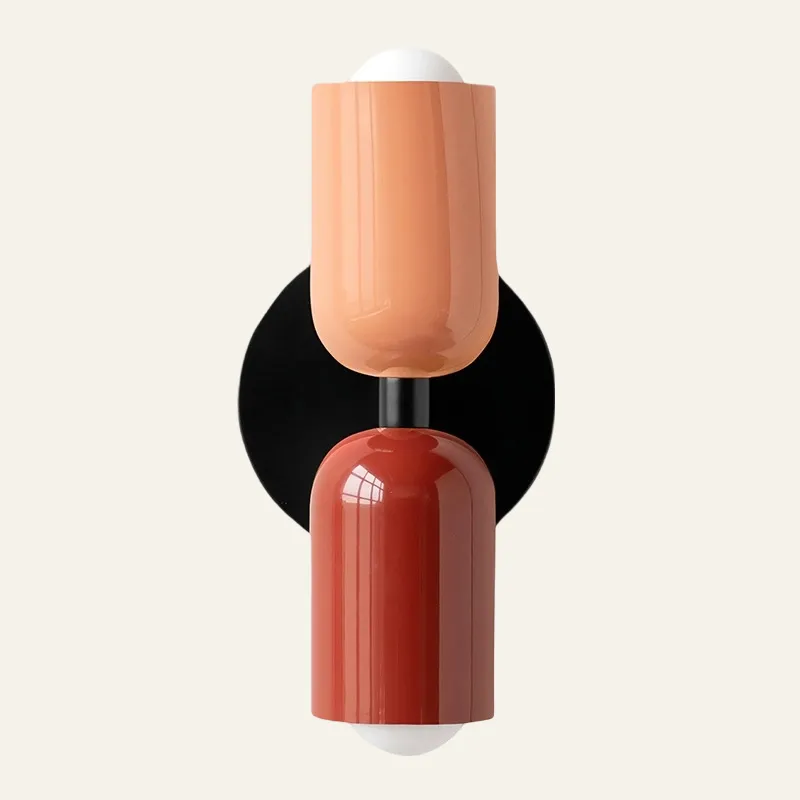
Small blocks of red, green, pink and cream are showing up against neutral rooms. A black or dark backplate keeps playful colour visually organised. Repeat one shade in a textile or artwork detail, not across every accessory. The result feels intentional without turning the room into a theme.
4. Balanced pairs that frame furniture
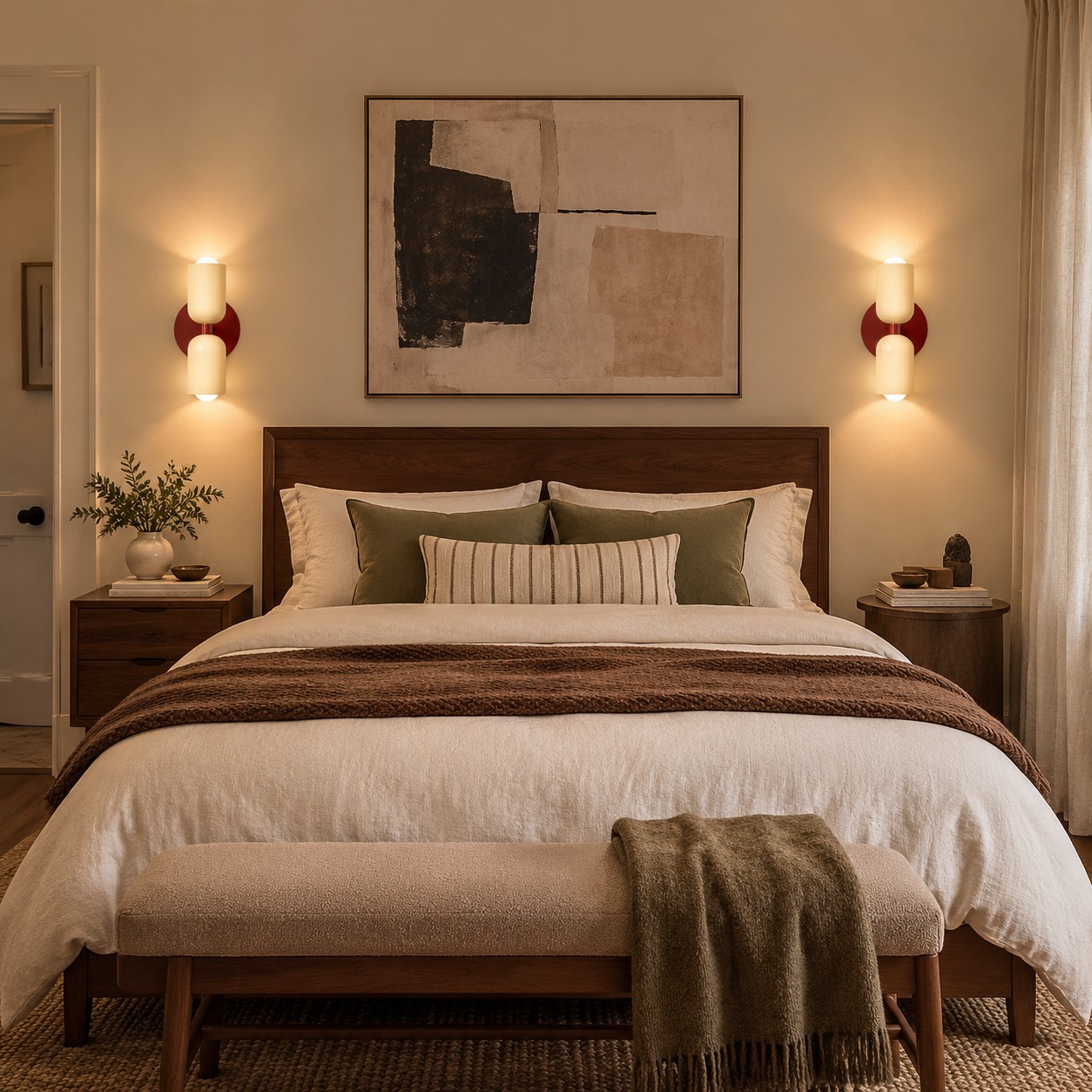
Pairs remain popular because they make a sofa, bed or sideboard look complete. The current version is less formal: the fixtures may match while the objects below remain relaxed and asymmetrical. Check the outside edges of the furniture first; placing the pair too close together can make the centre feel cramped.
5. Single statement sconces in small zones
A lone decorative light can define a reading chair, breakfast nook or entry console. This is especially useful where two fixtures would feel crowded. The guide explains how to test projection, glare and circulation before committing to the position.
6. Up-and-down light as architecture
Dual-direction beams create a clear vertical axis and make a compact fitting feel architectural. They work well on tall narrow wall sections, between doors or above a small cabinet. Keep nearby art outside the strongest part of the beam so the light pattern remains legible.
See Symra's dual-direction form and colour options
7. Soft off-white fittings for tonal rooms
Not every trend is a statement. Off-white shades on warm white walls create a low-contrast look where the fixture recedes during the day and appears through light after dark. This direction suits bedrooms and calm living rooms. Add definition through a darker backplate or nearby timber so the scheme does not become visually washed out.
8. Mixed warm metals without perfect matching
Brass, bronze and warm painted metal can share a room when their visual weight is controlled. Let one finish dominate and use the others as small accents. Avoid forcing an exact match between sconces, handles and furniture; subtle variation often looks more collected and remains easier to update.
How to use a Pinterest idea without dating the room
- Name the relationship. Save the reason the image works: colour echo, wall texture, furniture framing or a specific beam direction.
- Check the unglamorous dimensions. Confirm fixture size, projection, door clearance and the main seated sightline.
- Separate permanent and changeable choices. Keep wiring and placement flexible; express trend colour through a replaceable shade or nearby textile.
- Plan the night view. A pin captured in daylight may not show glare or the actual beam. Review the product description and light-source requirements.
- Edit the surrounding wall. Give a sculptural fitting enough empty space to read clearly.
Why Symra fits several current directions
The Symra wall light combines a compact 12 x 28 cm format with a round backplate and two opposing cylindrical shades. The product page lists metal and glass options, E27 light sources, 8 W power and several black, off-white, green, red, gold and multicolour combinations. That makes it relevant to the coloured-cylinder, dual-direction and tonal-wall ideas above. It is listed as non-dimmable with a push-button switch, and the bulb is not included, so confirm those details against the intended room before ordering.
Frequently asked questions
What wall lights are trending now?
Current visual signals favour sculptural forms, warm directional light, tactile walls, coloured cylinders, tonal off-white fittings and relaxed pairs.
How can I tell whether a Pinterest lighting idea will work at home?
Identify the placement and beam relationship, then test real dimensions, glare, clearance and the night view.
Do colourful wall lights date quickly?
They can remain durable when the shape is simple and the colour repeats one existing room element rather than driving the entire scheme.
Should wall sconces be symmetrical?
No. Symmetry suits beds and wide furniture, while a single sconce often works better for a reading corner, entry or compact dining nook.