
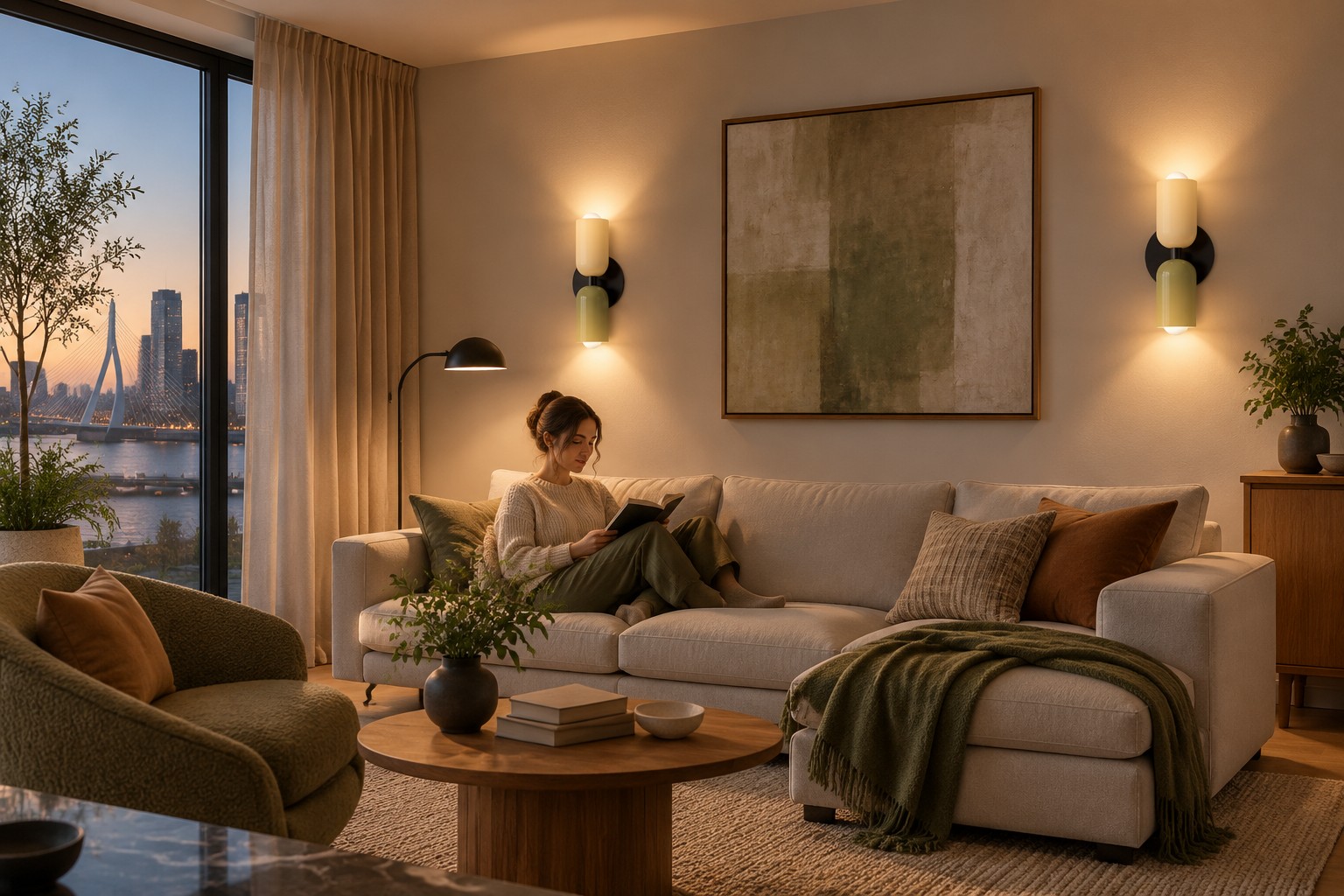
Layered lighting is not about filling a room with fixtures. It is about giving general visibility, activities, walls, and focal points enough independence to change as daily life changes.
What Layered Lighting Means in Daily Life
A single central light can make every activity depend on one setting. When it is bright enough for cleaning, it may feel harsh during conversation. When it is lowered for evening comfort, a book, table, or hallway may become difficult to use.
Layering separates those needs. One source supports orientation, another serves an activity, and another gives the room depth. The goal is not the maximum number of layers; it is the smallest set that allows the room to work at breakfast, after work, and late in the evening.
Fast test: If switching off one ceiling light makes the entire room unusable, the lighting plan has no functional backup.
Four Jobs Matter More Than Four Fixtures
| Lighting job | Question it answers | Typical surface |
|---|---|---|
| Ambient | Can I understand and move through the room? | Ceiling and broad room volume |
| Task | Can I comfortably read, cook, or work? | Table, worktop, desk, or chair |
| Vertical | Do the walls retain depth after dark? | Wall, texture, or architectural plane |
| Accent | Where should attention rest? | Artwork, shelving, or a selected object |
Some guides describe three layers and others describe five. The labels vary because circulation, decorative light, or daylight may be counted separately. Use the framework that helps you assign real jobs; do not buy an extra fixture just to complete a list.
If the room already contains many objects, Stop Buying More Decor. Start Designing with Light. provides the diagnostic step that should come before this layer map.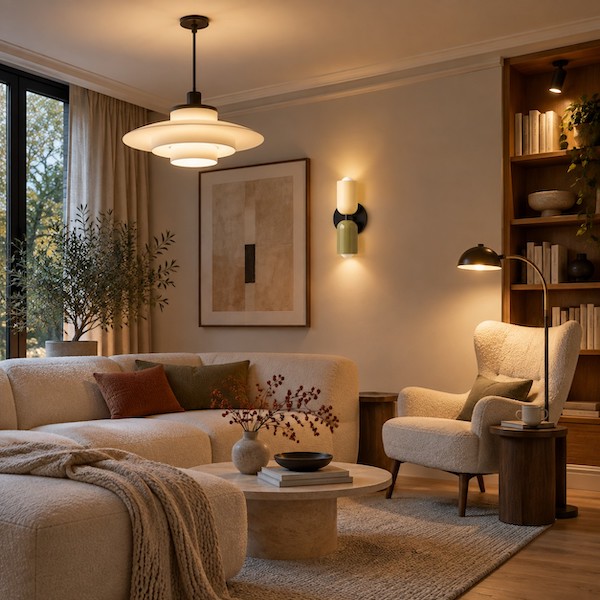
Map the Room in Passes
- Mark the fixed activities: sofa reading position, dining table, kitchen worktop, bed, desk, and walking route.
- Identify one vertical plane that disappears at night or creates an uncomfortable dark background.
- Record the normal viewing positions. A source that looks harmless while standing may glare from a chair or pillow.
- Give each proposed source a job and remove any fixture that merely repeats an existing one.
Where the missing job is vertical depth, the Symra up-and-down wall light can create a defined wall layer while leaving table and floor space free.
A Living Room Layer Plan That Adapts
Begin with enough ambient light to enter and tidy the room safely. Add task light only where someone reads, works, or plays. Then light one wall that supports the seating group, rather than illuminating every wall equally.
During cleaning, ambient and task sources can operate together. During conversation, keep the wall layer and selected local light active while reducing the ceiling source. For television viewing, avoid a bright point reflected in the screen and retain a gentle background so the screen is not surrounded by darkness.
This plan creates options without demanding a visually busy ceiling. In smaller Dutch living rooms, using walls and existing furniture zones efficiently can be more useful than adding several hanging fixtures.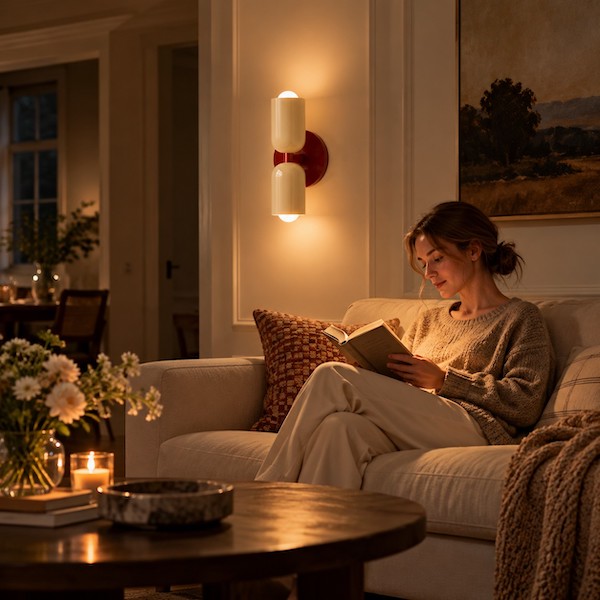
Bedrooms and Hallways Need Different Layer Logic
In a bedroom, the priority changes by viewpoint. General light helps with dressing, bedside task light supports reading, and a softer wall layer eases the transition to rest. Check glare while lying down, not only while standing beside the bed.
In a hallway, repetition and direction matter more than high output. A sequence of wall lights can support movement and reveal length, but beams should not overlap into bright stripes. Switch placement should also suit how the route is entered from both ends.
The number of fixtures should follow wall length, doors, and sightlines. A single sconce can serve a compact landing; a longer corridor may need a measured rhythm. Electrical planning should be confirmed before drilling or altering fixed wiring.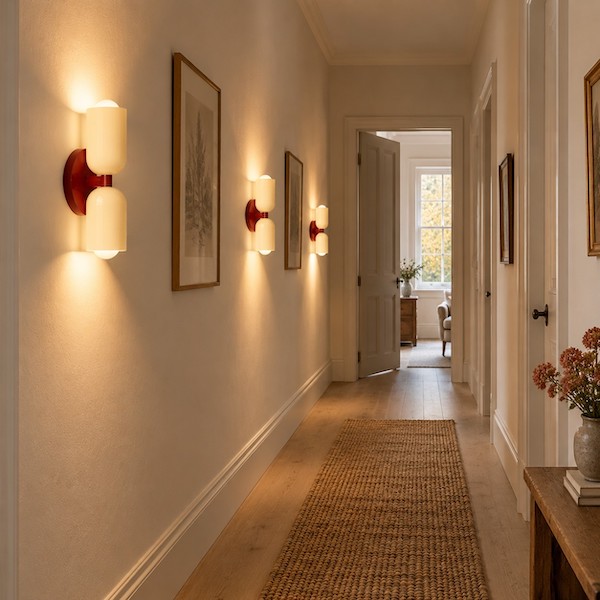
From Functional Layers to Atmosphere
Once every important activity has enough visibility, tune contrast rather than adding more brightness. Let the task surface be clear, the supporting wall be softer, and unimportant corners remain quieter. Shadow is part of a layered room; uncontrolled glare is not.
For a closer look at mood, timing, and evening routines, Designers Are Creating Atmosphere Before Decoration turns this technical layer map into a simple atmosphere brief.
Use Product Facts to Assign the Wall Layer
The Symra measures 12 centimetres in diameter and 28 centimetres high. The listed E27 source and 8W power make it a compact wall fixture, and the product page identifies the control method as non-dimmable.
That specification suggests a clear role: use it for wall definition, a bedside background, or a hallway rhythm, not as the only source for detailed work. Check bulb compatibility, wall scale, wiring, and the view from seated eye level before deciding quantity.
A layer is useful only when the fixture's verified output, size, and control match its assigned job.
Compare Symra specificationsControl Layers Without Assuming Every Light Dims
Dimming is useful, but independent switching is the foundation. A non-dimmable wall sconce can still support a flexible room when the ceiling, task, and wall circuits can be controlled separately.
Choose the E27 lamp effect carefully because it will establish the fixed character of that layer. Then adjust the wider scene by turning other sources on or off. Do not connect a product to a dimmer unless the fixture, lamp, and control are confirmed compatible by the relevant instructions or installer.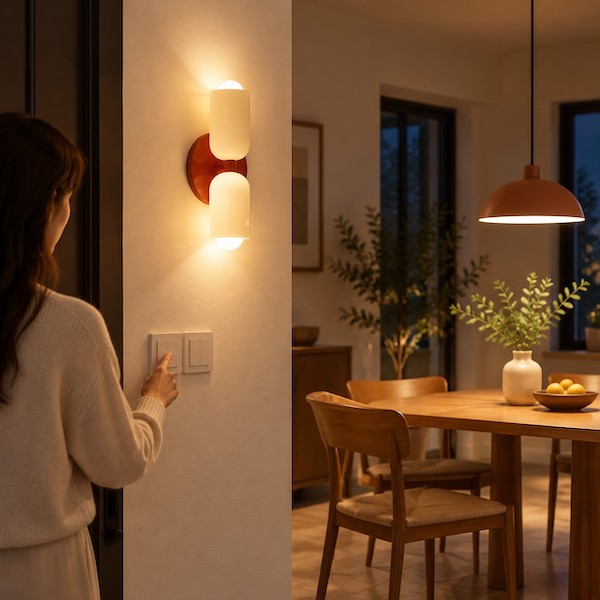
Layered Lighting Mistakes to Correct First
- Placing every source at ceiling height, which leaves faces and walls visually flat.
- Calling a room layered because it contains many fixtures, even though they all switch on together.
- Ignoring reflective screens, mirrors, stone, or glass that can turn moderate light into glare.
- Using warm colour as a substitute for shielding and good direction.
- Adding accent light before task surfaces are comfortable and circulation is clear.
Layered Lighting FAQs
What is the three-lighting rule?
It combines ambient, task, and accent light. Many homes also benefit from naming vertical wall light separately because it strongly affects depth and comfort.
What are the five layers of lighting?
There is no single mandatory list. Some plans separate ambient, task, accent, decorative, and daylight or circulation. Use only the categories that clarify real decisions in your room.
How should I arrange lighting in a room?
Start with activity zones and sightlines, then distribute sources across the ceiling, walls, and furniture level. Avoid lighting every surface at equal intensity.
Does a layered living room need a ceiling light?
Not always, but a ceiling source can be useful for cleaning and general visibility. The important point is that the room should not depend on it for every moment.
What bedroom lighting mistake is most common?
Planning from standing height. Always check exposed sources and reflections from the pillow and reading position before fixing the final height or direction.