Indoor beam-effect guide
Up and Down Wall Lights for Indoors: How to Choose the Right Beam Effect
Up and down wall lights shape a wall rather than replace a ceiling light. Narrow beams create graphic cones; broad beams produce a calmer wash. The choice depends on surface, ceiling clearance, viewing position, and surrounding light. Decide how the wall should look after dark before choosing the fitting.
The Quick Answer: Choose the Pattern, Then the Lamp
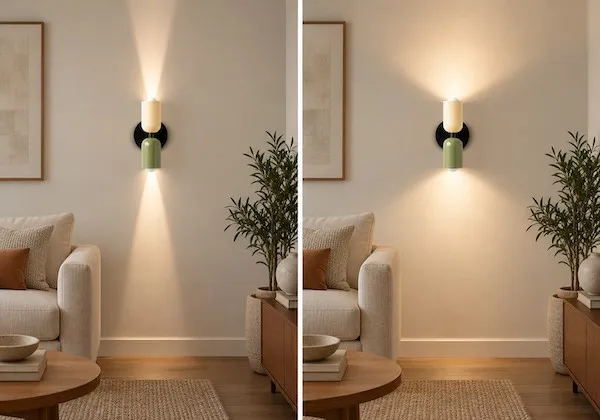
Choose narrow beams for visible geometry or rhythm, and broader beams for softer background light. Judge beam width with brightness, wall reflectance, mounting height, and glare. The same cone can look very different on pale plaster, dark paint, rough brick, or below a low ceiling.
Before You Start, Read the Wall
View the wall in daylight from the doorway and key seats. Note its height, clear space above and below, and shelves, frames, curtains, or doors that interrupt light. Decide whether the sconce provides accent, background, or route lighting.
- Record the wall colour and whether the finish is matte, glossy, smooth, or textured.
- Mark standing and seated eye levels from the main viewing positions.
- Check the electrical point, mounting surface, switch location, and local installation requirements.
Step 1: Decide Whether You Want Lines or a Wash
Beam angle describes distribution, not total brightness. The CIE definition of beam angle uses the full angle between the points where intensity falls to 50% of the centre-beam intensity. In practical terms, a narrower optic usually draws a tighter shape, while a wider one spreads light over more wall.
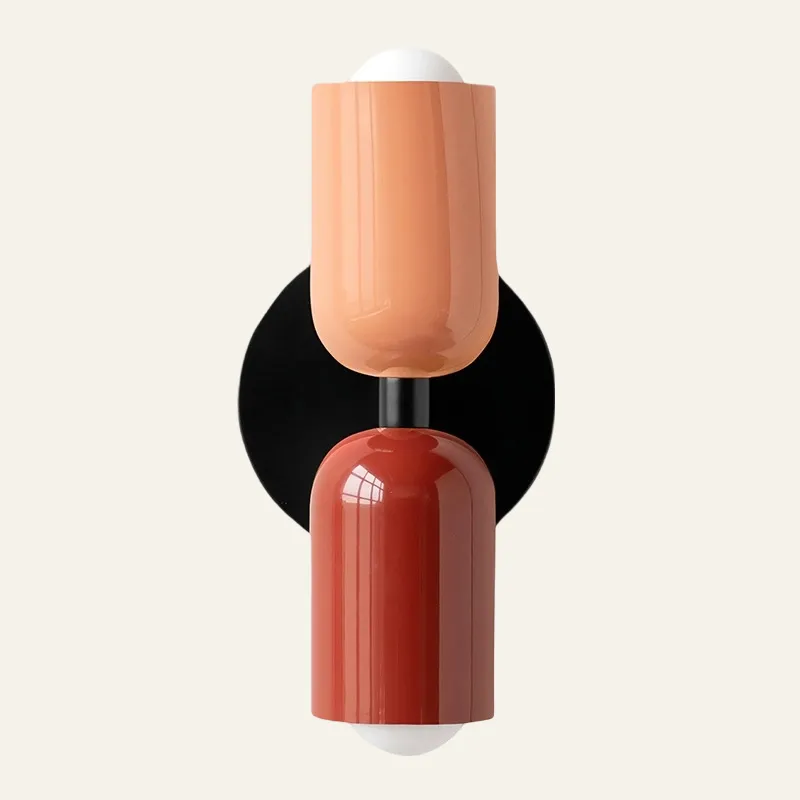
Choose a tighter pattern for a tall blank wall or repeated row; choose wider behind a sofa or bed, or where a hard-edged triangle would feel busy. Symra's page does not state a numerical beam angle, so request a lit-room image if exact cone width matters. You can inspect the Symra N47 dual-light design alongside your wall notes.
Step 2: Let the Surface Shape the Result
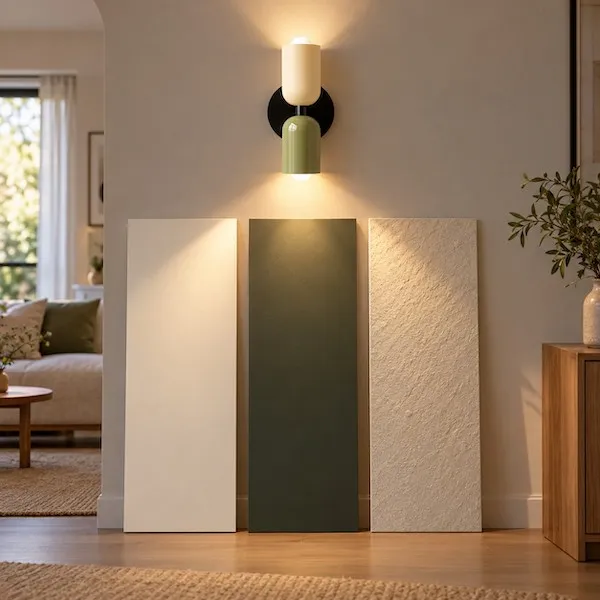
Light paint returns more light, so the pattern can appear larger and brighter; dark paint makes it moodier. Smooth matte plaster gives a clean outline, while texture breaks the edge into highlights and shadows. Gloss, glass, polished stone, and mirrors can add distracting reflections.
Test samples vertically where the beam will land and view them from across the room. The fitting should support living-room furniture, not become the only bright object. If style is undecided, the guide to Scandinavian wall lights for living rooms helps narrow the visual language before you refine the beam.
Step 3: Separate Brightness from Colour
Choose bulbs by output rather than wattage alone. ENERGY STAR explains that light output is measured in lumens, while watts describe power. More output can increase the pattern's visible contrast on the same surface, but it does not change the optic's beam angle or cut-off geometry. Test candidate bulbs in the room and start modestly when the sconce is near seating or used as evening background light.
Colour temperature changes mood, not geometry. ENERGY STAR describes lower kelvin values as warmer and higher values as cooler. Keep adjacent lamps reasonably consistent. Symra uses an E27 source and the page lists 8W, with the bulb sold separately; confirm the bulb's base, output, colour temperature, physical size, and compatibility before ordering.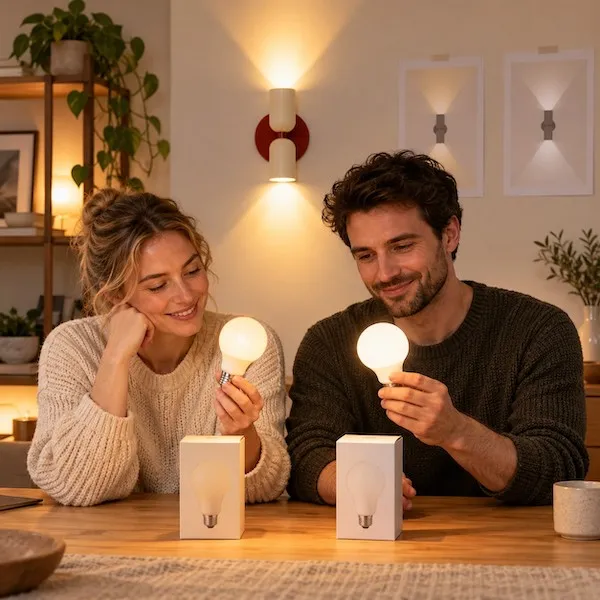
Step 4: Protect Every Sightline from Glare
A wall can glow beautifully while the lamp feels uncomfortable from a sofa or doorway. The CIE definition of glare includes discomfort or reduced visibility caused by unsuitable luminance distribution or extreme contrast. Check direct views of the opening or bulb from seated and standing eye level, plus reflections in televisions, mirrors, framed glass, and glossy furniture.
Do the test at night with the surrounding lamps set as they will normally be used. If the sconce becomes a brilliant point against a nearly black room, add a low ambient layer rather than simply increasing wall-light output. The goal is a readable beam with comfortable contrast.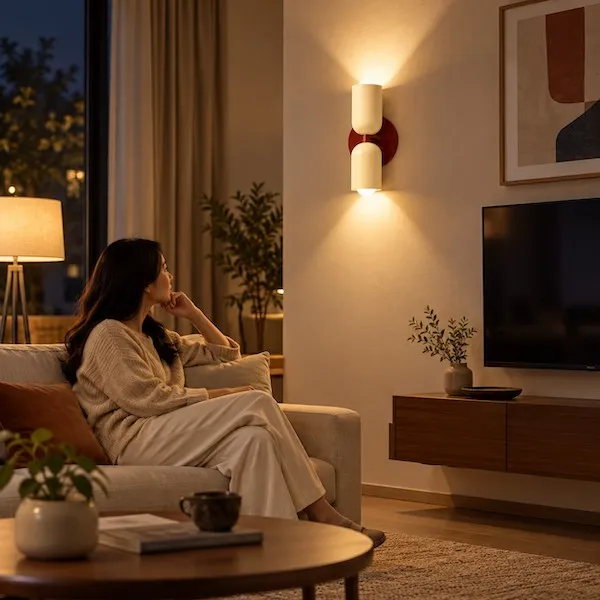
Step 5: Test Ceiling Clearance and Beam Cut-Offs
Tape a paper rectangle at the fixture's listed size. Symra is 12 cm in diameter and 28 cm high. Aim two torches upward and downward from the mock-up. This will not reproduce the final optic, but it reveals whether artwork, furniture, or the ceiling truncates the light.
Repeat the torch test at two plausible mounting heights. Watch where the upper pool meets the ceiling and where the lower pool reaches furniture, switches, or artwork. A clipped pool can be deliberate, but the mock-up shows whether the wall offers enough clear path. For corridor measurements and repeated layouts, continue with size, spacing, and placement for modern hallway wall lights. Have a qualified installer check final mounting and wiring.
When Symra N47 Is a Sensible Match
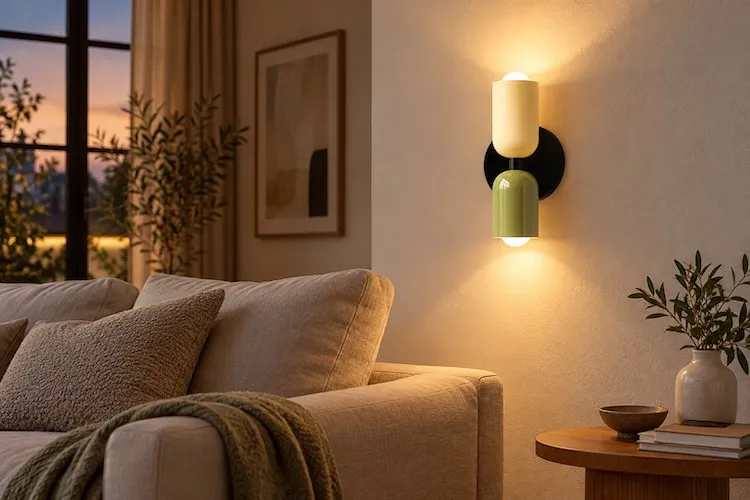
Symra suits a wall needing a compact decorative object with light directed upward and downward. Its cylindrical Nordic silhouette, metal and glass options, and varied colours add visual structure. The product page does not publish wall projection, so confirm that dimension before ordering for a narrow route or a wall beside furniture. It is better for atmosphere and wall modelling than concentrated reading or work light.
The product page lists an E27 source, 8W, a non-dimmable push-button control, and no included bulb. Treat those as purchase checks, especially if adjustable brightness is essential. Compare the room mock-up with the available Symra N47 materials and colours before choosing a variant.
Final Beam-Effect Checklist
- Name the desired effect: crisp cones, soft wash, or repeated rhythm.
- Test wall colour, texture, reflections, and clear space above and below.
- Choose brightness by lumens and mood by colour temperature.
- Check the fitting from every important seated and standing sightline.
- Mock up the real fixture size and test ceiling and furniture cut-offs before installation.
- Verify the bulb, control, wiring, variant, and included parts before purchase.
Up and Down Wall Light FAQs
Are up and down wall lights bright enough for a whole room?
Usually they work best as ambient or accent light. Add ceiling, floor, or task lighting where the room needs broad visibility or focused work light.
Is a narrow or wide beam better?
Narrow beams make stronger graphic shapes; wide beams create a gentler wash. Match the choice to wall height, texture, nearby objects, and how calm or dramatic the room should feel.
How can I reduce glare from a wall sconce?
Keep the bright opening outside normal sightlines, reduce excessive output, check reflective surfaces, and retain some surrounding ambient light to soften contrast.
Do textured or dark walls change the beam?
Yes. Texture breaks a smooth edge into highlights and shadows, while dark finishes return less light. Test a vertical sample under similar nighttime conditions.
Can the Symra N47 be dimmed?
The current product page lists its push-button control as non-dimmable. If dimming is essential, confirm the complete control and bulb configuration with the seller before purchase.