
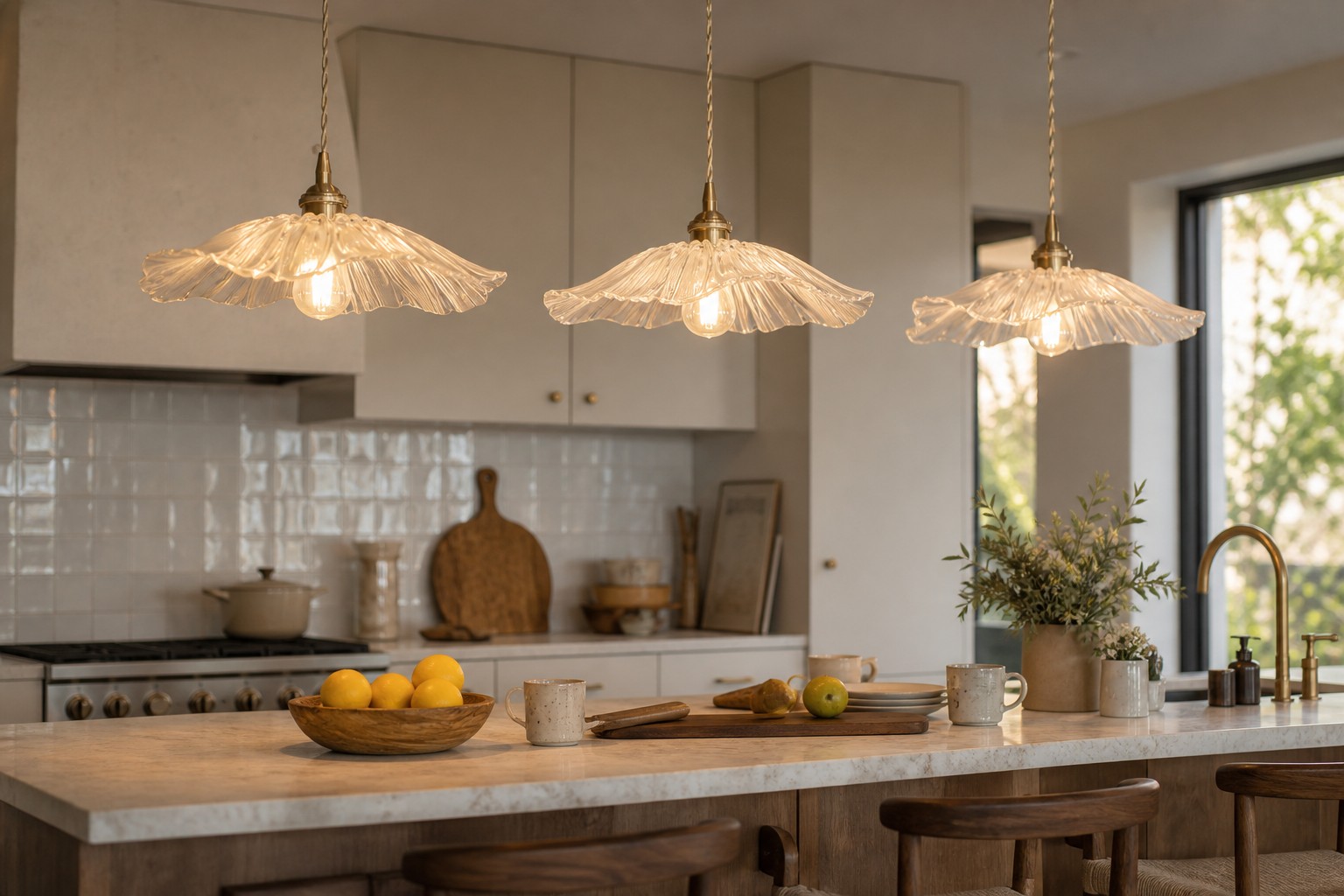
Designing an open-plan living and dining space is a delicate balancing act. You want each area to feel distinct and purposeful, yet flawlessly connected to the rest of the room. The most common pitfall homeowners face is creating a jarring visual divide through mismatched decor or, conversely, a space so uniform that it feels like a cafeteria. The secret weapon to solving this design dilemma lies right above your head: your lighting. By strategically selecting a dining room fixture that balances distinct personality with versatile materials, you can anchor your dining zone while setting the stylistic tone for the entire open space.
Quick Answer
To achieve a cohesive open-plan layout, use a visually lightweight but texturally rich statement fixture—such as the Blossix Retro Lotus Glass Pendant Lamp—as the focal point over your dining table. A translucent, vintage-inspired glass pendant defines the dining zone without obstructing the sightlines from your living room sofa. By echoing the pendant’s specific traits (such as its warm brass finishes, ribbed glass texture, or organic floral curves) in your living room's soft furnishings, you seamlessly tie the two functional zones together without overwhelming the space.
Core Criteria for Evaluating Open-Plan Lighting
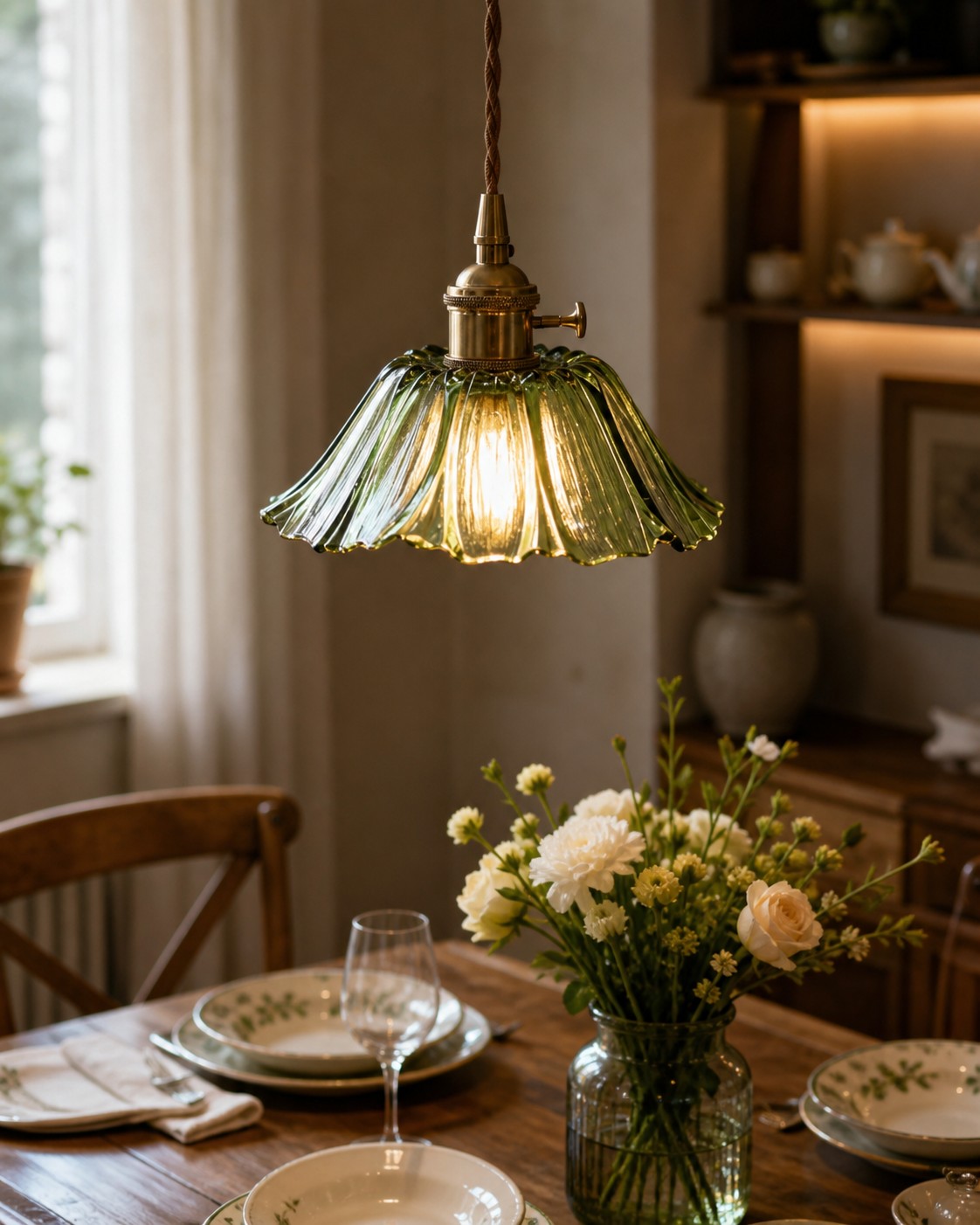
When selecting a pendant light for a combined dining and living area, you cannot simply buy what looks pretty in a showroom. Open-plan spaces require a strict adherence to scale, sightline management, and material harmony. Here are the definitive criteria you must use to make your choice:
- Sightline Management (Visual Weight): In an open-plan room, your eyes naturally scan from one end of the space to the other. If you hang a heavy, solid-metal dome over your dining table, it acts as a visual block. You must choose materials that offer presence without opacity. Textured, frosted, or patterned retro glass is the ideal solution.
- The "One Star" Rule: An open space can only handle one primary lighting focal point. If your living room features a massive chandelier, your dining area should utilize subtle fixtures. Generally, making the dining table the "star" of the open plan works best, allowing living room lighting to remain low-profile.
Strict Proportions and Placement: A pendant light loses its grounding effect if it is sized incorrectly. Use the following baseline measurements to ensure architectural harmony:
| Metric | The Golden Rule for Open-Plan Dining | Why It Matters |
|---|---|---|
| Pendant Width | 1/2 to 2/3 the width of the dining table. | Prevents the fixture from dwarfing the table. |
| Hanging Height | 75 cm to 90 cm above the tabletop. | Creates an intimate "room within a room" without blocking eye contact. |
| Linear Spacing | For tables longer than 180 cm, use two pendants spaced evenly. | Distributes visual weight horizontally. |
| Color Temp. | Strictly 2700K - 3000K (Warm White). | Ensures a cozy, relaxed ambiance across both zones. |
The "Echoing" Strategy: Styling the Retro Lotus Design Across Zones
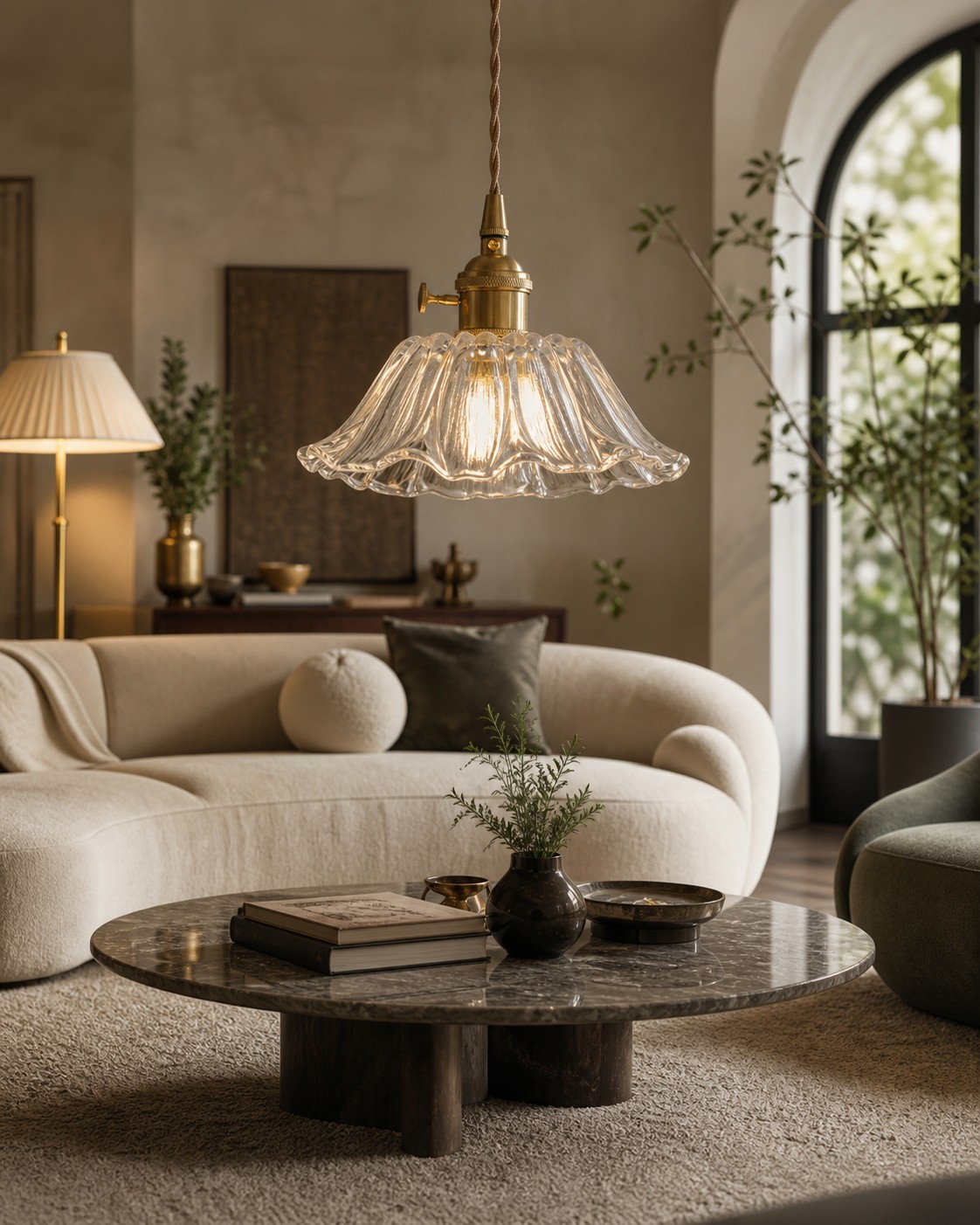
The most sophisticated way to integrate a distinct fixture into a dual-purpose room is through "Echoing." You do not want to perfectly match your living room to your dining room; instead, you want to extract micro-elements from the dining pendant and ripple them into the living room design.
- Step 1: Echoing the Organic Shape. The retro lotus design brings a soft, natural elegance. To echo this in the living room, introduce soft curves. Opt for a gently curved armchair or round nesting coffee tables instead of overly boxy sofas.
- Step 2: Echoing the Glass Texture. Retro embossed or ribbed glass has a distinct tactile quality. Carry this texture into the living room by styling your coffee table with fluted glass vases or a ribbed glass table lamp.
- Step 3: Echoing the Hardware. If the pendant has a brass canopy, weave small brass touches into the living area, such as brass cabinet pulls or a slender brass floor lamp. Keep it to a 70/30 ratio (70% dominant metal, 30% accent metal).
- Step 4: Layering the Light. Because your glass pendant is serving as the visual anchor, your living room lighting must take a supporting role. Utilize warm perimeter lighting like recessed LEDs or floor lamps.
Common Mistakes That Ruin Open-Plan Cohesion
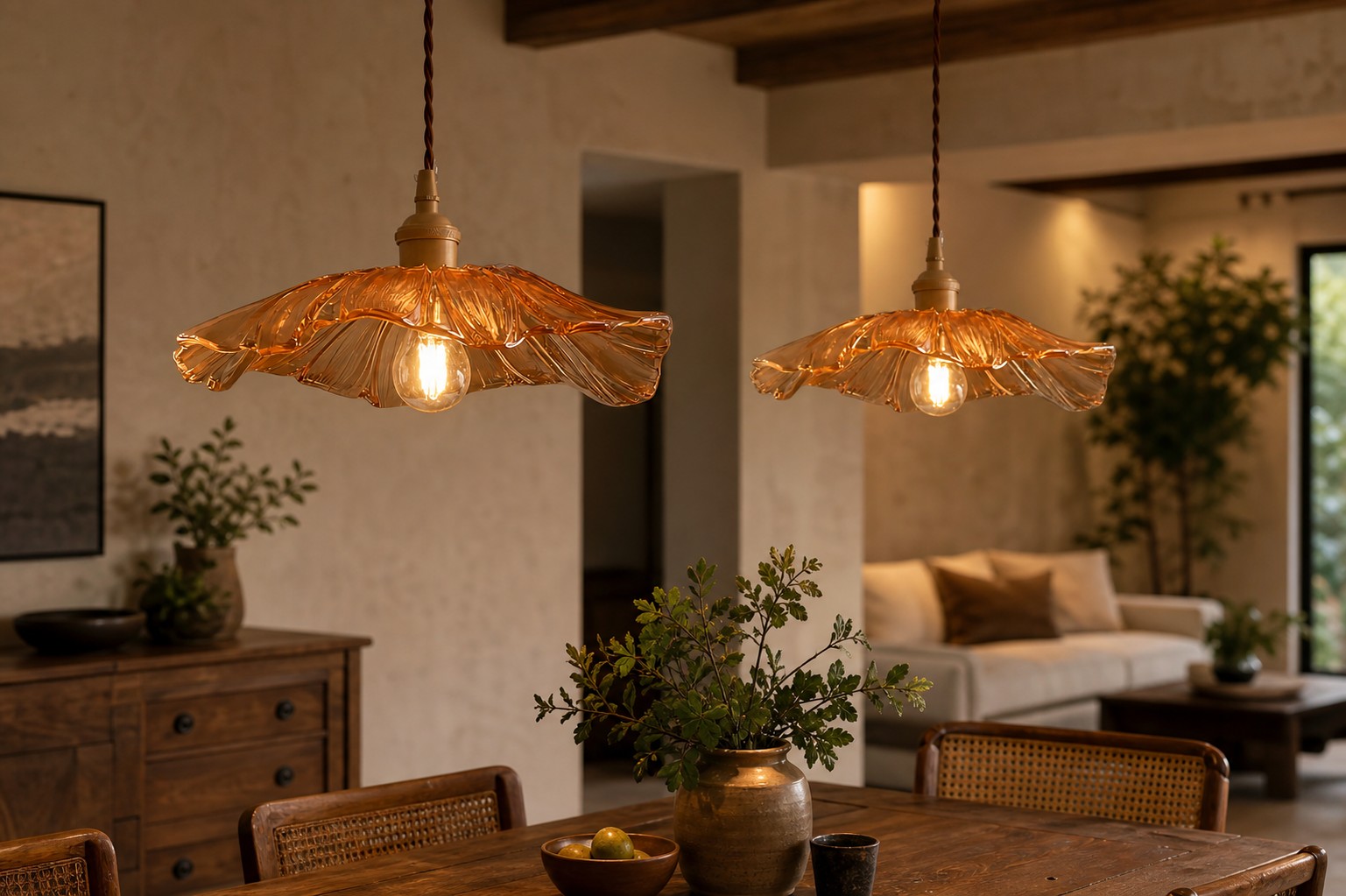
Even with the perfect furniture and lighting, a few technical missteps can shatter the harmony of an open-plan space:
Clashing Color Temperatures (The Hospital Effect): If your dining zone uses crisp daylight bulbs (4000K+) while your living room uses cozy warm bulbs (2700K), your open-plan space will visually snap in half. You must synchronize your color temperatures.
The "Runway" Ceiling: Installing multiple identical pendant lights throughout the dining area, kitchen island, and living room creates a cluttered "runway" effect. Designate one zone for the hanging statement piece.
Ignoring the Dimmer Switch: In an open-plan layout, the function of a room changes. Failing to install your dining pendant on a high-quality dimmer switch ruins the adaptability of the space when you transition to the living room for a movie.
Featured Solution: The Blossix Retro Lotus Glass Pendant Lamp
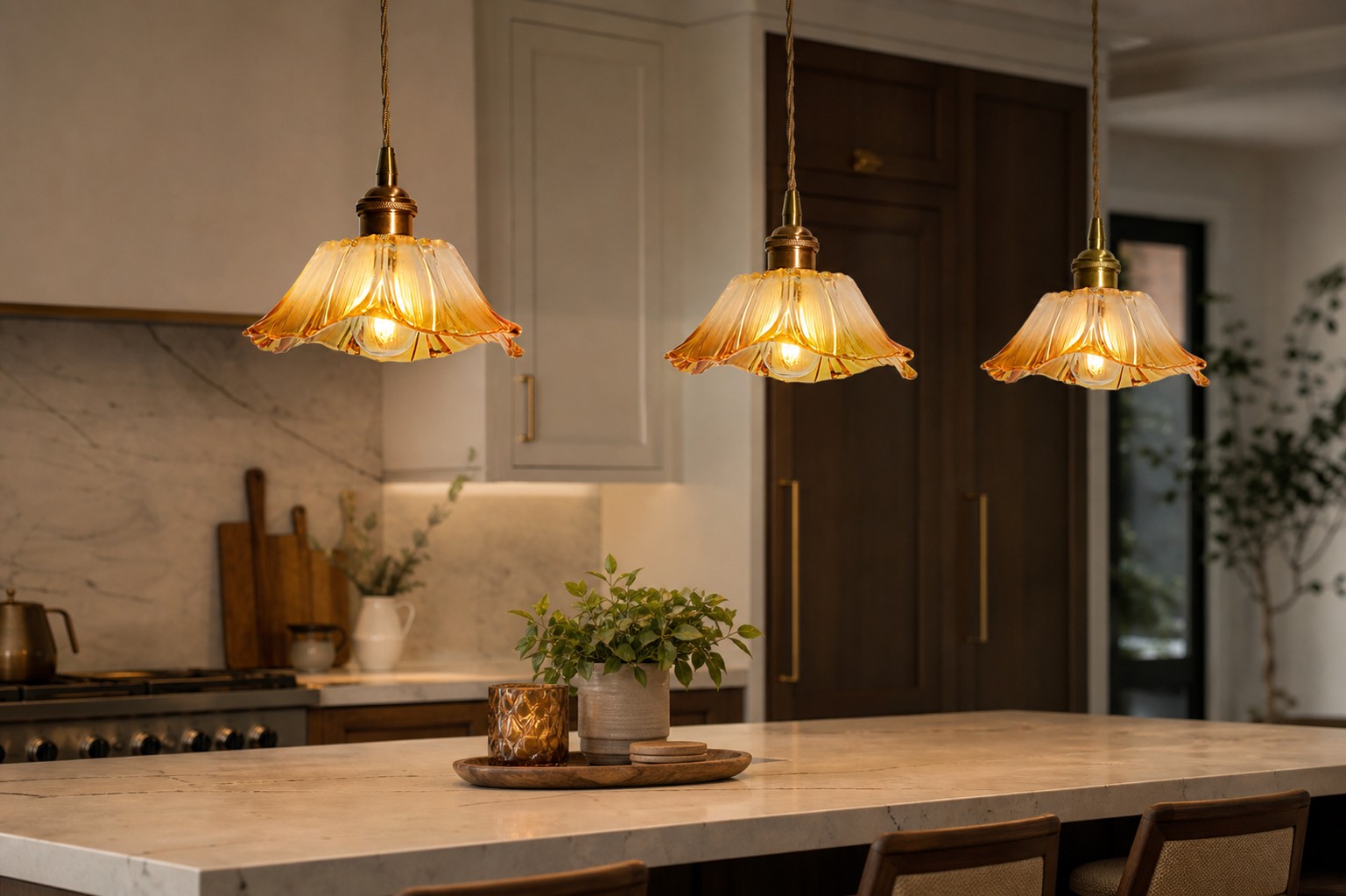
If you are currently struggling to find that perfect transitional anchor for your open-plan home, the Blossix Retro Lotus Glass Pendant Lamp stands out as an exceptional solution.
This fixture practically acts as a masterclass in open-plan lighting design. Its Oriental vintage charm injects immediate personality into the dining space. Unlike opaque metal fixtures that cut off the room, the heavily textured glass shade allows you to maintain clear, breezy sightlines from your living room sofa all the way through the dining area.
Whether your home leans towards mid-century modern, Japandi, or eclectic vintage, this pendant provides the structural and textural cohesion you need.
FAQ
Can I use two pendant lights if I have a very long dining table?
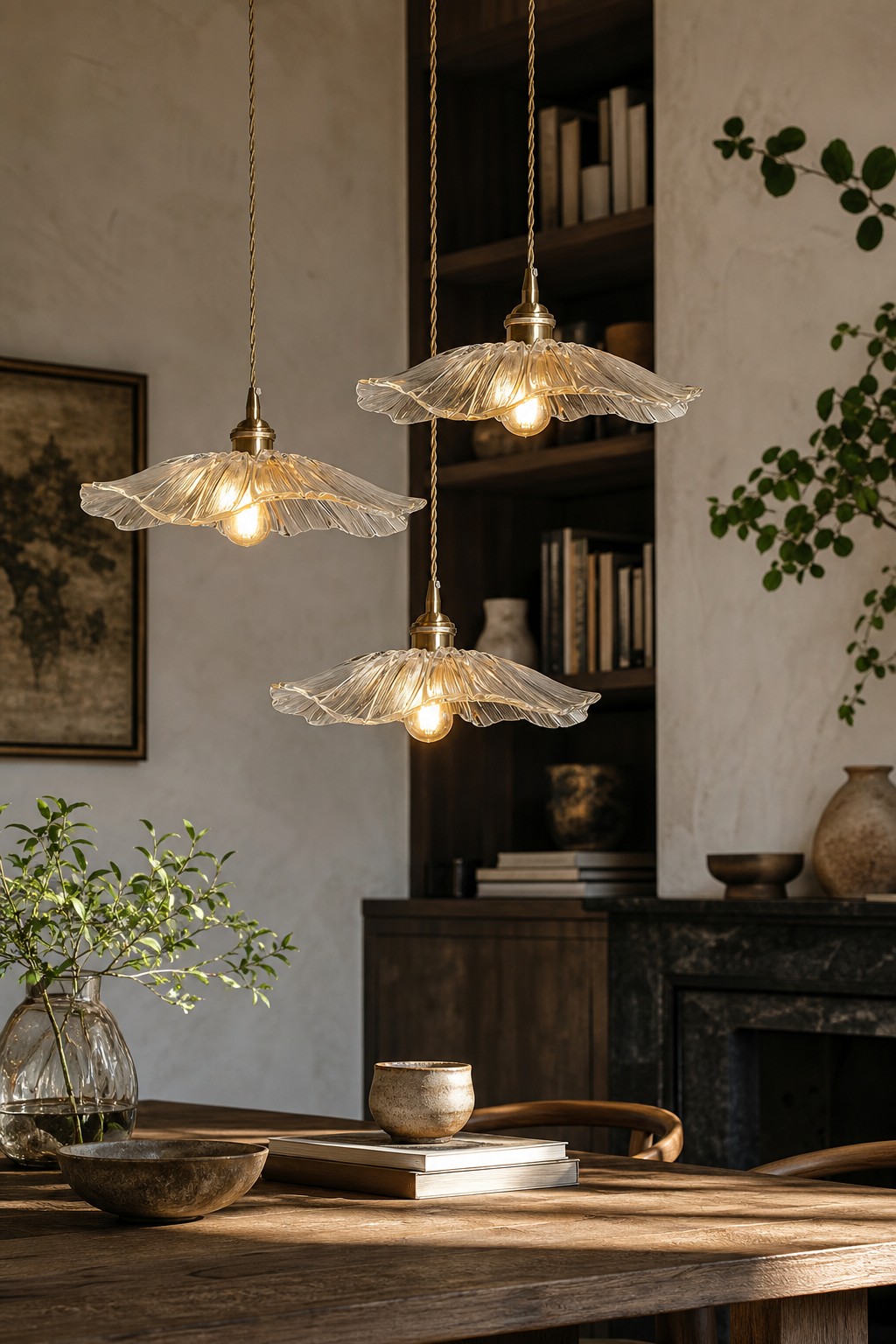
Yes, absolutely. For dining tables exceeding 180 cm in length, hanging two medium-sized lotus pendants spaced evenly over the table is highly recommended. It distributes the light evenly without overwhelming the ceiling space.
Does retro patterned glass work in a modern minimalist living and dining room?
Yes, it acts as a striking, deliberate contrast. A fixture with organic curves and textured glass softens the harsh, straight lines often found in minimalist spaces and adds much-needed tactile warmth.
How do I properly clean and maintain a textured glass pendant over a dining table?
Weekly, dust the exterior with a dry microfiber cloth. Once a month, ensure the power is off, and gently wipe the textured glass with a lint-free cloth dampened with a mild mix of water and a drop of dish soap.
My living room uses black metal accents. Will a brass-fitted pendant clash?
Not at all. Mixing metals is a staple of high-end interior design. If your living room features matte black, a brass dining pendant will pop beautifully as the focal point. Just add one or two tiny brass elements to the living room to tie the looks together.